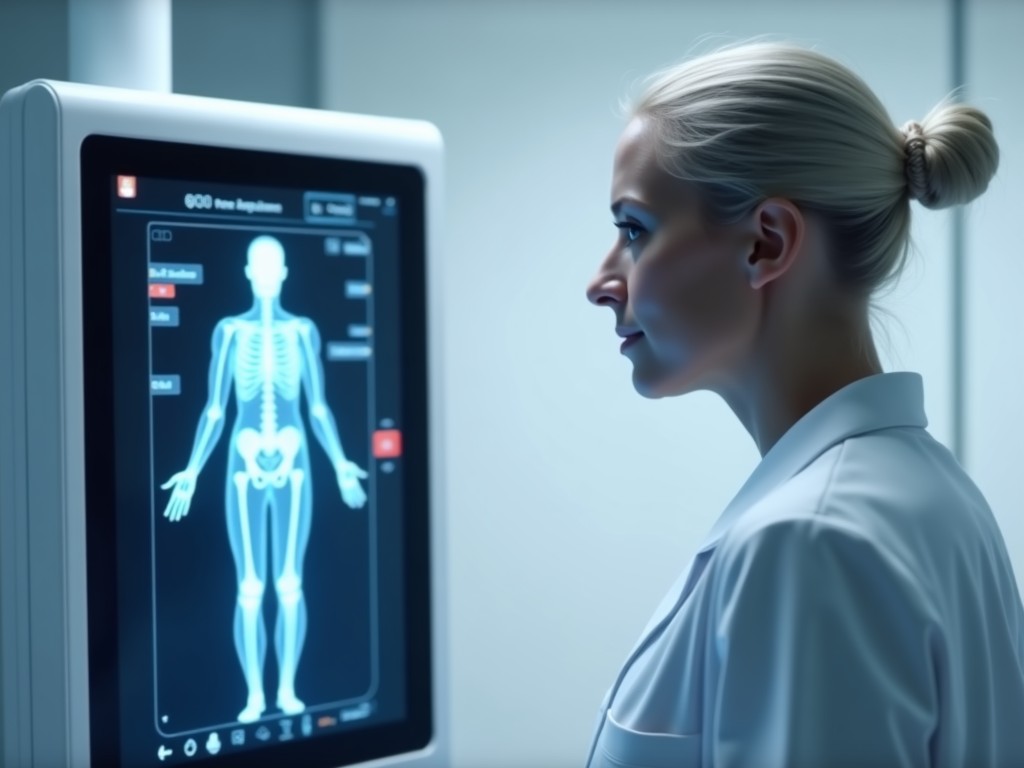
Wholesale Body Composition Analysis Machine
A body composition analysis machine measures the relative amounts of fat, muscle, water and bone in the human body using bioelectrical impedance. The device sends low‑amplitude alternating currents
Inquire NowWholesale Body Composition Analysis Machine
A body composition analysis machine measures the relative amounts of fat, muscle, water and bone in the human body using bioelectrical impedance. The device sends low‑amplitude alternating currents through surface electrodes and records the resulting voltage drop to calculate impedance values.
Technology Overview
Multi‑frequency bioelectrical impedance analysis (MF‑BIA) applies several discrete frequencies, typically ranging from 5 kHz to 500 kHz. At low frequencies the current flows mainly through extracellular fluid, while higher frequencies penetrate cell membranes, allowing separate estimation of intracellular and extracellular water compartments.
Measurement Principles
Impedance magnitude and phase at each frequency are combined with the subject’s height, weight, age and sex in empirically derived equations. The resulting outputs include fat mass, fat‑free mass, skeletal muscle mass, visceral fat area, total body water and its intracellular/extracellular fractions.
Key Specifications
| Parameter | Typical Value / Range | Notes |
|---|---|---|
| Measurement Technology | Multi‑frequency Bioelectrical Impedance Analysis | 5‑frequency excitation |
| Frequencies Used | 5, 50, 100, 250, 500 kHz | Enables extracellular/intracellular water separation |
| Segmental Analysis | Whole‑body + 5 segments (arms, legs, trunk) | Provides regional lean‑mass distribution |
| Output Metrics | Fat mass, Fat‑free mass, Skeletal muscle mass, Visceral fat area, Total body water, ECW, ICW | Derived from impedance and anthropometric inputs |
| Measurement Time | <20 seconds | Includes electrode contact and calculation |
| Repeatability (CV) | ≤1.5 % for fat mass | Based on repeated measurements on same subject |
| Electrode Type | Disposable Ag/AgCl gel electrodes | Single‑use, low skin irritation |
| Power Consumption | 15 VA | Typical standby + measurement |
| Operating Temperature | 10 – 40 °C | Indoor climate‑controlled environments |
| Dimensions (W×D×H) | 350 mm × 280 mm × 110 mm | Benchtop footprint |
| Weight | 4.2 kg | Includes power supply |
| Compliance | IEC 60601-2-24, ISO 13485 | Medical electrical equipment and quality management |
Applications
In clinical settings the device supports nutritional assessment, monitoring of edema, and evaluation of sarcopenia in aging or chronically ill patients. The segmental output helps clinicians identify fluid shifts between compartments.
Fitness and wellness centers use the machine to track training‑induced changes in muscle mass and fat mass, providing objective data for program adjustment and member motivation.
Corporate wellness programs deploy the equipment for periodic health risk screening, as visceral fat and extracellular water ratios correlate with metabolic syndrome risk.
Research laboratories rely on the high repeatability and multi‑frequency capability for longitudinal studies investigating interventions such as diet, exercise, or pharmacological treatments.
Quality Assurance
Manufacturing starts with printed‑circuit boards that undergo automated optical inspection to verify trace continuity and component placement. Each board is subjected to a functional test where known resistive loads are applied and the measured impedance is compared to reference values within ±0.5 %.
Electrode cables are checked for continuity and shielding effectiveness to guarantee low noise ingress. The enclosure is tested for ingress protection to IP20, ensuring resistance to dust and accidental contact.
Before shipment, every unit completes a full measurement cycle on a calibrated phantom with known tissue‑equivalent properties; the results must fall within the specified repeatability band.
Customization Options
Electrode lead length can be adjusted from the standard 1.0 m to 1.5 m or 2.0 m to accommodate different examination room layouts.
Software language packs are available for English, Spanish, Mandarin, and Arabic, with the ability to add further languages upon request.
Data export formats include CSV, PDF, and HL7‑compatible XML, selectable via the device menu or through a USB interface.
An optional hand‑grip sensor module can be added to provide segmental upper‑limb impedance without disposable electrodes.
Frequently Asked Questions
Can the measurement frequency set be changed? The five frequencies are fixed in the hardware to ensure regulatory compliance; however, the weighting algorithms can be adapted for special populations via a software update.
What information is required before quotation? Buyers should provide the intended order quantity, any required electrode cable length, preferred language pack, and desired data export format.
How are export shipments protected? Units are packed in double‑wall corrugated cartons with interior foam inserts, sealed with moisture‑barrier bags, and palletized for international freight.
Get a Quote
For wholesale pricing and lead‑time details, please contact our sales team.
Request Information