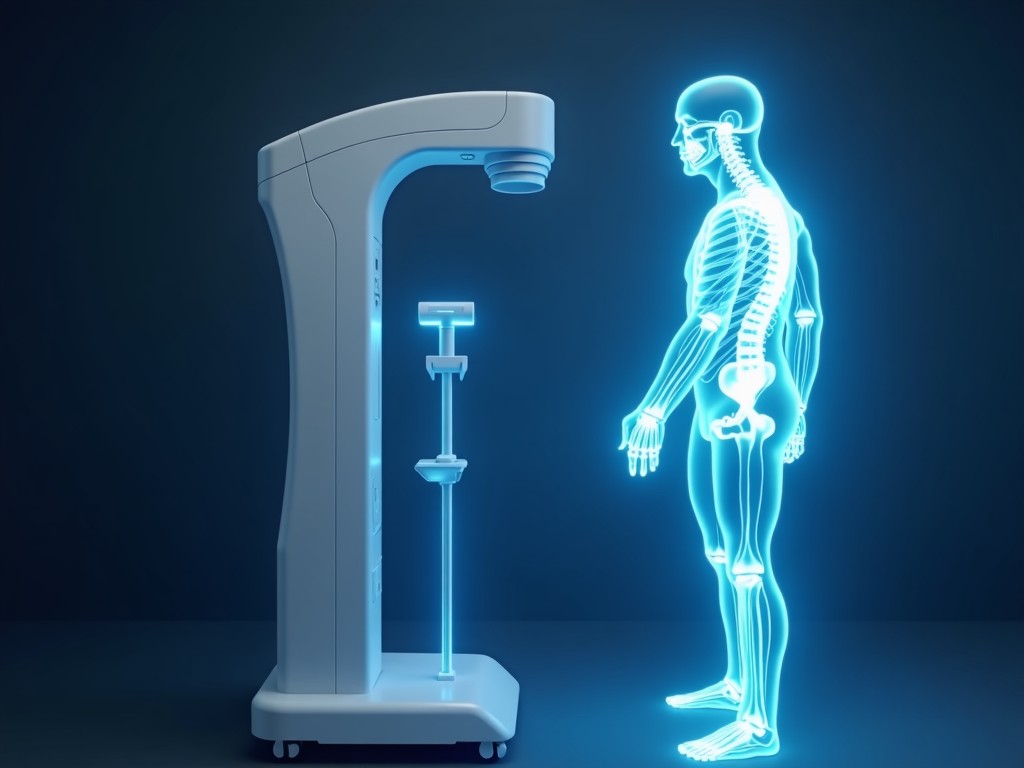
Wholesale Advanced Body Composition Analyzer
An advanced body composition analyzer uses multi‑frequency bioelectrical impedance analysis (MF‑BIA) to estimate fat mass, lean mass, total body water, and segmental distribution. The device sends
Inquire NowWholesale Advanced Body Composition Analyzer
An advanced body composition analyzer uses multi‑frequency bioelectrical impedance analysis (MF‑BIA) to estimate fat mass, lean mass, total body water, and segmental distribution. The device sends low‑amplitude alternating currents through the body via hand‑to‑foot or hand‑to‑hand electrodes and measures the resulting voltage drop.
Measurement Technology
MF‑BIA typically employs frequencies ranging from 5 kHz to 1 MHz. Low frequencies penetrate extracellular water, while higher frequencies pass through cell membranes, allowing estimation of intracellular and extracellular fluid compartments.
Segmental analysis is achieved by placing separate electrode pairs on each limb and the torso, providing impedance values for up to five body segments. This enables calculation of regional lean mass and fat mass, useful for identifying asymmetries or localized changes.
Key Technical Specifications
| Parameter | Typical Value / Range | Notes |
|---|---|---|
| Measurement Method | Multi‑frequency Bioelectrical Impedance Analysis | 5 kHz, 50 kHz, 250 kHz, 500 kHz, 1 MHz |
| Weight Capacity | 0–300 kg | Platform load cell accuracy ±0.1 kg |
| Body Fat % Range | 0–80 % | Typical repeatability ±1.5 % (SD) |
| Segmental Sites | Right Arm, Left Arm, Torso, Right Leg, Left Leg | Impedance measured per segment |
| Output Metrics | Fat Mass, Fat‑Free Mass, Skeletal Muscle Mass, Total Body Water, Visceral Fat Level, Basal Metabolic Rate | Derived from impedance equations |
Applications
- Fitness centers and personal training studios – enables trainers to track client progress with segmental lean‑mass data, helping to tailor resistance programs.
- Medical and rehabilitation clinics – provides objective fluid‑status and sarcopenia screening, supporting treatment plans for edema, renal disease, or aging populations.
- Corporate wellness programs – offers quick, non‑invasive screening for employee health initiatives, with data export for longitudinal tracking.
- Research institutions – supplies reliable reference data for studies on nutrition, exercise physiology, and metabolic syndrome, with validation against DXA or MRI.
Customization Options
Wholesale buyers can select electrode configurations (hand‑to‑foot, hand‑to‑hand, or full‑body pad arrays) to match the intended user population and measurement speed.
Software interfaces are available with optional API integration for exporting results to electronic health records, gym management systems, or cloud analytics platforms. Language packs and unit toggles (metric/imperial) can be pre‑configured.
Quality Control & Validation
Each unit undergoes a three‑point impedance verification using precision resistors traceable to national standards before shipment. This confirms that the measured resistance and reactance fall within ±0.5 % of the target values.
Bland‑Altman studies against dual‑energy X‑ray absorptiometry (DXA) typically show limits of agreement within ±2.5 % for fat‑mass percentage across a BMI range of 18–35 kg/m². Results are documented in the product’s technical dossier, which is available upon request.
Frequently Asked Questions
Can the electrode layout be changed for different sample sizes?
Yes. The analyzer supports modular electrode kits; hand‑to‑foot cables can be swapped for hand‑to‑hand or segmental pad sets depending on the required measurement speed and subject mobility.
What information is needed to receive a wholesale quotation?
Please provide the desired quantity, preferred electrode configuration, any software customizations (API, language, reporting templates), and the destination port for freight calculation.
How is the analyzer calibrated for different populations?
The device uses population‑specific predictive equations that can be adjusted via the software. Custom equations can be uploaded for ethnic‑specific or clinical cohorts, subject to validation by the end user.
What is the typical lead time for a wholesale order?
Lead times vary with order size and customization level, but standard configurations usually ship within 4–6 weeks after receipt of purchase order and deposit.