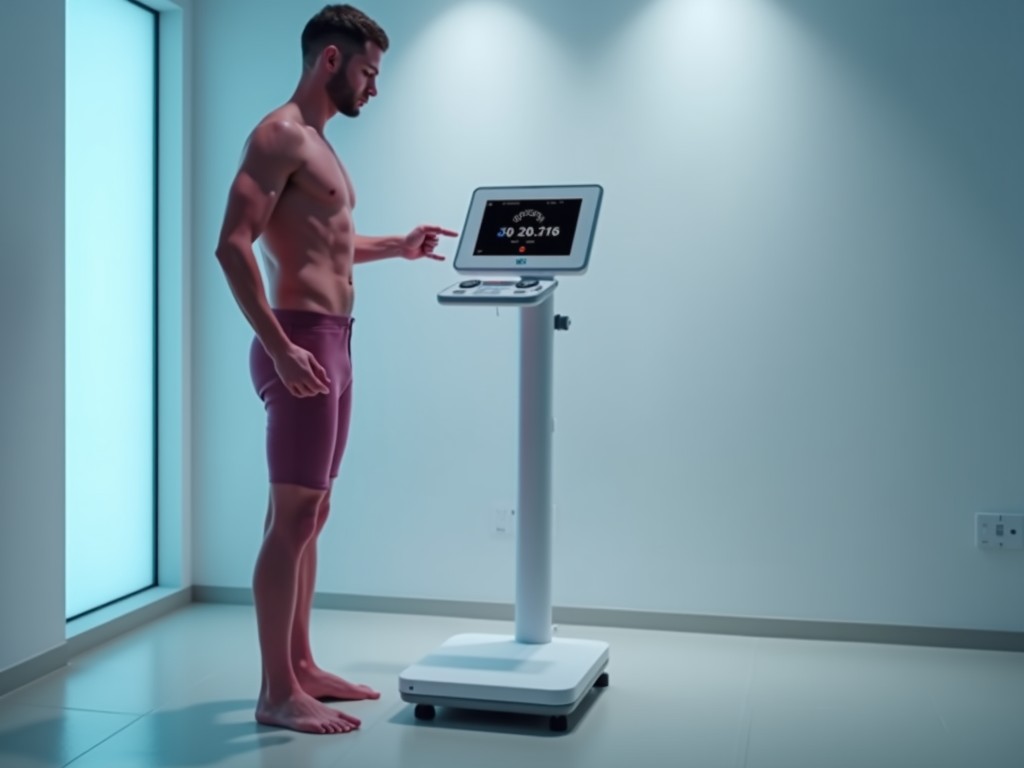
Smart Scale Body Composition Analyzer Supplier
A smart scale that measures body composition integrates weight sensing with bioelectrical impedance analysis to estimate fat mass, muscle mass, water content, and bone density. The device
Inquire NowSmart Scale Body Composition Analyzer Supplier Overview
A smart scale that measures body composition integrates weight sensing with bioelectrical impedance analysis to estimate fat mass, muscle mass, water content, and bone density. The device communicates results through wired or wireless interfaces, enabling integration with health monitoring systems, fitness equipment, or industrial wellness programs.
Measurement Technology
The analyzer uses multi‑frequency bioelectrical impedance, typically applying alternating currents from 5 kHz to 500 kHz through four electrodes positioned on the scale surface. Impedance vectors at each frequency are processed with proprietary algorithms to segment extracellular and intracellular water, which correlates with fat‑free mass and fat mass.
Electrode material is often stainless steel 316L to resist corrosion from sweat and cleaning agents. The load cell subsystem employs strain‑gauged aluminum alloy with a capacity of 0–200 kg and a resolution of 0.1 kg, verified by calibration against traceable standards.
Technical Specifications
| Parameter | Typical Value | Notes |
|---|---|---|
| Weight Capacity | 0–200 kg | Overload protection up to 150 % of capacity |
| Weight Resolution | 0.1 kg | LSB of load cell output |
| Impedance Frequencies | 5 kHz, 50 kHz, 100 kHz, 200 kHz, 500 kHz | Multi‑frequency selection configurable |
| Electrode Material | Stainless steel 316L | Surface finish Ra ≤ 0.8 µm |
| Operating Temperature | 5 °C – 40 °C | Non‑condensing humidity 10 %–90 % RH |
| Communication Interfaces | USB 2.0, Bluetooth 5.0, optional RS‑485 | Data rate up to 115 200 bps |
Key Performance Characteristics
- Fat mass estimation error typically ± 2.5 % compared with DXA reference under controlled hydration.
- Segmental analysis (arms, legs, torso) provides impedance ratios with inter‑segment variance < 5 %.
- Measurement repeatability (standard deviation) ≤ 0.15 % for weight and ≤ 1.2 % for impedance magnitude.
- Power consumption < 0.5 W during idle, < 2 W during active measurement.
Industrial Applications
In corporate wellness programs, the analyzer provides objective data for tracking employee health trends, enabling targeted intervention programs that can reduce absenteeism and healthcare costs. The scale’s network connectivity allows aggregation of anonymized metrics into occupational health dashboards.
Manufacturing facilities with shift‑based workforces use the device to monitor hydration status and muscle fatigue in physically demanding roles, supporting ergonomic assessments and preventing overexertion injuries. The robust stainless‑steel electrodes withstand frequent cleaning with alkaline detergents common in food‑processing environments.
Rehabilitation centers integrate the analyzer with therapy equipment to objectively quantify changes in lean mass during recovery protocols, providing measurable outcomes for insurance reporting and treatment adjustment.
Quality Control & Testing
Each unit undergoes a three‑stage verification: (1) load cell linearity check using calibrated weights across 0 %–100 % of capacity, (2) impedance spectrum validation against a precision resistor network to confirm frequency response within ± 1 %, and (3) firmware checksum validation to ensure algorithm integrity. Environmental stress testing includes temperature cycling (−10 °C to 50 °C) and humidity exposure (90 % RH for 48 h) to verify drift limits.
Final inspection includes a visual check for electrode surface defects, verification of wireless pairing stability, and a functional test simulating a full measurement cycle with known phantom masses to confirm body‑composition output ranges.
Customization Options
- Electrode layout adjustment for hand‑grip or foot‑only configurations.
- Alternative housing materials such as ABS with antimicrobial coating for high‑hygiene areas.
- Custom firmware modules to output additional metrics like basal metabolic rate or visceral fat level.
- Private labeling and tailored packaging for OEM distribution.
Frequently Asked Questions
Can the measurement range be increased? The load cell can be selected for capacities up to 300 kg upon request, with corresponding adjustments to structural supports and calibration procedures.
What information is required for a quotation? Provide the intended application environment, required communication interface, electrode configuration, and any regulatory certifications needed for your region.
How is quality inspected before shipment? Each unit receives a full functional test, impedance spectrum verification, and a visual inspection checklist; test records are retained for traceability.
What packaging methods are available? Standard packaging includes corrugated cardboard with internal foam inserts; options for palletized bulk shipping or reusable crates are available for large orders.
Contact for Technical Inquiry
To discuss how this body composition analyzer can be integrated into your facility’s health monitoring system, request a detailed technical datasheet or schedule a consultation with our application engineers.