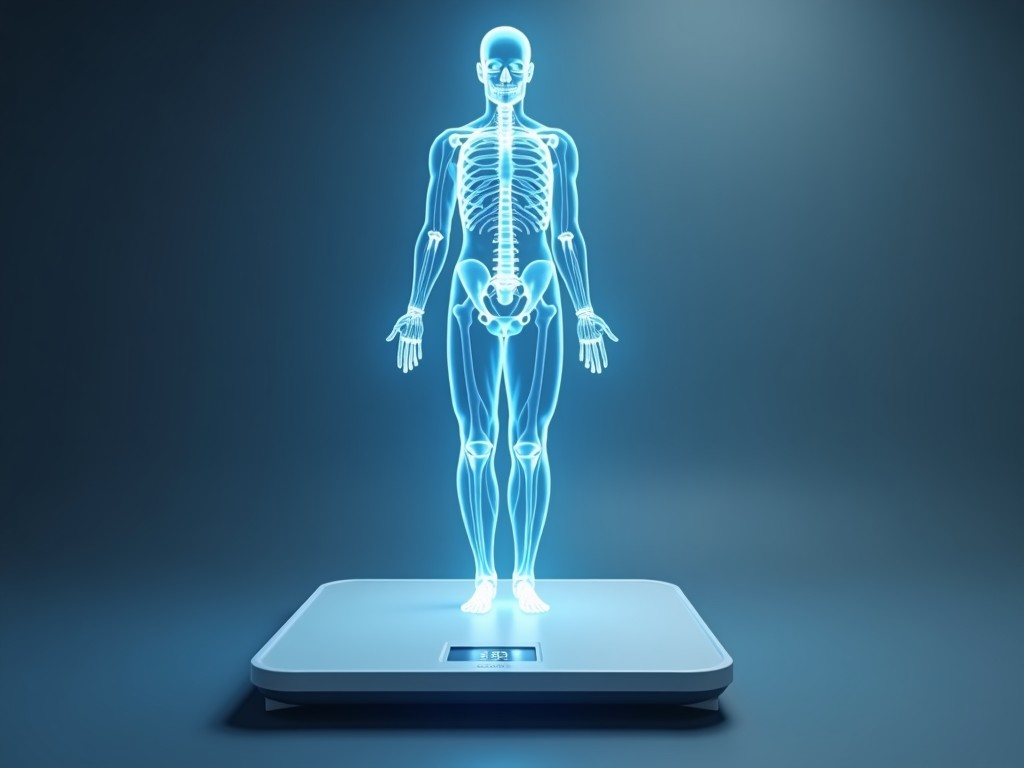
Smart Scale Body Composition Analyzer Manufacturer
Our analyzers use multi‑frequency bioelectrical impedance (BIA) to estimate fat mass, lean mass, total body water, and bone mineral content. The technique sends low‑level alternating currents through
Inquire NowSmart Scale Body Composition Analyzer – Manufacturer Overview
Our analyzers use multi‑frequency bioelectrical impedance (BIA) to estimate fat mass, lean mass, total body water, and bone mineral content. The technique sends low‑level alternating currents through the body and measures impedance at several frequencies to differentiate intracellular and extracellular compartments.
Measurement Technology
Four‑point electrode configuration ensures consistent current paths regardless of foot placement. Signals at 5 kHz, 50 kHz, and 250 kHz enable segmental analysis of arms, legs, and trunk. The analog front‑end includes a 24‑bit delta‑sigma ADC with programmable gain to maintain signal‑to‑noise ratio above 80 dB across the measurement range.
Core Specifications
| Parameter | Typical Value | Notes |
|---|---|---|
| Maximum user weight | 250 kg | Load cell rated to 300 kg with safety factor 1.2 |
| Measurement frequencies | 5 kHz, 50 kHz, 250 kHz | Switchable via firmware |
| Electrode material | Stainless‑steel 304 with conductive coating | Corrosion resistant for humid environments |
| Display resolution | 320 × 240 px LCD | Optional touchscreen upgrade |
| Power supply | 100‑240 V AC, 50/60 Hz, 12 V DC adapter | Internal battery backup for 8 h operation |
| Operating temperature | 5 °C – 40 °C | Relative humidity 10 %–90 % non‑condensing |
| Data output | USB‑C, Bluetooth 5.0, optional Ethernet | Supports HL7 and CSV formats |
Industrial and Commercial Applications
Fitness centers benefit from rapid, repeatable measurements that support personalized training programs without requiring specialized staff. Clinical settings use the analyzers for monitoring fluid shifts in dialysis patients and assessing sarcopenia in geriatric care.
Corporate wellness programs integrate the devices into health kiosks, providing employees with immediate feedback on body composition trends. Research laboratories rely on the segmental data for studies on nutrition, exercise physiology, and metabolic disorders.
Customization Options
Housing can be supplied in ABS polycarbonate blend or powder‑coated aluminum for enhanced impact resistance. Display choices range from monochrome LCD to full‑color capacitive touchscreen with adjustable brightness.
- Firmware modules for athlete mode, pediatric mode, or medical mode
- Brand‑specific logos and color schemes on enclosure and UI
- Optional hand‑grip electrodes for upper‑body segmental analysis
- Mounting kits for wall‑mounted, floor‑standing, or portable configurations
Quality Assurance and Testing
Each unit undergoes a three‑point calibration using precision resistors traceable to national standards. Repeatability is verified by measuring a reference phantom ten times; the coefficient of variation must be below 0.5 % for impedance readings.
Environmental testing includes thermal cycling (−10 °C to 60 °C), vibration sweep (10‑500 Hz, 2 g), and ingress protection verification (IPX4). Compliance documentation covers IEC 60601‑1 for medical electrical equipment and ISO 13485 for quality management systems.
Comparison with Competing Technologies
| Method | Typical Error vs. DXA (% ) | Relative Cost | Portability | Required Expertise |
|---|---|---|---|---|
| Multi‑frequency BIA (this product) | 3‑5 % | Low | High (hand‑held or floor scale) | Minimal (user‑guided) |
| Dual‑energy X‑ray absorptiometry (DXA) | Reference (0 %) | High | Low (dedicated room) | Certified technologist |
| Skinfold calipers | 4‑6 % | Very low | High | Trained technician |
| Near‑infrared interactance | 5‑7 % | Medium | Medium | Operator training |
Frequently Asked Questions
Can the electrode spacing be adjusted for different foot sizes?
The electrodes are fixed at a spacing optimized for adult foot dimensions; however, optional wide‑size platforms are available to accommodate larger feet without altering the electrical path.
What file formats are supported for data export?
Exported reports can be saved as CSV, PDF, or HL7‑compliant XML. Custom formats can be generated upon request through the firmware API.
Is calibration required after relocation?
The device stores its calibration in non‑volatile memory; relocation within the same environmental range does not require recalibration. A quick verification using the supplied reference weight is recommended after long‑distance transport.
Request Information
For detailed specification sheets, pricing, or to arrange a product demonstration, please contact our technical sales team.