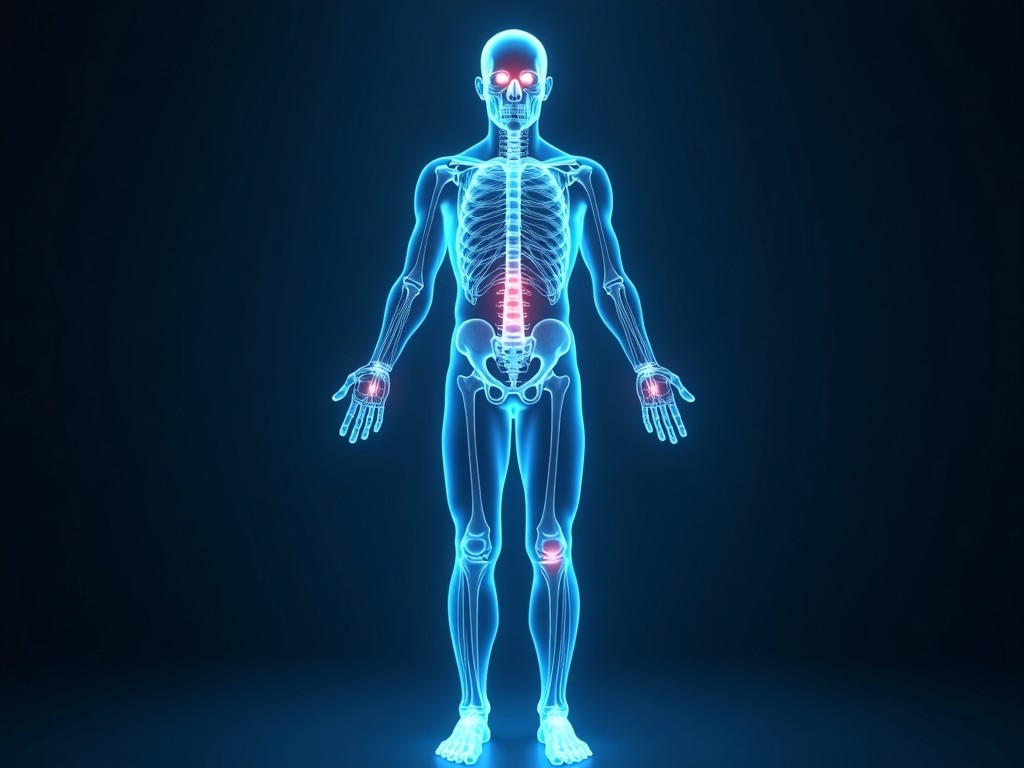
Smart Body Composition Analyzer
The device estimates body composition by sending low‑amplitude alternating currents through the torso and limbs and measuring the resulting impedance. Multi‑frequency bioelectrical impedance analysis
Inquire NowSmart Body Composition Analyzer
The device estimates body composition by sending low‑amplitude alternating currents through the torso and limbs and measuring the resulting impedance. Multi‑frequency bioelectrical impedance analysis (BIA) separates extracellular and intracellular water, enabling calculation of fat mass, lean mass, and total body water.
Measurement Principle
Four electrodes are placed on the hands and feet; a spectrum of frequencies from 5 kHz to 500 kHz is applied. The impedance vector at each frequency is fitted to a Cole‑Cole model to derive resistance and reactance values for intracellular and extracellular compartments.
Technical Specifications
| Parameter | Typical Value | Notes |
|---|---|---|
| Operating Frequency Range | 5 kHz – 500 kHz (8 frequencies) | Programmable via firmware |
| Excitation Current | ≤ 100 µA rms | Within IEC safety limits |
| Measurement Duration | < 10 s per scan | Includes electrode contact check |
| Output Resolution | 0.1 % for fat mass, 0.05 kg for lean mass | Derived from impedance precision |
| Operating Temperature | 10 °C – 40 °C | Non‑condensing humidity |
Measured Parameters
- Fat mass (kg and %)
- Fat‑free mass (kg)
- Total body water (L)
- Intracellular water (L)
- Extracellular water (L)
- Basal metabolic rate (kcal/day)
Industrial Applications
In wellness centers, the analyzer provides repeatable hydration and composition data that trainers use to adjust exercise regimens. The short measurement time supports high‑throughput screening without requiring disrobing or invasive procedures.
Research facilities utilize the multi‑frequency output to study fluid shifts during interventions such as dialysis or altitude exposure. The device’s ability to separate intra‑ and extracellular water offers a quantitative proxy for edema formation.
Design and Enclosure
The housing is constructed from ABS‑PC blend with a surface resistivity below 10⁹ Ω/sq to prevent static buildup that could interfere with electrode contacts. Rubber over‑molded grips on the hand electrodes ensure consistent pressure across a range of hand sizes.
- Dimensions: 280 mm × 120 mm × 45 mm (L × W × H)
- Weight: 620 g including batteries
- Electrode material: stainless steel 316L with gold‑plated contact surface
Data Interface and Connectivity
Measurement results are transmitted via Bluetooth Low Energy (BLE 5.0) using a proprietary GATT service that encapsulates each parameter as a 16‑bit signed integer with a scale factor. A USB‑C port provides firmware updates and wired serial output at 115 200 baud for integration with laboratory data acquisition systems.
Calibration and Quality Control
Each unit undergoes a two‑point impedance calibration using precision resistors traceable to national standards. The calibration verifies that resistance readings at 50 kHz deviate less than ±0.5 % from reference values across the operating temperature range.
In‑process inspection includes electrode contact impedance testing (< 10 kΩ) and verification of the battery management system’s cut‑off voltage (3.0 V). Final functional testing repeats a full body scan on a reference phantom with known composition to confirm algorithmic accuracy.
Customization Options
- Alternative electrode layouts (hand‑to‑hand, foot‑to‑foot) for segmental analysis
- Custom firmware scales for specific populations (e.g., pediatric, geriatric)
- Enclosure color matching or corporate branding via pad printing
- Extended temperature range (−10 °C to 50 °C) with conformal coating
Frequently Asked Questions
Can the measurement frequency set be adjusted for specific research protocols?
Yes. The firmware exposes a configuration register that allows selection of any subset of the eight available frequencies; custom sequences can be loaded via the USB‑C interface.
What materials are available for the enclosure if a medical‑grade housing is required?
Upon request, the analyzer can be supplied in a polysulfone‑based enclosure that meets ISO 10993‑1 cytotoxicity testing and can be sterilized with ethylene oxide.
How is quality inspected before shipment?
Each unit receives a visual inspection, impedance calibration verification, electrode contact test, and a functional scan on a reference phantom. Only units meeting all criteria are packaged.
Get More Information
To discuss configuration options, lead times, or request a formal quotation, contact our technical sales team.
Contact Us