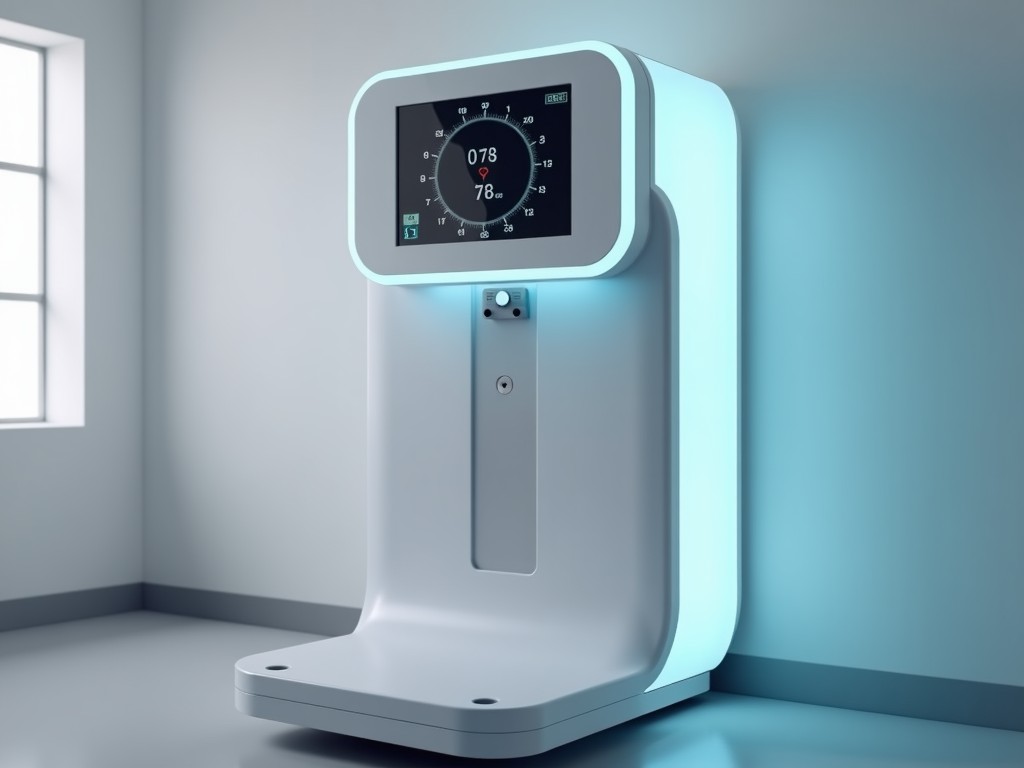
Scale And Body Fat Analyzer Supplier
This page describes the technical capabilities of a supplier that manufactures combined weight scales and body fat analyzers intended for industrial and commercial use. The information focuses on
Inquire NowScale and Body Fat Analyzer Supplier – Technical Overview
This page describes the technical capabilities of a supplier that manufactures combined weight scales and body fat analyzers intended for industrial and commercial use. The information focuses on measurement principles, construction details, and performance characteristics that procurement engineers evaluate when selecting a vendor.
Measurement Principle
The devices use load‑cell technology for weight measurement and multi‑frequency bioelectrical impedance analysis (BIA) for body composition. A four‑point load cell converts applied force into an electrical signal with linearity better than 0.1 % full scale. BIA sends a low‑amplitude alternating current (typically 5 kHz to 500 kHz) through hand‑to‑foot electrodes and measures the resulting voltage drop to estimate extracellular water, total body water, and fat mass.
Key Technical Specifications
| Parameter | Typical Value | Customizable Range | Units |
|---|---|---|---|
| Maximum capacity | 300 | 150 – 500 | kg |
| Weight accuracy | ±0.5 | ±0.2 – ±1.0 | % FS |
| Weight repeatability | 0.2 | 0.1 – 0.5 | kg |
| BIA frequency | 5, 50, 500 | Selectable 1 – 1000 | kHz |
| Impedance measurement range | 100 – 1200 | 50 – 2000 | Ω |
| Operating temperature | 5 – 40 | -10 – 60 | °C |
Design and Construction
The load cell is machined from stainless steel 17‑4 PH, providing a yield strength above 1000 MPa and corrosion resistance suitable for humid environments. The housing is injection‑molded ABS with a UL‑94 V‑0 flame rating, and the electrode surfaces are coated with silver‑silver chloride to ensure stable contact impedance below 10 kΩ. Internal wiring uses PTFE‑insulated conductors rated for 105 °C continuous operation.
- Four‑point bending beam load cell minimizes off‑axis loading errors.
- Modular electrode PCB allows replacement without disassembling the weighing platform.
- Ingress protection rating IP65 for the electronics enclosure.
- Low‑profile design (overall height < 30 mm) facilitates integration into existing flooring or platforms.
Application Areas
Combined scale and BIA analyzers are selected where both weight and body composition data are needed for member tracking, clinical assessment, or research. The dual‑function eliminates the need for separate instruments, reducing floor space and calibration effort.
- Fitness centers and gyms – rapid member assessments for personalized training programs.
- Medical clinics and wellness centers – monitoring fluid balance and nutritional status in outpatient settings.
- Corporate health programs – longitudinal data collection for employee health initiatives.
- Sports science laboratories – repeatable measurements for studies on hydration and training adaptations.
Quality Assurance and Testing
Each unit undergoes a three‑stage verification: (1) load‑cell linearity and hysteresis testing across 0 % to 100 % of rated capacity using calibrated dead‑weight standards; (2) BIA impedance accuracy checked against precision resistors and phantom tissue simulators; (3) environmental cycling (temperature, humidity) to confirm stable output over the specified operating range. Test results are recorded in a traceable log and supplied with the shipment on request.
Customization Options
Customers can tailor the analyzer to specific integration requirements. Common modifications include load‑cell capacity adjustment, electrode spacing to match different user statures, alternative display technologies (LCD, OLED, or touchscreen), and firmware changes for custom metrics such as visceral fat rating or basal metabolic rate.
- Load‑cell range: 150 kg to 500 kg in 50 kg increments.
- Electrode plate size: 80 mm × 40 mm to 120 mm × 60 mm.
- Enclosure material: ABS, polycarbonate, or stainless‑steel for harsh environments.
- Communication interfaces: USB, RS‑232, Bluetooth 5.0, or Wi‑Fi.
- Calibration certificates: ISO 17025 accredited or factory traceable.
Ordering Information
Minimum order quantity is one unit for standard configurations; volume pricing applies for orders of ten or more units. Lead time for stock models is typically three to four weeks, while customized designs require six to eight weeks after design approval. Samples can be arranged upon request to validate performance in the target environment.
For quotations, technical drawings, or sample requests, please contact our sales team.
Frequently Asked Questions
- Can the load‑cell capacity be changed after purchase? The load cell is a machined component; capacity changes require replacing the load‑cell module, which can be done as a service operation.
- What information is needed to obtain a quotation? Provide the desired weight capacity, electrode spacing, display type, communication interface, and any environmental constraints (e.g., temperature range, IP rating).
- Which materials are available for the housing? Standard ABS, optional polycarbonate for impact resistance, and stainless‑steel for corrosive settings.
- How is quality inspected before shipment? Each unit receives linearity, repeatability, impedance accuracy, and environmental tests as described in the Quality Assurance section.
- What packaging methods protect the analyzer during transit? Units are placed in anti‑static foam inserts inside double‑wall corrugated cartons, with corner protectors and moisture‑barrier bags for international shipments.
- What is the typical production lead time? Stock configurations ship within three to four weeks; customized units require six to eight weeks after final design approval.
To discuss your specific requirements or request a formal quotation, reach out to our engineering team.