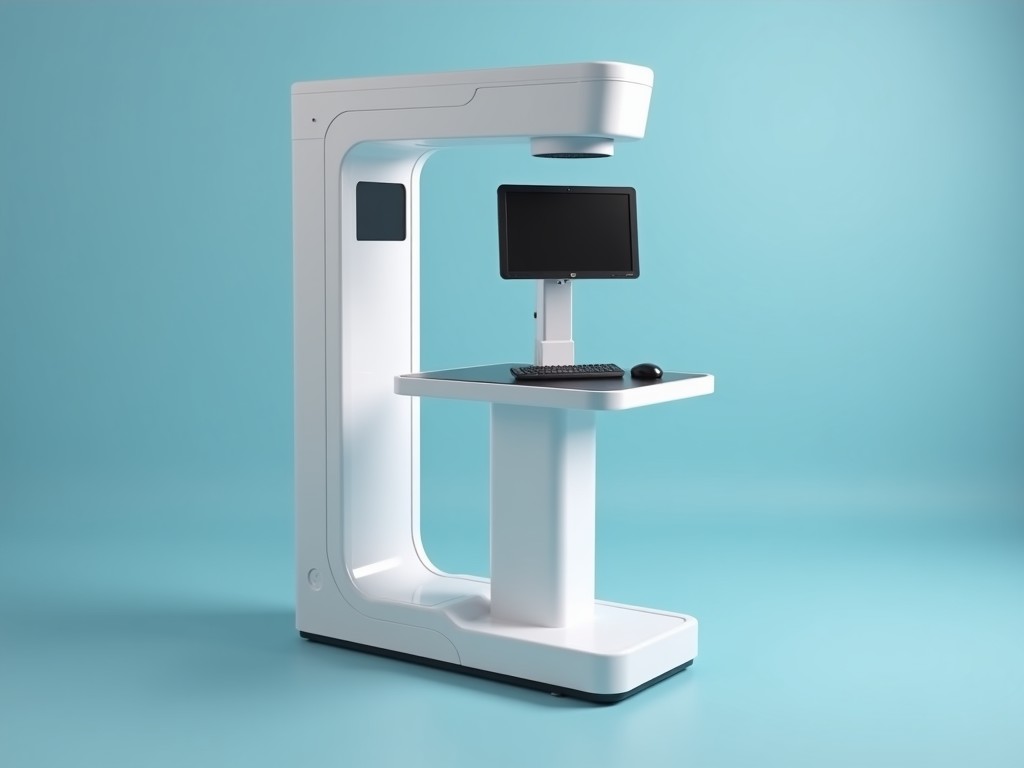
Scale And Body Fat Analyzer Manufacturer
Industrial facilities often require routine monitoring of personnel mass and composition to support ergonomic assessments, safety programs, and health initiatives. A scale and body fat analyzer
Inquire NowScale and Body Fat Analyzer Manufacturer
Industrial facilities often require routine monitoring of personnel mass and composition to support ergonomic assessments, safety programs, and health initiatives. A scale and body fat analyzer combines a high‑capacity load cell platform with multi‑frequency bioelectrical impedance analysis to deliver both weight and segmental body‑fat estimates in a single step. The system is designed for repeated use in environments where durability, ease of cleaning, and minimal calibration drift are critical.
Measurement Principle
The load cell platform employs four strain‑gauge transducers arranged in a Wheatstone bridge, providing a linear output from 0 to 250 kg with a resolution of 0.05 kg and a repeatability error under 0.1 % of full scale. Bioelectrical impedance is measured by sending a low‑amplitude alternating current (typically 5 kHz to 500 kHz) through eight surface electrodes embedded in the weighing surface; the resulting voltage drop yields impedance values that correlate with extracellular and intracellular water compartments. By combining the impedance data with the measured weight and user‑entered height, age, and gender, the analyzer estimates total body fat percentage using a validated empirical formula.
Key Specifications
| Parameter | Typical Value | Notes |
|---|---|---|
| Weight Capacity | 0 – 250 kg | Customizable up to 500 kg |
| Resolution | 0.05 kg | Adjustable via firmware |
| Repeatability Error | ≤0.1 % FS | Tested at 25 °C |
| Impedance Frequency Range | 5 kHz – 500 kHz | Multi‑frequency BIA |
| Number of Electrodes | 8 (four‑point tetrapolar) | Patterned on weighing surface |
| Measurement Time | < 5 s | From step‑on to result display |
| Power Supply | 100‑240 V AC, 50/60 Hz | Optional DC 24 V |
| Operating Temperature | 0 °C – 40 °C | Non‑condensing |
| Enclosure Material | Powder‑coated steel (IP54) | Stainless steel option available |
Typical Applications
In manufacturing plants, monitoring worker mass helps evaluate the effectiveness of manual handling interventions and track changes linked to shift work or seasonal workloads. In logistics warehouses, regular body‑fat screening can identify individuals at risk for metabolic syndrome, allowing targeted wellness programs that reduce absenteeism. The analyzer’s rugged construction and IP‑rated housing enable placement near loading docks or break rooms where exposure to dust, moisture, and frequent cleaning is expected.
Customization Options
- Load cell capacity (0‑250 kg, 0‑500 kg, or bespoke ranges)
- Electrode configuration (number, spacing, material)
- Housing material (powder‑coated steel, stainless steel, aluminum)
- Display type (LED, LCD, touchscreen)
- Communication interfaces (USB, RS‑485, Ethernet, Bluetooth)
- Software integration (API for ERP/MES, cloud data logging)
- Calibration accessories (certified weights, verification software)
Quality Control & Testing
Each unit undergoes a linearity test of the load cell across the full range using traceable weights, followed by impedance verification with precision resistors to confirm BIA accuracy. Environmental cycling (temperature, humidity, vibration) is performed to ensure long‑term stability, and a final functional check validates the measurement algorithm against reference body‑composition methods.
Frequently Asked Questions
- Can the dimensions be customized? Yes, the platform size and overall footprint can be adjusted to fit specific installation constraints.
- What information is required before quotation? Required details include desired weight capacity, electrode layout, housing material, output interface, and any regulatory certifications needed.
- What materials are available for the enclosure? Standard options are powder‑coated steel (IP54) and 304 stainless steel; other alloys are available upon request.
- How is quality inspected? Each analyzer passes load‑cell linearity, impedance accuracy, environmental, and functional tests before shipment.
- What is the typical production lead time? Lead time ranges from 4 to 6 weeks depending on customization complexity and current schedule.
Contact for Inquiry
To discuss your specific requirements or request a detailed quotation, please reach out to our technical sales team.