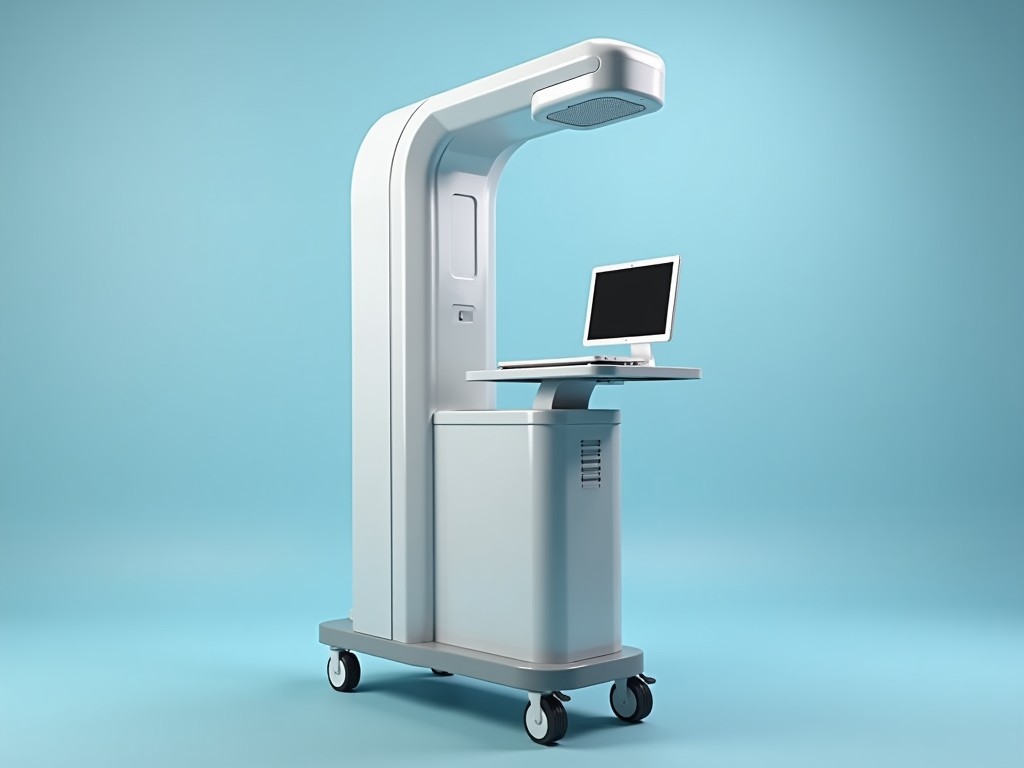
Purchase Medical Body Composition Analyzer
A medical body composition analyzer quantifies fat mass, lean mass, total body water, and bone mineral content using bioelectrical impedance analysis (BIA) or dual‑energy X‑ray absorptiometry (DXA)
Inquire NowPurchase Medical Body Composition Analyzer
A medical body composition analyzer quantifies fat mass, lean mass, total body water, and bone mineral content using bioelectrical impedance analysis (BIA) or dual‑energy X‑ray absorptiometry (DXA) principles. The measurement process relies on passing a low‑amplitude, multi‑frequency electrical current through the body and interpreting the resulting impedance spectrum to derive compartment volumes.
Principle of Operation
Multi‑frequency BIA applies alternating currents at frequencies ranging from 5 kHz to 1 MHz. Low frequencies predominantly traverse extracellular water, while higher frequencies penetrate intracellular spaces. By solving the Cole‑Cole model across the frequency range, the device separates extracellular water, intracellular water, and solid tissue components.
When DXA is employed, two distinct photon energies (typically 40 keV and 70 keV) attenuate differently in fat versus lean tissue. The differential attenuation yields a pixel‑wise map of fat and lean distribution, from which total body percentages are calculated.
Technical Specifications
| Parameter | Typical Value / Range |
|---|---|
| Measurement Method | Multi‑frequency BIA (5 kHz‑1 MHz) or DXA (dual‑energy) |
| Frequency Points (BIA) | 5, 50, 100, 200, 500 kHz; 1 MHz (optional) |
| Current Amplitude | ≤ 0.8 mA rms (per IEC 60601‑2‑26) |
| Measurement Time | 15‑30 seconds per scan |
| Output Parameters | Fat mass, fat‑free mass, total body water, extracellular water, intracellular water, skeletal muscle mass, visceral fat area, bone mineral content (DXA) |
| Weight Capacity | Up to 250 kg (depends on platform design) |
| Power Supply | 100‑240 V AC, 50/60 Hz, 60 VA max |
| Data Interface | USB 2.0, Ethernet (optional), DICOM export (DXA models) |
| Operating Temperature | 10 °C – 35 °C |
| Dimensions (W × D × H) | 450 mm × 350 mm × 120 mm (platform) – varies by model |
Typical Applications
- Clinical nutrition assessment – tracking changes in fat and lean mass during therapeutic diet interventions.
- Renal dialysis monitoring – evaluating fluid overload and dry weight adjustments via extracellular water measurements.
- Geriatric care – detecting sarcopenia by quantifying appendicular skeletal muscle index over time.
- Sports medicine – guiding training load adjustments based on segmental lean symmetry and visceral fat trends.
- Bariatric surgery follow‑up – verifying postoperative fat loss while preserving lean tissue.
Selection Considerations for Buyers
When evaluating a body composition analyzer, verify the measurement principle matches the required clinical accuracy. BIA devices typically provide segmental results with a coefficient of variation under 4 % for total body water when performed under standardized fasting and hydration conditions. DXA systems offer superior bone mineral assessment but involve ionizing radiation and require dedicated shielding.
Check the electrode configuration. Hand‑to‑foot designs necessitate consistent limb placement; foot‑to‑foot scales reduce placement variance but may limit segmental analysis. For longitudinal studies, ensure the device supports data export in CSV or DICOM formats to integrate with electronic health records.
Assess the maintenance schedule. BIA electrodes should be replaced after approximately 10 000 measurements or when impedance drift exceeds 2 %. DXA tubes require periodic calibration per the manufacturer’s schedule, often every 6‑12 months, to maintain photon energy accuracy.
FAQ
Can the analyzer be customized for specific patient populations? Yes, electrode spacing and current frequency bands can be adjusted upon request to suit pediatric or bariatric cohorts.
What information is needed before quotation? Provide intended use (clinical, research, wellness), required output parameters, expected daily throughput, and any site‑specific constraints such as room dimensions or power availability.
How is quality inspected? Each unit undergoes impedance linearity testing across the full frequency range, followed by phantom validation using known‑volume tissue simulators to confirm accuracy within ±2 %.