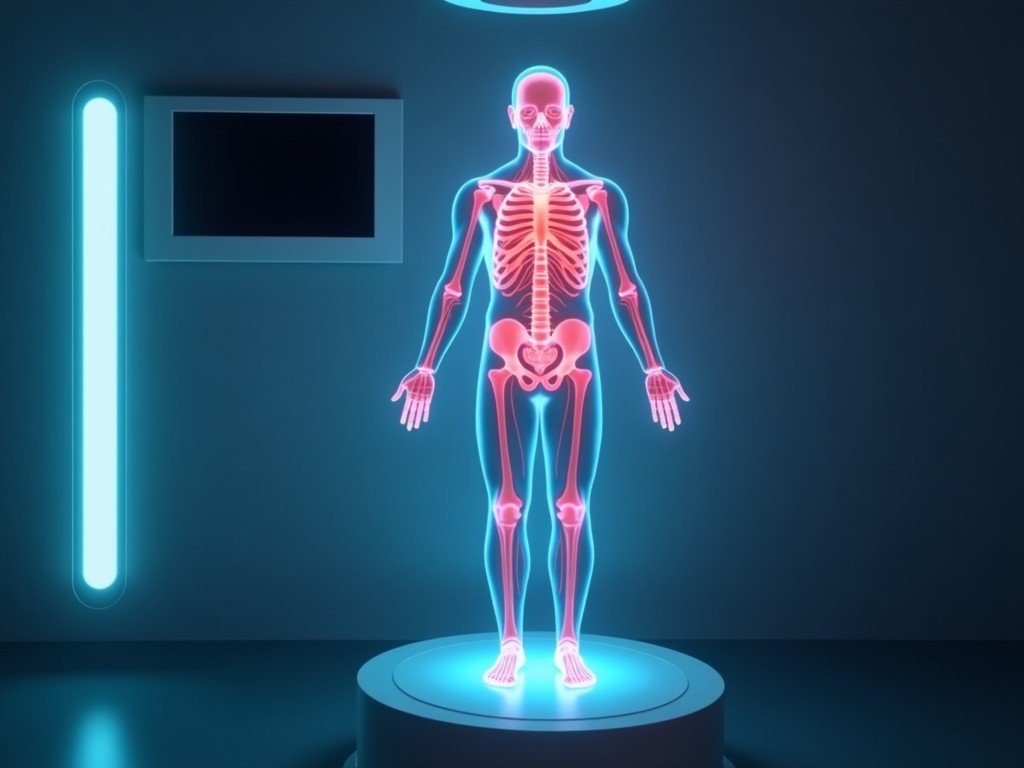
Oem Digital Body Composition Analyzer
The analyzer determines body composition by passing a low‑amplitude alternating current through the torso and limbs and measuring the resulting voltage drop. Bioelectrical impedance analysis (BIA)
Inquire NowOEM Digital Body Composition Analyzer
The analyzer determines body composition by passing a low‑amplitude alternating current through the torso and limbs and measuring the resulting voltage drop. Bioelectrical impedance analysis (BIA) relies on the fact that lean tissue conducts electricity better than fat tissue due to its higher water and electrolyte content.
Designed for integration into third‑party equipment, the unit provides a standardized digital output that can be read by host controllers via UART, SPI, or USB interfaces. Mechanical dimensions are kept compact to facilitate mounting inside fitness consoles, medical carts, or wellness kiosks.
Measurement employs a multi‑frequency approach, typically sweeping from 5 kHz to 500 kHz in 256 steps. This frequency range enables separation of extracellular and intracellular water compartments, improving the accuracy of segmental fat‑free mass estimates.
Output parameters include total body water, extracellular water, intracellular water, fat mass, fat‑free mass, skeletal muscle mass, and basal metabolic rate. Each parameter is derived from impedance values using empirically validated equations that are adjustable through firmware coefficients.
Typical Specifications
| Parameter | Value / Range |
|---|---|
| Measurement Principle | Multi‑frequency Bioelectrical Impedance Analysis |
| Frequency Range | 5 kHz – 500 kHz (256 linear steps) |
| Excitation Current | ≤ 100 µA RMS (safe for continuous use) |
| Impedance Resolution | 0.1 Ω |
| Output Interface | UART (TTL), SPI, USB 2.0 (device selectable) |
| Power Supply | 5 V ± 5 %, 150 mA max |
| Operating Temperature | 0 °C – 45 °C |
| Dimensions (PCB) | 45 mm × 30 mm × 8 mm (L×W×H) |
| Connector Options | 0.5 mm pitch FFC, 2 mm pitch header, M12 socket (custom) |
Applications
In commercial treadmills and ellipticals, the analyzer provides real‑time feedback on hydration status and muscle fatigue, allowing users to adjust workout intensity based on physiological data rather than perceived exertion alone.
Medical rehabilitation equipment incorporates the device to monitor extracellular fluid shifts in patients undergoing dialysis or cardiac therapy, offering clinicians a non‑invasive trend indicator between laboratory visits.
Wellness kiosks in corporate settings use the module to deliver quick body‑composition screens that support occupational health programs, with data exported to corporate wellness platforms via the built‑in USB interface.
Customization Options
Firmware coefficients can be adjusted to match population‑specific equations (e.g., Asian, African, Caucasian cohorts) without altering hardware, enabling OEMs to tailor accuracy for target markets.
Housing materials range from ABS for indoor consumer equipment to polycarbonate‑glass fiber blends for environments requiring higher impact resistance or chemical exposure.
Electrode configurations are adaptable: four‑point tactile sensors for hand‑to‑foot measurements, eight‑point segmental arrays for limb‑specific analysis, or snap‑on disposable pads for single‑use applications.
Connector selections include low‑profile flex cables for space‑constrained consoles, rugged circular connectors for outdoor equipment, and standardized USB‑type C plugs for plug‑and‑play integration.
Software drivers and example code are provided in C and Python, facilitating rapid integration with existing control loops or cloud‑based analytics pipelines.
Quality Control Philosophy
Each unit undergoes impedance verification against a network of precision resistors with tolerances of ±0.05 % before leaving the production line. This confirms that the front‑end gain and analog‑to‑digital conversion remain within specified limits.
Temperature cycling from –10 °C to +60 °C is performed on a sample lot to ensure that frequency response does not drift beyond 0.5 % across the operational range.
Final inspection includes a functional test where known phantom loads simulate specific fat‑free mass and fat mass values; the analyzer’s output must agree with reference calculations within ±2 %.
Traceability is maintained by recording lot numbers, calibration dates, and test operator IDs in a secure database accessible to customers upon request.
To discuss integration requirements, request a quotation, or obtain sample units, please contact our engineering team.
Request Quote