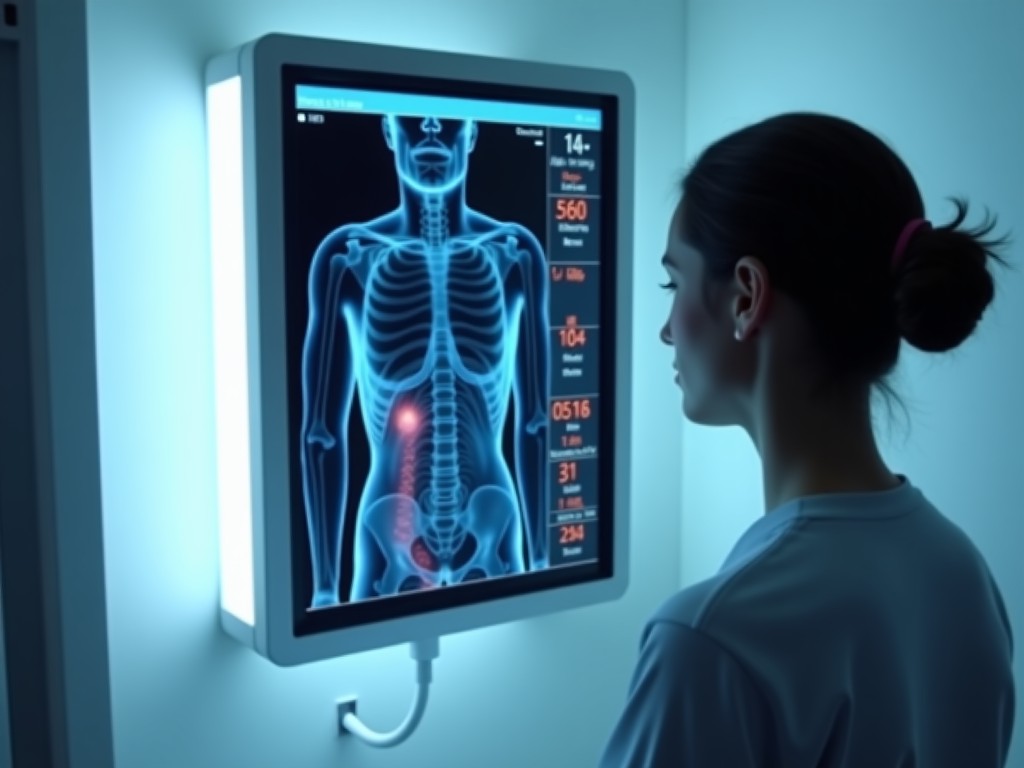
Oem Budget Friendly Bmi Body Composition Analyzer Monitor
The device determines body composition by applying a low‑amplitude alternating current through the body and measuring the resulting impedance. Bioelectrical impedance analysis (BIA) estimates the
Inquire NowOEM Budget Friendly BMI Body Composition Analyzer Monitor
The device determines body composition by applying a low‑amplitude alternating current through the body and measuring the resulting impedance. Bioelectrical impedance analysis (BIA) estimates the volume of conductive tissues, allowing calculation of fat‑free mass, fat mass, and related metrics from the resistance and reactance values.
For OEM integration the monitor is supplied as a printed circuit board assembly with optional enclosure kits. Mechanical interfaces include mounting holes, connector pads for electrodes, and a low‑profile LCD connector, enabling placement in handheld, wall‑mounted, or console‑style housings without redesigning the core measurement electronics.
Key outputs typically include total body weight, percent body fat, skeletal muscle mass, visceral fat rating, basal metabolic rate, and total body water. The measurement uses a four‑point tactile electrode arrangement (hand‑to‑foot or foot‑to‑foot) to reduce the influence of contact impedance and improve repeatability across subjects.
| Parameter | Typical Value | Notes |
|---|---|---|
| Measurement Frequency | 50 kHz (single‑frequency) | Standard for BIA; optional multi‑frequency versions available |
| Current Excitation | ≤ 0.8 mA RMS | Within IEC safety limits for passive subjects |
| Impedance Range | 150 Ω – 800 Ω | Covers typical adult population; auto‑range scaling |
| Weight Capacity | 0 kg – 200 kg | Load cell linearity ±0.1 % FS |
| Display Update Rate | 1 Hz | Readings refreshed each second |
| Operating Temperature | 0 °C – 40 °C | Non‑condensing humidity 10 %–90 % RH |
The analyzer is suited for environments where frequent, non‑invasive assessments are required, such as fitness centers tracking member progress, corporate wellness programs monitoring employee health, and outpatient clinics conducting nutritional screenings. Its low power draw and compact footprint allow integration into battery‑operated kiosks or wall‑mounted stations without significant thermal management.
- Housing material: ABS (standard) or polycarbonate for higher impact resistance
- Display options: 128×64 pixel LCD, 1.3‑inch OLED, or custom touchscreen
- Communication interfaces: USB‑CDC, Bluetooth 5.0, RS‑232, or UART
- Firmware: selectable calculation algorithms (e.g., RJL, Lukaski), multi‑language support, adjustable user profiles
- Cable length: standard 0.5 m electrode leads, extendable to 2 m upon request
- Electrode shape: stainless‑steel pads, snap‑on connectors, or integrated grip sensors
Quality assurance follows a defined test protocol: each unit undergoes impedance linearity verification using precision resistors, weight calibration with certified masses, and repeatability checks across ten consecutive measurements. Firmware includes built‑in self‑diagnostics that flag out‑of‑range impedance or electrode contact faults before displaying results.
Can the measurement algorithm be customized for specific populations? Yes, the OEM firmware allows adjustment of the regression coefficients used to convert impedance to body composition values, enabling optimization for athletes, elderly, or pediatric groups.
What documentation is required for a quotation? Provide the desired housing dimensions, interface preferences, estimated annual volume, and any regulatory target (e.g., CE, FCC) to receive a accurate cost and lead‑time estimate.
How are sample units handled? Sample boards are shipped with a basic enclosure and a set of electrode cables; evaluation units include a quick‑start guide and a calibration certificate.