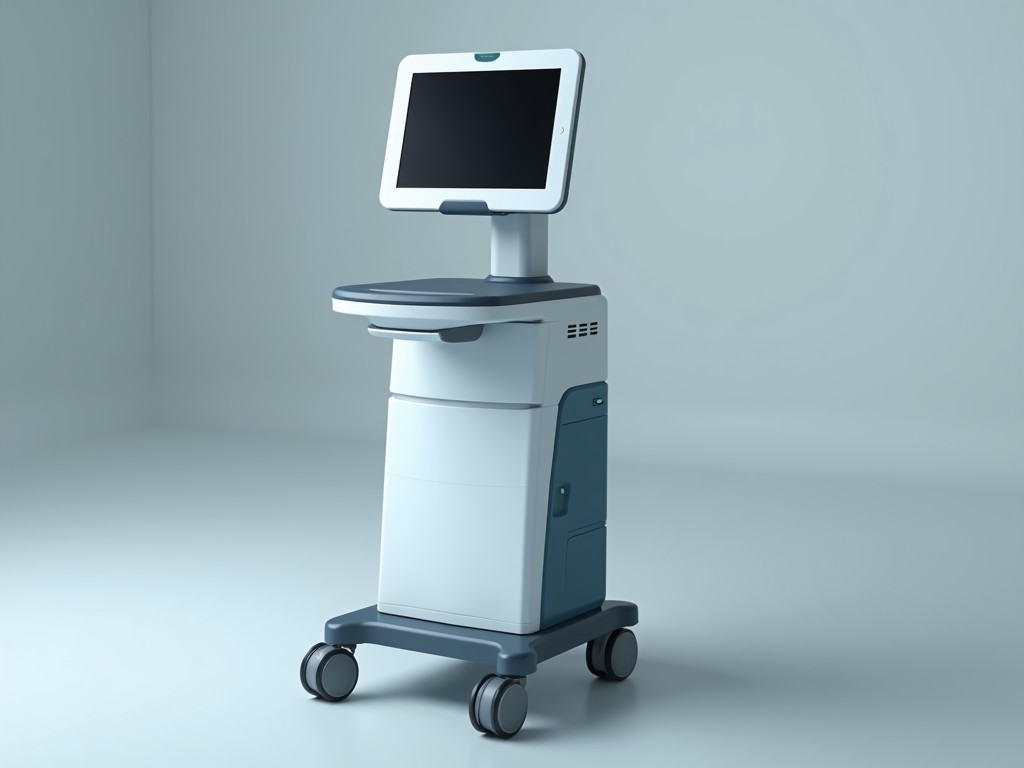
Oem Body Fat Measuring Device Supplier
A body fat measuring device estimates adipose tissue composition using bioelectrical impedance analysis (BIA). The method passes a low‑level alternating current through the body and measures the
Inquire NowOEM Body Fat Measuring Device Supplier
Overview
A body fat measuring device estimates adipose tissue composition using bioelectrical impedance analysis (BIA). The method passes a low‑level alternating current through the body and measures the resulting voltage drop to calculate impedance, which correlates with fat‑free mass and total body water.
OEM suppliers provide the core sensing module, electrode assembly, and firmware to system integrators who embed the technology into scales, handheld analyzers, or clinical stations. This arrangement allows partners to focus on enclosure design, user interface, and market‑specific features while relying on a proven measurement subsystem.
Working Principle
Multi‑frequency BIA improves accuracy by separating extracellular and intracellular water contributions. Typical devices inject currents at 5 kHz, 50 kHz, and 250 kHz, capturing impedance spectra that are processed with population‑specific algorithms to estimate fat mass, muscle mass, and basal metabolic rate.
Electrode geometry and contact pressure influence signal stability. The OEM module incorporates spring‑loaded or conductive‑gel electrodes with defined surface area (e.g., 2 cm² per contact) to maintain repeatable impedance readings across varied skin conditions.
Typical Technical Specifications
| Parameter | Typical Value / Range | Notes |
|---|---|---|
| Measurement Principle | Multi‑frequency Bioelectrical Impedance Analysis | 5 kHz – 250 kHz |
| Impedance Range | 150 Ω – 800 Ω (whole body) | Dependent on subject size and posture |
| Accuracy (vs. DXA) | ±3 % body fat percentage | Population‑specific calibration improves results |
| Resolution | 0.1 % fat, 0.1 kg lean mass | Limited by signal‑to‑noise ratio |
| Sampling Rate | Up to 1 kHz per frequency | Enables real‑time trend monitoring |
| Power Consumption | <150 mW (idle), <300 mW (measurement) | Suitable for battery‑operated handhelds |
| Operating Temperature | 0 °C – 40 °C | Condensation‑free environment required |
| Dimensions (PCB) | 30 mm × 20 mm × 4 mm | Allows integration into slim enclosures |
| Interface | UART, I²C, or SPI (configurable) | Firmware provides raw impedance and derived metrics |
Applications
Fitness centers embed the module in smart scales to give members immediate feedback on body composition trends, supporting personalized training programs and membership retention.
Corporate wellness programs use handheld BIA devices for periodic health screenings, enabling employers to track workforce health metrics without requiring clinic visits.
Clinical settings employ the technology for monitoring fluid shifts in dialysis or cardiac patients, where changes in extracellular impedance reflect shifts in edema status.
Research laboratories integrate the OEM subsystem into wearable prototypes to study longitudinal relationships between hydration, nutrition, and metabolic rate under controlled conditions.
Customization Options
Housing material can be selected from ABS, polycarbonate, or stainless‑steel‑filled polymers to meet impact resistance, sterilization, or aesthetic requirements.
Cable length and connector type (e.g., JST, Molex, or custom over‑molded) are adjustable to accommodate varying distances between sensing electrodes and the main processor board.
Firmware can be tuned for specific population algorithms (athlete, elderly, pediatric) or to output additional parameters such as visceral fat rating or segmental lean‑mass distribution.
Branding options include laser‑etched logos, custom label overlays, and firmware‑driven display strings, allowing the OEM partner to present a seamless end‑product identity.
Quality Assurance
Design verification includes impedance sweep validation against precision resistors and saline phantom tanks to confirm frequency response linearity within ±0.5 %.
Reliability testing comprises temperature cycling (‑20 °C to +60 °C), humidity exposure (85 % RH, 48 h), and mechanical vibration (10‑500 Hz, 2 g) to ensure long‑term stability of electrode contacts and solder joints.
Each lot undergoes 100 % electrical continuity check and impedance measurement traceability to a calibrated LCR meter, with statistical process control limits set at ±2 % of target impedance.
Documentation provides material safety data sheets, RoHS compliance declarations, and ISO 9001‑aligned process records upon request.
Frequently Asked Questions
- Can the electrode layout be changed? Yes, the OEM module supports custom electrode patterns; new designs require impedance validation and may affect the measurement range.
- What information is needed for a quotation? Provide target measurement site (hand‑to‑foot, foot‑to‑foot, hand‑to‑hand), required frequency set, enclosure dimensions, and expected annual volume.
- Which materials are available for the sensing flex? Standard options include polyimide with copper traces; alternative substrates such as PET or flexible FR‑4 are available upon request.
- How is quality inspected before shipment? Each unit receives automated impedance testing, visual inspection of solder joints, and functional firmware verification.
- What packaging methods protect the device during transit? Anti‑static trays inside corrugated cartons with foam corner guards; custom palletization is available for large volumes.
- What is the typical production lead time? Lead time ranges from 4 to 6 weeks after receipt of final specifications and tooling approval, depending on volume and material availability.
- How are samples arranged? Engineering samples (typically 3‑5 units) are shipped after NEX review; payment terms and shipping costs are agreed prior to dispatch.
Contact for OOM Inquiry
To discuss integration details, request a formal quotation, or obtain engineering samples, please use the inquiry form linked below. Our technical team will respond with a detailed feasibility assessment within two business days.
Request OEM Quotation