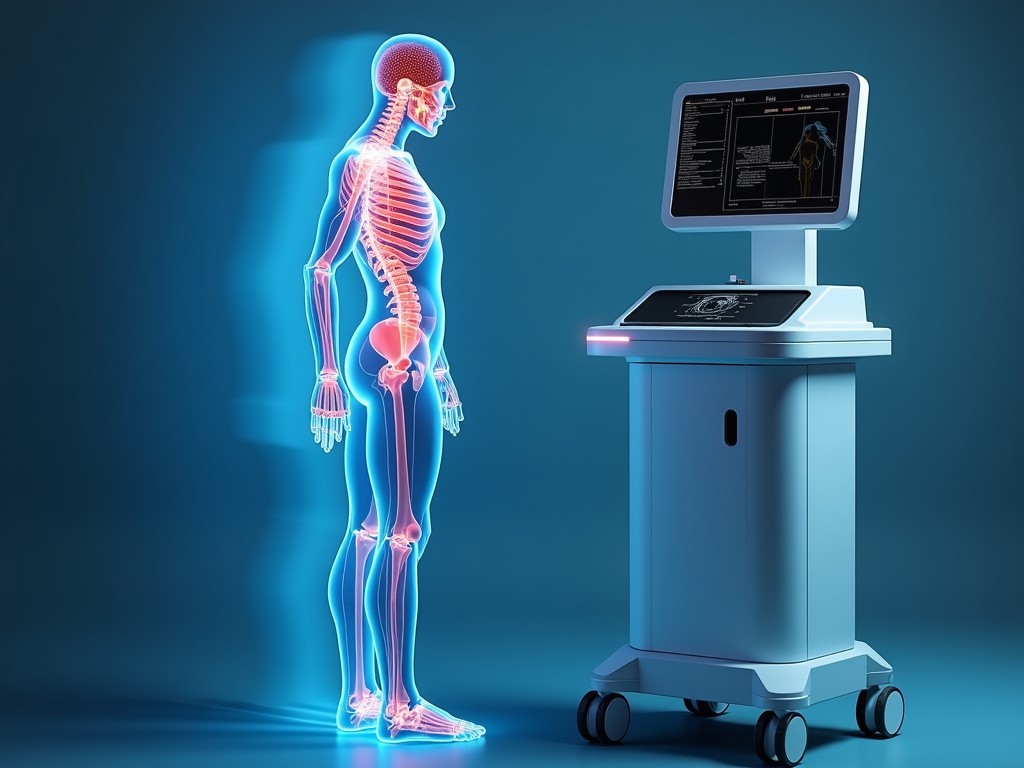
Oem Bioelectrical Impedance Analysis Machine
Bioelectrical impedance analysis estimates body composition by passing a low‑amplitude alternating current through tissue and measuring the resulting voltage drop. The ratio of voltage to current
Inquire NowOEM Bioelectrical Impedance Analysis (BIA) Machine
Bioelectrical impedance analysis estimates body composition by passing a low‑amplitude alternating current through tissue and measuring the resulting voltage drop. The ratio of voltage to current yields impedance, which varies with intracellular and extracellular fluid distribution.
Signal Parameters and Safety Limits
Typical OEM BIA modules operate at a single frequency of 50 kHz with a drive current not exceeding 0.8 mA RMS, well below the IEC 60601‑2‑27 safety threshold for continuous contact. Impedance measurement resolution is 0.1 Ω across a range of 150 Ω to 1200 Ω, enabling detection of fat‑free mass changes as small as 0.5 kg.
Typical Performance Specifications
| Parameter | Typical Value | Notes |
|---|---|---|
| Drive Frequency | 50 kHz | Single‑frequency option; multi‑frequency available on request |
| Drive Current | 0.5 mA RMS (adjustable 0.2‑0.8 mA) | Complies with IEC 60601‑2‑27 |
| Impedance Range | 150 Ω – 1200 Ω | Covers adult and pediatric subjects |
| Resolution | 0.1 Ω | Enables 0.5 kg FFM sensitivity |
| Operating Temperature | 0 °C to 45 °C | Industrial enclosure rating IP40 |
Integration Considerations for OEMs
The measurement front‑end is provided as a compact PCB assembly (45 mm × 30 mm × 8 mm) with a standard 10‑pin header for power, ground, drive signal, and differential voltage output. Firmware includes a built‑in impedance‑to‑FFM conversion algorithm calibrated against DXA reference data, reducing the need for extensive validation on the host platform.
Mechanical mounting options include M3 threaded holes on the PCB corners and optional silicone gaskets for vibration isolation. Electrical isolation between the drive circuit and patient‑contact electrodes is achieved via a medical‑grade transformer barrier rated at 4 kV AC.
Common Applications in Health‑Tech Equipment
- Segmental body‑composition scales where limb‑specific impedance drives localized fluid‑status feedback.
- Wearable fitness monitors that require periodic FFM tracking without user‑intervention.
- Clinical dialysis consoles utilizing bioimpedance to assess ultrafiltration effectiveness in real time.
- Research‑grade ergometers incorporating impedance to correlate metabolic output with tissue hydration.
Quality Assurance and Traceability
Each unit undergoes a three‑step test regimen: (1) electrical safety verification per IEC 60601‑1, (2) impedance accuracy check using a precision resistor network traceable to NIST standards, and (3) functional validation against a reference BIA analyzer across a cohort of 20 subjects with known body‑composition values. Test results are stored in a QR‑code label affixed to the enclosure for lot‑level traceability.
Customization Options
OEMs may specify alternative drive frequencies (5 kHz, 100 kHz, or multi‑frequency sweep), adjust excitation current limits, or request alternative connector types (Molex, JST, or board‑edge). Firmware can be adapted to output raw impedance, phase angle, or proprietary FFM indices. Mechanical enclosures are available in ABS, polycarbonate, or aluminum with optional IP65 sealing.
Frequently Asked Questions
- Can the electrode layout be changed? Yes, the PCB supports up to four electrode pairs; custom cable harnesses can be routed to alternative placement sites.
- What documentation is required for quotation? Provide target application, expected annual volume, any required certifications (e.g., FDA 510(k), CE), and preferred mechanical envelope.
- How are samples handled? Evaluation units are shipped with a calibration certificate and a 30‑day loan agreement; return shipping is covered by the supplier.
- What is the typical lead time? Standard configurations ship within 4‑6 weeks after PO receipt; custom firmware or mechanical changes may extend to 8‑10 weeks.
To discuss how this BIA module can be integrated into your next‑generation health‑monitoring device, please use the link below to initiate a technical inquiry.