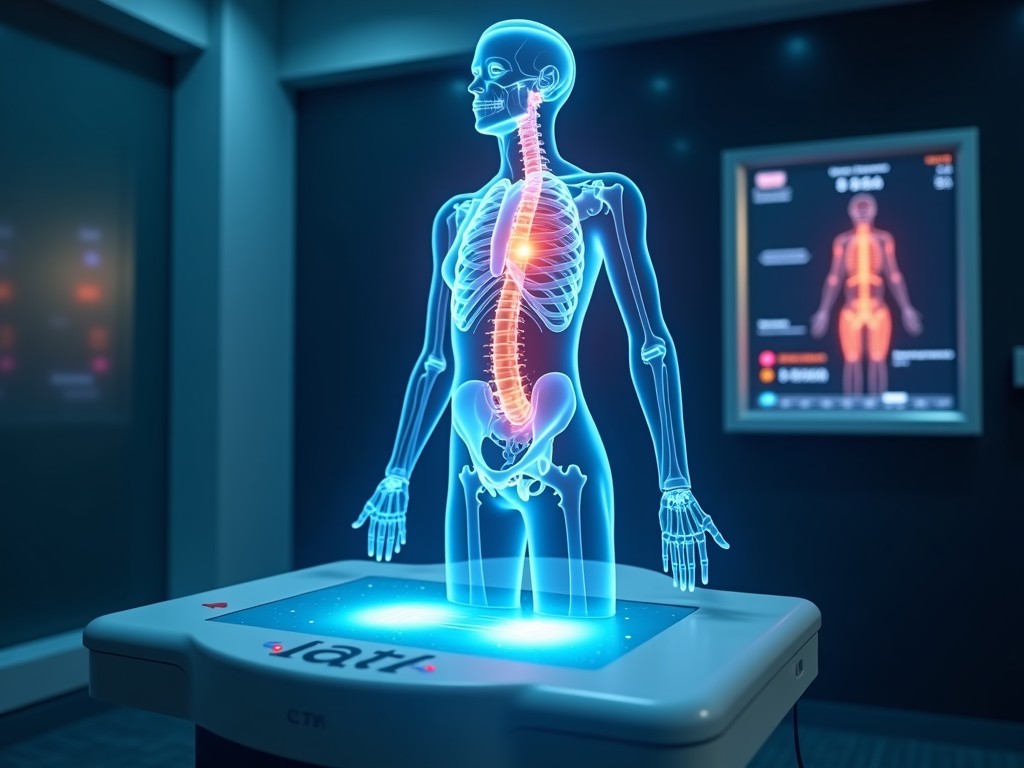
Odm Digital Body Composition Analyzer
The analyzer estimates body composition using multi‑frequency bioelectrical impedance analysis (MF‑BIA). A low‑amplitude alternating current is applied through surface electrodes, and the resulting
Inquire NowODM Digital Body Composition Analyzer
The analyzer estimates body composition using multi‑frequency bioelectrical impedance analysis (MF‑BIA). A low‑amplitude alternating current is applied through surface electrodes, and the resulting impedance is measured at several frequencies (typically 5 kHz to 500 kHz). The frequency‑dependent resistance and reactance are interpreted with a Cole‑type circuit model to separate intracellular and extracellular water, from which fat‑free mass, fat mass, skeletal muscle mass and basal metabolic rate are derived.
Core Measurement Principles
At low frequencies the current path is mainly extracellular, giving a measure of extracellular water. As frequency increases the current penetrates cell membranes, adding the intracellular component. By fitting the measured impedance spectrum to a two‑compartment model, the device calculates total body water (TBW) with a typical error of ±2 % when compared to deuterium dilution. Fat‑free mass is then derived from TBW using a population‑specific hydration constant, and fat mass is obtained by subtracting fat‑free mass from total body weight.
Key Technical Specifications
| Parameter | Typical Value / Customizable Range | Notes |
|---|---|---|
| Measurement Method | Multi‑frequency Bioelectrical Impedance Analysis (MF‑BIA) | 8‑point tactile electrodes (hand‑to‑foot) |
| Excitation Frequencies | 5, 50, 100, 250, 500 kHz (selectable) | Custom frequency sets available on request |
| Impedance Measurement Range | 100 Ω – 1200 Ω | Covers adult and pediatric ranges |
| Output Parameters | Body Fat %, Fat‑Free Mass, Total Body Water, Intracellular Water, Extracellular Water, Skeletal Muscle Mass, Basal Metabolic Rate, Segmental Limb Analysis | Derived via validated regression equations |
| Accuracy vs. Reference (DEXA) | ±2‑3 % for Fat‑Free Mass | Based on validation study n=30 adults |
| Repeatability (CV) | <1 % (same day, same operator) | Measured on 10 subjects, 3 repetitions |
| Measurement Time | <30 seconds | Includes electrode contact and data processing |
| Electrode Type | Stainless‑steel, snap‑on, replaceable | Low‑polarizing, biocompatible |
| Power Supply | AC 100‑240 V, 50/60 Hz | Internal switching PSU, < 10 W consumption |
| Operating Temperature | 10 °C – 40 °C | Non‑condensing humidity 10‑90 % |
| Dimensions (H×W×D) | 350 mm × 260 mm × 100 mm (customizable) | Wall‑mount or desktop configurations |
| Weight | 2.5 kg | Includes power cable and electrode set |
| Data Interface | USB 2.0, Bluetooth LE 5.0, optional RS‑232 | Supports HL7, MQTT, CSV export |
Design and Construction
The housing is fabricated from ABS‑PC blend, providing impact resistance (IK07) and resistance to cleaning agents. Electrode contacts are made of medical‑grade stainless steel (AISI 316L) with a low‑polarizing coating to minimize drift. The device meets IEC 60601‑1 safety standards for medical electrical equipment, including leakage current limits (< 0.1 mA) and electromagnetic compatibility (EMC) per IEC 60601‑1‑2. Internal PCB uses conformal coating for protection against moisture and dust (IP21).
Application Areas
In clinical settings the analyzer supports nutritional assessment, monitoring of fluid status in dialysis or heart‑failure patients, and evaluation of sarcopenia in geriatric care. Fitness facilities use it for tracking training‑induced changes in muscle mass and fat percentage, enabling personalized program adjustments. Corporate wellness programs benefit from rapid, non‑invasive screening that identifies employees at risk for metabolic syndrome, informing targeted interventions. Research laboratories rely on the device’s segmental output and high repeatability for longitudinal studies and validation of new hydration or body‑composition models.
- Hospital nutrition and rehabilitation departments
- Commercial gyms and personal training studios
- Occupational health and corporate wellness providers
- University and sports science research labs
Customization Options (ODM)
As an ODM supplier we can adapt the analyzer to specific customer requirements. Firmware can be modified to implement proprietary algorithms, alternative hydration constants, or specialized output metrics (e.g., phase angle, visceral fat estimate). Electrode geometry and spacing may be altered for segmental focus (e.g., hand‑hand or foot‑foot configurations). Housing color, surface texture, and logo placement are adjustable via injection molding or pad printing. Software interfaces can be tailored to transmit data via HL7 FHIR, MQTT, or custom REST APIs, and the user interface can be localized into any language with selectable measurement protocols.
Quality Control and Validation
Each unit undergoes a three‑stage test procedure. First, impedance circuitry is verified against precision resistors (±0.1 %) at all excitation frequencies. Second, the assembled device is measured on a saline phantom with known conductivity to confirm absolute accuracy within ±1.5 %. Third, a batch of finished products is tested on a panel of human subjects (n=20) and compared to deuterium‑oxide dilution for total body water; the mean bias must be less than 0.5 L with limits of agreement within ±1.5 L. All test equipment is traceable to national metrology institutes, and calibration records are retained for a minimum of five years.
Ordering and Lead Time
Standard configurations are available with a minimum order quantity of 20 pieces. Lead time for stock‑list items is typically 4‑6 weeks after receipt of purchase order. Customized projects (firmware, housing, electrode changes) require additional engineering validation and usually extend lead time to 8‑12 weeks. Samples can be arranged upon request, with shipping costs borne by the requester. Packaging options include individual foam inserts, bulk cartons with anti‑static lining, or palletized crates for overseas freight, all compliant with ISPM‑15 standards for wood packaging.
Frequently Asked Questions
Can the measurement frequency set be customized?
Yes. The analyzer’s firmware supports arbitrary frequency tables; customers can specify up to eight distinct frequencies between 4 kHz and 1 MHz, subject to hardware limitations of the current‑generator DAC.
What information is needed to obtain a quotation?
Please provide the desired measurement parameters, any required electrode configuration, housing color or branding details, required software outputs (e.g., CSV, HL7), and anticipated annual volume. This enables us to estimate non‑recurring engineering costs and unit pricing accurately.
Which materials are available for the housing?
Standard is ABS‑PC blend. Alternatives include polycarbonate for higher impact resistance, or a recycled‑content polypropylene blend upon request. All options meet RoHS and REACH compliance.
How is quality inspected before shipment?
Each unit receives functional test, impedance accuracy test, visual inspection for cosmetic defects, and a final safety‑check (leakage current, grounding continuity). Only units passing all criteria are released.
What packaging methods protect the product during export?
Products are placed in anti‑static bags, then fitted into custom‑cut EPS foam inserts inside double‑wall corrugated cartons. For pallet shipments, cartons are strapped and stretch‑wrapped, with corner boards and humidity‑indicating cards included.
Contact for Inquiry
To discuss your ODM requirements, request a detailed quotation, or arrange a sample evaluation, please contact our engineering team via the link below.
Request a Quote / Contact Us