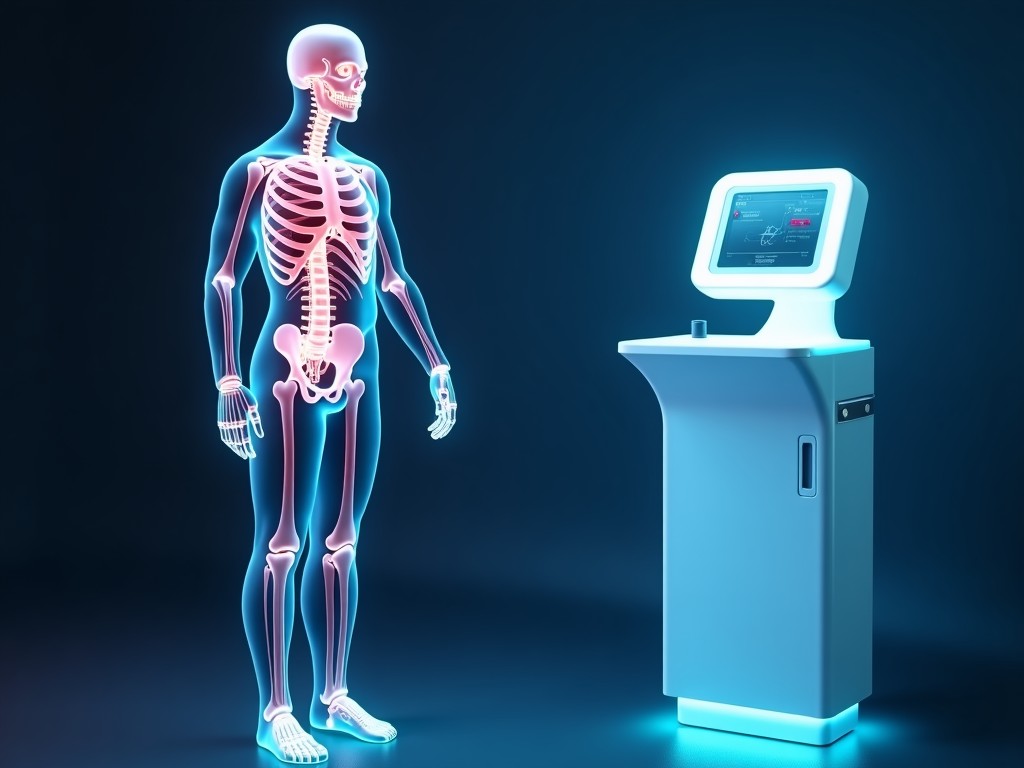
Medical Body Composition Analyzer Manufacturer
A medical body composition analyzer provides quantitative assessment of fat mass, lean mass, total body water, and bone mineral content using non‑invasive bioelectrical impedance. Clinicians rely on
Inquire NowMedical Body Composition Analyzer
Overview
A medical body composition analyzer provides quantitative assessment of fat mass, lean mass, total body water, and bone mineral content using non‑invasive bioelectrical impedance. Clinicians rely on these metrics to monitor nutritional status, guide rehabilitation programs, and evaluate metabolic risk in outpatient and inpatient settings. The device delivers results within seconds, supporting rapid decision‑making without exposing patients to ionizing radiation.
Core Technology
The analyzer employs multi‑frequency bioelectrical impedance analysis (BIA) with currents ranging from 5 kHz to 1 MHz. By measuring impedance at multiple frequencies, the system distinguishes extracellular and intracellular water compartments, improving accuracy for edema assessment and athletic populations. Proprietary algorithms apply population‑specific equations validated against dual‑energy X‑ray absorptiometry (DXA) reference data.
Measurement Parameters
The following table lists typical output ranges for adult patients; values adjust automatically based on age, sex, and ethnicity selected in the software.
| Parameter | Typical Range | Units |
|---|---|---|
| Fat Mass | 5 – 50 | kg |
| Lean Mass | 30 – 80 | kg |
| Total Body Water | 20 – 50 | L |
| Bone Mineral Content | 1.5 – 4.0 | kg |
| Visceral Fat Rating | 1 – 30 | — |
Typical Applications
In hospitals, the analyzer supports preoperative nutritional screening, postoperative recovery tracking, and dialysis patient monitoring where fluid balance is critical. Outpatient clinics use it to evaluate obesity‑related comorbidities and to personalize weight‑management programs based on segmental fat distribution. Research laboratories benefit from its reproducibility for longitudinal studies on aging, sarcopenia, and metabolic syndrome, eliminating the need for repeated radiographic exposure.
Design and Construction
The chassis is constructed from ABS‑polycarbonate blend with antimicrobial coating, meeting IEC 60601‑1‑2 electromagnetic compatibility requirements. Four tactile electrodes are positioned on a weighted platform to ensure consistent foot placement, reducing variability caused by patient movement. A detachable hand‑grip electrode set enables segmental analysis of arms and trunk, with quick‑release connectors facilitating cleaning between uses.
Quality Assurance
Each unit undergoes factory calibration using precision resistors traceable to national standards, verifying impedance measurement error within ±1 %. Firmware includes self‑diagnostic routines that check electrode contact quality before each test and alert the operator if resistance exceeds predefined thresholds. Production follows ISO 13485 quality management, and finished devices are subjected to IEC 60601‑1 safety testing, including leakage current and dielectric strength assessments.
Customization Options
Manufacturers can tailor the analyzer to specific workflow requirements through the following options:
- Electrode configurations: standard foot‑only, hand‑foot segmental, or chin‑electrode for supine patients.
- Software interfaces: HL7‑compatible API, DICOM export, or cloud‑based data storage with role‑based access control.
- Language packs: over 20 languages selectable at startup, with customizable report templates.
- Accessories: wireless barcode scanner for patient ID, roll‑away cart with locking wheels, and disposable electrode covers.
Frequently Asked Questions
Yes, the software includes age‑specific algorithms validated for ages 5–18, with optional height and weight input to improve accuracy.
Please provide intended use environment (clinical, fitness, research), expected daily throughput, and any required certifications (e.g., CE, FDA 510(k)).
Each device undergoes impedance linearity testing, electrode contact verification, and visual inspection per ISO 13485; test records are available upon request.
Units are packed in double‑wall corrugated boxes with inner foam inserts, corner protectors, and humidity‑absorbing packets; palletized shipments include stretch film and shock indicators.
Next Steps
Engineers and procurement managers seeking a reliable, clinically validated body composition analyzer can request a detailed technical datasheet or arrange a virtual demonstration. Please use the contact form below to discuss configuration options, lead times, and regulatory documentation specific to your market.
Contact Sales Team