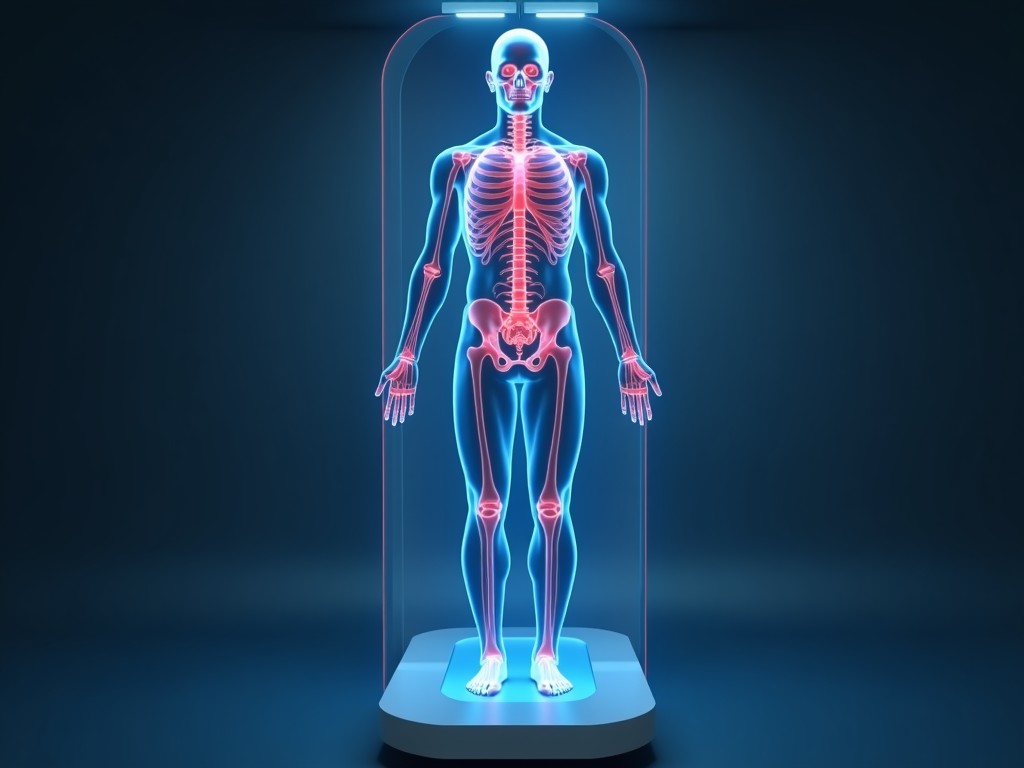
Full Body Composition Analyzer Manufacturer
A full body composition analyzer uses bioelectrical impedance analysis (BIA) to quantify fat mass, lean tissue, total body water, and bone mineral content. The device sends low‑level alternating
Inquire NowFull Body Composition Analyzer Manufacturer
A full body composition analyzer uses bioelectrical impedance analysis (BIA) to quantify fat mass, lean tissue, total body water, and bone mineral content. The device sends low‑level alternating currents through multiple frequencies and measures the resulting voltage to derive segmental and whole‑body values. Manufacturers focus on electrode geometry, current stability, and algorithm validation to ensure repeatability across diverse populations.
Technology Overview
Multi‑frequency BIA typically employs currents ranging from 1 kHz to 500 kHz to differentiate extracellular and intracellular pathways. Eight‑point tactile electrodes (four on each hand and foot) enable segmental analysis of arms, legs, and trunk. The measurement circuit uses a constant‑current source with ±0.1 % stability and a 24‑bit analog‑to‑digital converter for impedance resolution below 0.01 Ω.
Key Specifications
| Parameter | Typical Value | Notes |
|---|---|---|
| Measurement frequencies | 1 kHz, 5 kHz, 50 kHz, 250 kHz | Multi‑frequency BIA |
| Electrode count | 8‑point tactile electrodes (hand‑to‑foot) | Segmental analysis capability |
| Output parameters | Fat mass, fat‑free mass, total body water, intracellular/extracellular water, skeletal muscle mass, bone mineral estimate | Derived via proprietary equations |
| Sample throughput | ≤30 seconds per measurement | Includes positioning and stabilization |
| Power consumption | <15 VA (standby <0.5 VA) | Universal 100‑240 V AC input |
| Dimensions (W×D×H) | 350 mm × 300 mm × 110 mm | Compact countertop footprint |
| Operating temperature | 10 °C – 40 °C | Relative humidity 20‑80 % non‑condensing |
Typical Applications
In fitness facilities, the analyzer supports member onboarding by providing baseline metrics that guide personalized training programs. Repeated measurements every 4‑6 weeks allow tracking of lean mass gains versus fat loss, which is more informative than body weight alone. In medical settings, clinicians use the segmental water distribution data to assess edema risk in cardiac or renal patients, and the intracellular/extracellular ratio helps monitor nutritional status during dialysis. Research laboratories rely on the analyzer’s reproducibility (CV < 1.5 % for repeated measures) when studying interventions such as protein supplementation or exercise protocols. Corporate wellness programs adopt the device because it delivers actionable data quickly, encouraging employee engagement without invasive procedures.
Quality Control & Manufacturing
Each unit undergoes a three‑stage verification: incoming inspection of electrode materials (stainless steel‑tin alloy with controlled surface roughness), in‑process testing of current source stability (±0.2 % over 24 h), and final functional validation against a reference phantom with known impedance values. Traceability is maintained through serial‑linked test logs that record temperature, humidity, and operator ID for every calibration step. The enclosure is molded from ABS‑PC blend with a flame‑rating of UL‑94 V‑0, providing impact resistance while keeping weight under 2.5 kg.
Customization Options
- Electrode layout – hand‑only, foot‑only, or full hand‑to‑foot configurations
- Interface choices – USB‑CDC, RS‑232, or Bluetooth Low Energy (BLE) modules
- Enclosure colors – standard white, corporate‑color matching, or antimicrobial coating
- Language packs – selectable UI languages via firmware (English, Spanish, Mandarin, etc.)
Frequently Asked Questions
Can the measurement frequency set be adjusted for specific protocols?
Yes. The firmware allows enabling or disabling individual frequencies; typical ranges from 1 kHz to 1 MHz are available upon request for research applications.
What information is required before a quotation can be issued?
Key details include desired electrode configuration, required output parameters, preferred communication interface, order volume, and any special environmental certifications (e.g., IP rating).
How is quality inspected for each production batch?
Statistical process control is applied to electrode impedance matching; a sample of 5 % undergoes full functional testing against traceable reference standards, with results logged in the batch record.
Request More Information
To discuss how a full body composition analyzer can be integrated into your facility or product line, please provide your application details and contact information. Our engineering team will respond with a technical proposal and lead‑time estimate.
Submit Inquiry