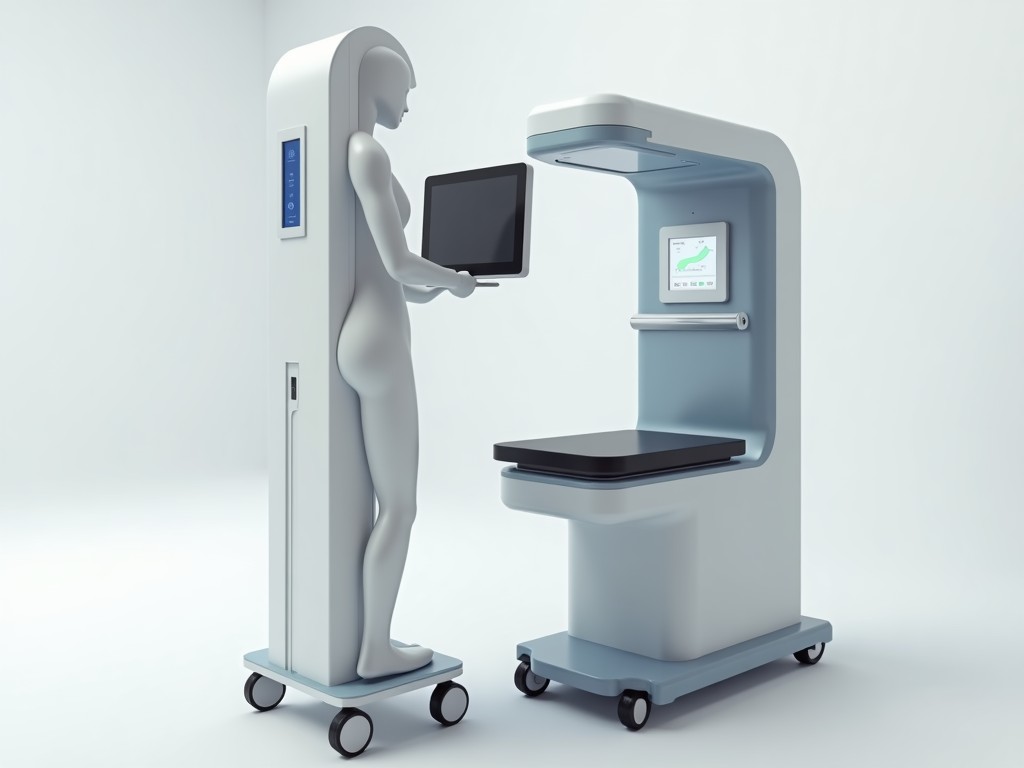
Custom Body Fat Measurement Machine
This device determines body composition by measuring bioelectrical impedance across multiple frequencies. The system uses a four‑electrode configuration to separate extracellular and intracellular
Inquire NowCustom Body Fat Measurement Machine
This device determines body composition by measuring bioelectrical impedance across multiple frequencies. The system uses a four‑electrode configuration to separate extracellular and intracellular water contributions, providing segmental fat and lean mass estimates.
Measurement accuracy depends on electrode placement, subject hydration status, and the algorithm’s regression coefficients calibrated against dual‑energy X‑ray absorptiometry (DXA) reference data. Typical repeatability (coefficient of variation) is under 1.5% for total body fat percentage in controlled laboratory conditions.
Technical Specifications
| Parameter | Value / Range |
|---|---|
| Measurement method | Multi‑frequency bioelectrical impedance analysis (1 kHz, 5 kHz, 50 kHz, 250 kHz) |
| Electrode type | Surface‑mount Ag/AgCl, reusable, 30 mm diameter |
| Input current | ≤ 0.8 mA rms, sinusoidal, IEC 60601‑2‑27 compliant |
| Voltage resolution | 0.1 mV (24‑bit ADC) |
| Output metrics | Total body fat %, visceral fat rating, segmental lean mass (arms, legs, trunk), basal metabolic rate estimate |
| Operating temperature | 10 °C – 40 °C |
| Power supply | External DC adapter, 12 V / 2 A, IEC 60950‑1 certified |
| Data interface | USB‑C (device) and Bluetooth 5.0 (LE) for wireless transfer |
| Enclosure material | ABS‑PC blend, UL‑94 V‑0, IP40 rating |
Key Features
- Four‑point electrode array enables segmental analysis, reducing error from fluid shifts.
- Automatic impedance calibration at startup compensates for temperature drift.
- On‑board storage holds up to 10,000 measurement records with timestamp and user ID.
- Firmware supports OTA updates via USB‑C, allowing algorithm improvements without hardware change.
- Low‑noise front‑end achieves < 0.5 µV RMS input‑referred noise, ensuring stable phase angle measurement.
Typical Applications
Fitness centers use the device to track members’ progress over training cycles, providing objective data for personalized program adjustments.
Clinical nutrition labs rely on its segmental output to assess edema distribution in patients undergoing dialysis or intensive care.
Corporate wellness programs integrate the machine into annual health screenings, enabling longitudinal trend analysis across employee populations.
Customization Options
- Electrode spacing adjustable from 80 mm to 120 mm to accommodate different limb diameters.
- Optional hand‑grip electrodes for upper‑body only measurements.
- Custom firmware packages can include sport‑specific algorithms (e.g., endurance vs. strength athletes).
- Enclosure color and branding can be matched to corporate identity using Pantone‑matched ABS.
- Alternative power options: PoE (Power over Ethernet) adapter for fixed‑installation sites.
Quality Assurance
Each unit undergoes a four‑point impedance verification traceable to a calibrated precision resistor network.
Firmware is subjected to regression testing against a dataset of 5,000 DXA‑matched subjects to confirm bias < 0.5 % fat percentage.
Frequently Asked Questions
- Can the electrode configuration be changed for pediatric subjects? Yes, smaller‑diameter electrodes (20 mm) and reduced spacing are available as a kit.
- What information is required before quotation? Desired measurement modes (segmental vs. whole‑body), electrode type, enclosure finish, and expected annual volume.
- How is quality inspected? Every unit receives a 100 % functional test, impedance linearity check, and visual inspection per IPC‑A‑610 Class II.