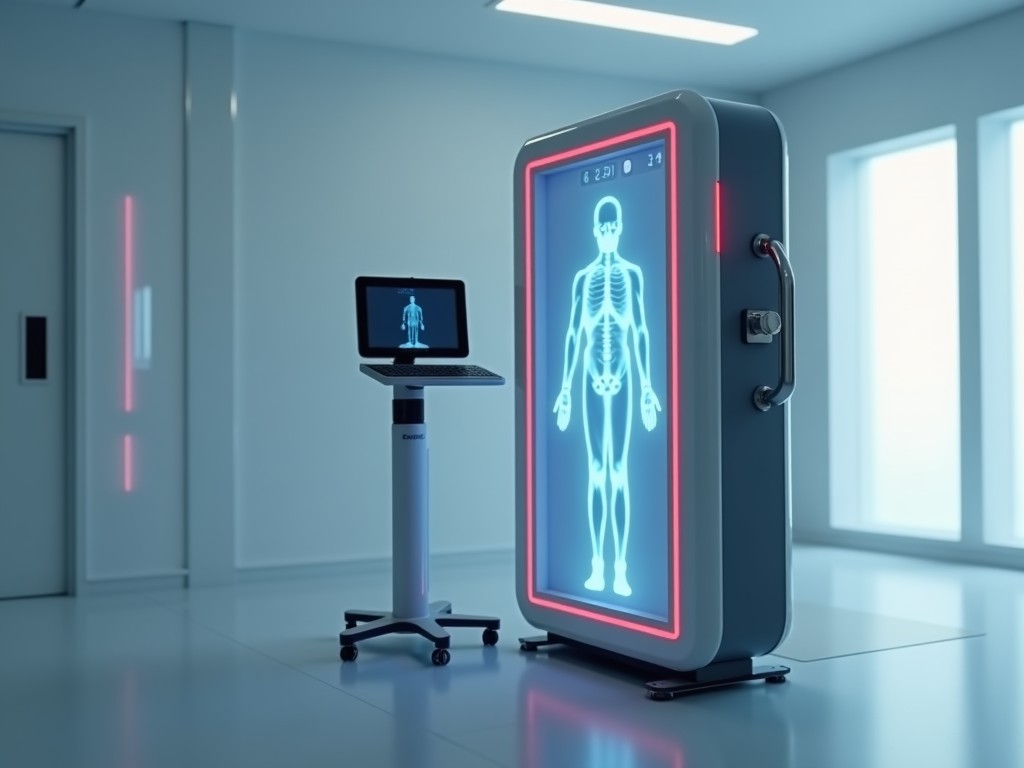
Custom Body Composition Testing Machine
A custom body composition testing machine measures the proportion of fat, muscle, bone, and water in the human body using bioelectrical impedance analysis (BIA) or dual‑energy X‑ray absorptiometry
Inquire NowCustom Body Composition Testing Machine
A custom body composition testing machine measures the proportion of fat, muscle, bone, and water in the human body using bioelectrical impedance analysis (BIA) or dual‑energy X‑ray absorptiometry (DXA) principles. The system is configured to match specific measurement protocols, electrode configurations, and software reporting requirements defined by the client.
Measurement Principles
Bioelectrical impedance sends a low‑level alternating current through the body and measures the opposition (impedance) encountered by different tissues. Fat tissue, which contains less water, exhibits higher impedance than lean mass. By combining impedance data with height, weight, age, and gender, the algorithm estimates body composition percentages.
Key Technical Parameters
| Parameter | Typical Value | Customizable Range |
|---|---|---|
| Measurement Method | Bioelectrical Impedance Analysis | BIA, DXA, or combined |
| Weight Capacity | 250 kg | 150–300 kg |
| Electrode Count | 8 | 4–12 |
| Frequency Range | 5 kHz–500 kHz | Selectable per project |
| Sample Time | < 10 s | 5–20 s |
| Data Output | CSV, PDF, JSON | Custom formats on request |
| Power Supply | 100–240 V AC | Optional internal battery |
| Operating Temperature | 10 °C–40 °C | 0 °C–45 °C (with conditioning) |
Design and Construction
The enclosure is constructed from ABS‑rated plastic with a reinforced internal frame to withstand repeated use in clinical or gym environments. Electrodes are integrated into a removable, disinfectable pad array that conforms to standard limb placement. Internal electronics are isolated to meet IEC 60601‑1 medical equipment safety standards where applicable.
Applications
Body composition data supports training program adjustment, nutritional planning, and health risk assessment. The machine’s adaptability allows deployment across varied settings where precise, repeatable measurements are required.
- Fitness centers – tracking member progress and personalizing workout plans.
- Medical clinics – monitoring hydration, sarcopenia, and metabolic health.
- Research laboratories – longitudinal studies on nutrition, aging, and disease.
- Corporate wellness programs – employee health screenings and intervention efficacy.
- Sports performance facilities – optimizing athlete conditioning and recovery protocols.
Customization Options
Because measurement protocols differ between projects, the machine’s hardware and software can be tailored before production. Customization focuses on electrode layout, signal frequency selection, data interface, and reporting format.
- Electrode array size – 4‑8 electrodes for segmental or whole‑body analysis.
- Frequency selection – single‑frequency 50 kHz to multi‑frequency up to 500 kHz.
- Output interfaces – USB, Ethernet, Bluetooth, HL7 for EMR integration.
- Software modules – trend analysis, visceral fat segmentation, API access.
- Power options – AC adaptor, internal battery for mobile use.
Quality Assurance and Testing
Each unit undergoes factory calibration using traceable reference phantoms that simulate known fat and lean mass ratios. Impedance linearity is verified across the specified frequency range, and software algorithms are validated against DEXA scans on a representative subject pool. Final inspection includes visual check, functional test, and safety leakage current measurement per IEC 60601‑1.
Frequently Asked Questions
Can the electrode configuration be changed after delivery?
Electrode pads are designed as plug‑in modules; alternative configurations can be supplied and swapped in the field without tools.
What information is required before quotation?
Target measurement method, required weight capacity, desired electrode count, preferred data outputs, and any regulatory certifications needed for the destination market.
How is quality inspected?
Each unit receives impedance linearity checks, algorithm validation against reference phantoms, visual and functional tests, and leakage current measurement per IEC 60601‑1.
What packaging methods are available?
Standard packaging includes a double‑wall corrugated box with interior foam inserts; custom crating or palletization can be arranged for overseas shipment.
What is the typical production lead time?
Lead time ranges from 6 to 10 weeks depending on the degree of customization and current production load.