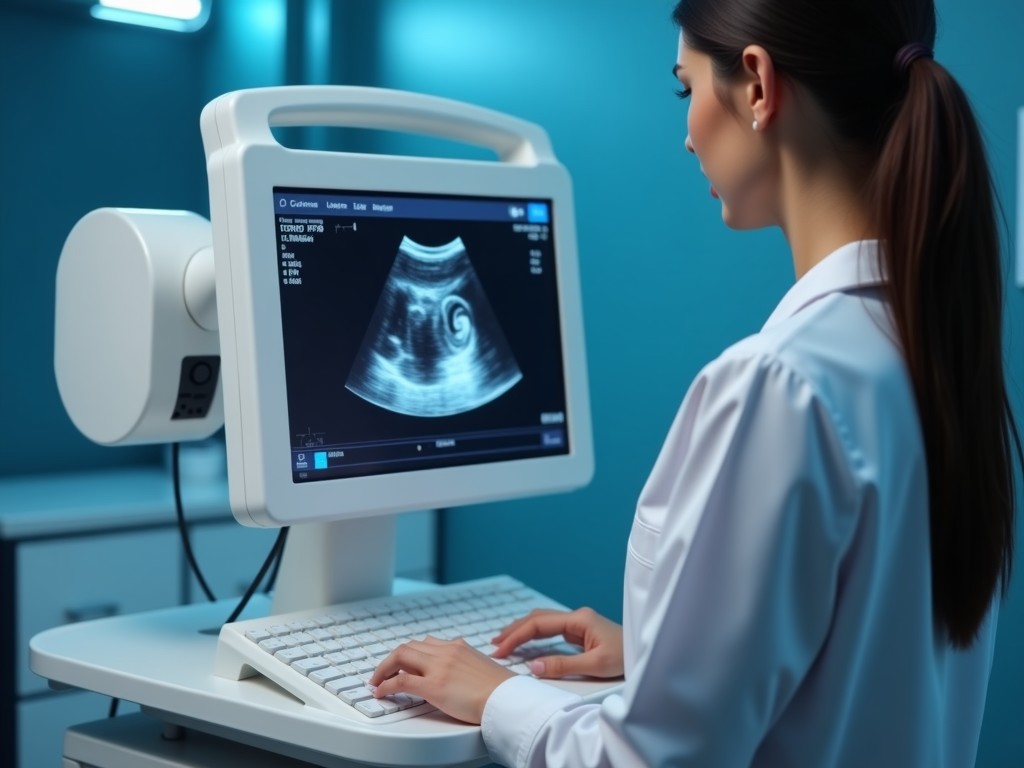
Cost Effective Ultrasound Body Fat Analyzer
Ultrasound body fat analyzers estimate subcutaneous fat thickness by measuring the time‑of‑flight of acoustic pulses through tissue layers. The device emits short bursts at a known frequency and
Inquire NowCost‑Effective Ultrasound Body Fat Analyzer
Ultrasound body fat analyzers estimate subcutaneous fat thickness by measuring the time‑of‑flight of acoustic pulses through tissue layers. The device emits short bursts at a known frequency and receives the reflected signals from tissue interfaces.
Measurement Principle
The analyzer transmits a 2‑5 MHz ultrasonic wave into the skin. Echoes returning from the fat‑muscle and muscle‑bone boundaries are timed; thickness is calculated from the known speed of sound in each tissue type (≈1450 m/s in fat, ≈1580 m/s in muscle). Repeated measurements at multiple sites enable a segmented fat‑mass estimate.
Key Technical Specifications
| Parameter | Typical Value |
|---|---|
| Ultrasound frequency | 2 MHz – 5 MHz (adjustable) |
| Measurement depth | 0 mm – 30 mm |
| Thickness resolution | 0.1 mm |
| Repeatability (σ) | ±0.5 mm |
| Power consumption | < 2 W (stand‑by < 0.2 W) |
| Dimensions (L×W×H) | 120 mm × 80 mm × 30 mm |
| Weight | 150 g (including battery) |
| Output interface | USB‑C, Bluetooth 5.0 |
Design and Construction
The transducer is housed in a chemically resistant ABS enclosure rated IP54 for dust and splash protection. A flexible polymer coupling pad ensures consistent acoustic contact while minimizing patient discomfort. Internal electronics include a low‑noise analog front‑end and a 32‑bit DSP for real‑time signal processing.
Typical Applications
Because the method is non‑ionizing and portable, the analyzer fits environments where repeated, quick assessments are needed without radiation exposure. It supports longitudinal tracking in fitness facilities, baseline screening in occupational health programs, and research protocols requiring site‑specific fat thickness data.
- Fitness center member progress tracking
- Corporate wellness baseline assessments
- Clinical trials measuring subcutaneous fat changes
- Educational labs for anatomy and physiology instruction
Customization Options
Measurement sites can be programmed via the companion software to match specific protocols (e.g., abdomen, thigh, triceps). Output units are selectable between millimeters, percentage body fat, or absolute mass estimate. Housing color, cable length, and mounting brackets are adjustable according to project requirements.
Quality Assurance
Each unit undergoes a two‑point calibration using reference phantoms with known fat and muscle thicknesses. Traceability is maintained to national metrology standards through a certified test bench. Final inspection includes verification of signal‑to‑noise ratio (> 20 dB) and battery life under typical use cycles.
FAQ
Can the measurement sites be changed after purchase?
Yes. The site configuration is stored in flash memory and can be updated through the USB‑C interface using the provided configuration utility.
What information is needed for a quotation?
Please provide the intended measurement frequency range, number of sites, required output format, and any enclosure or cable length modifications.
How is the device powered?
It operates from a removable 18650 Li‑ion cell (≈ 800 mAh) delivering up to 6 hours of continuous scanning, or from an external 5 V USB supply.
Inquiry
To discuss how this analyzer can be integrated into your assessment workflow, please use the link below to contact our technical sales team.
Request a quotation