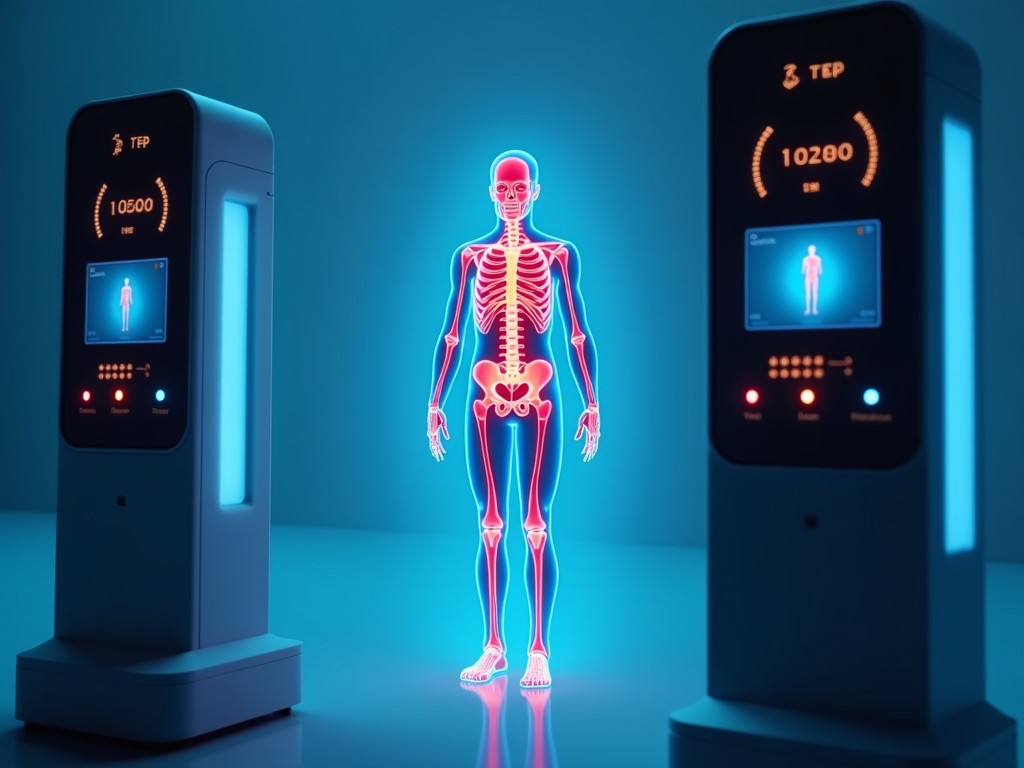
Cost Effective Digital Body Composition Analyzer
A digital body composition analyzer estimates body fat, skeletal muscle, total body water and related parameters by measuring the impedance of a low‑level alternating current passed through the torso
Inquire NowCost-Effective Digital Body Composition Analyzer
A digital body composition analyzer estimates body fat, skeletal muscle, total body water and related parameters by measuring the impedance of a low‑level alternating current passed through the torso and limbs. Cost‑effective designs achieve measurement performance comparable to laboratory instruments while reducing price through simplified analog front‑ends, integrated signal‑processing ASICs and standardized enclosures.
Measurement Principle
The device uses multi‑frequency bioelectrical impedance analysis (BIA). Typical excitation frequencies span 5 kHz to 500 kHz; low frequencies predominantly reflect extracellular water, while higher frequencies penetrate cell membranes to sense intracellular water. By solving the Cole‑Cole model for each frequency segment, the analyzer derives fat‑free mass, fat mass and water compartments.
Key Technical Specifications
| Parameter | Typical Value / Range | Notes |
|---|---|---|
| Weight Capacity | Up to 180 kg | Safe for most adult populations |
| Body Fat % Range | 5 % – 50 % | Validated against DXA |
| Skeletal Muscle Mass Range | 20 kg – 80 kg | Derived from impedance models |
| Total Body Water Range | 20 L – 60 L | Intracellular + extracellular |
| Visceral Fat Rating | 1 – 30 | Arbitrary unit scale |
| Measurement Time | <20 s | Includes electrode contact detection |
| Power Supply | Rechargeable Li‑ion 3.7 V 2000 mAh | ≈200 measurements per charge |
| Display | 2.4‑inch LCD 320×240 px | Backlit, readable in ambient light |
| Connectivity | USB 2.0, Bluetooth LE 5.0 | Data export to PC or mobile app |
| Operating Temperature | 10 °C – 40 °C | Indoor use only |
| Accuracy (vs DXA) | ±1.5 % body fat | Typical across validated population |
| Repeatability | ±0.5 % body fat | Short‑term, same‑day |
Design and Construction
The enclosure is fabricated from injection‑molded ABS with a textured grip surface to prevent slipping during use. Electrodes are stainless‑steel pads with a low‑contact‑resistance coating, arranged in an eight‑tetrapolar configuration (four hand, four foot). The printed‑circuit board integrates a programmable gain amplifier, a 24‑bit sigma‑delta ADC and a low‑power microcontroller that runs the impedance‑to‑composition algorithms. All components are selected for long‑term stability and are conformal‑coated to resist humidity.
Typical Applications
Fitness centers deploy the analyzer for member onboarding and progress tracking, allowing trainers to tailor programs based on fat‑mass and muscle‑mass trends. Clinical settings use it for monitoring nutritional status in outpatient rehabilitation, where frequent, non‑invasive assessments are required. Corporate wellness programs benefit from the low per‑unit cost, enabling deployment across multiple sites for employee health screening. Research laboratories employ the device in longitudinal studies because its portability facilitates repeated measurements in field conditions without the logistical burden of DXA or Bod Pod systems.
Advantages of Cost‑Effective Design
Cost reduction stems from substituting a discrete analog front‑end with a single‑chip bioimpedance transceiver that combines excitation, detection and filtering. Firmware‑based impedance spectroscopy eliminates the need for external multiplexers, lowering bill‑of‑materials cost. The housing uses standard ABS rather than machined aluminum, and the display is a commodity LCD rather than a custom touchscreen. These choices keep the unit price in the $800‑$1200 range while preserving measurement repeatability within ±0.5 % for short‑term assessments.
Quality and Reliability Considerations
Each unit undergoes factory calibration against a reference DXA scanner using a cohort of 30 subjects spanning the target BMI range. Temperature compensation algorithms correct for drift caused by ambient variations between 10 °C and 40 °C. Electrode life is evaluated through 10 000 insertion‑removal cycles, with contact resistance remaining below 100 Ω after testing. The device meets IEC 60601‑1‑2 for electromagnetic compatibility and is marked CE for conformity with EU safety directives.
Comparison with Alternative Methods
| Method | Approx. Unit Cost (USD) | Typical Accuracy vs DXA | Portability | Typical Use Case |
|---|---|---|---|---|
| Cost‑Effective Digital BIA Analyzer | $800 – $1200 | ±1.5 % body fat | Hand‑held / floor‑scale | Fitness centers, clinics, wellness programs |
| Skinfold Calipers | $150 – $300 | ±3 % – 4 % body fat | Highly portable | Field studies, sports teams |
| Dual‑Energy X‑ray Absorptiometry (DXA) | $40,000 – $100,000 | ±1 % body fat | Fixed installation | Clinical diagnostics, research |
| Air Displacement Plethysmography (Bod Pod) | $30,000 – $40,000 | ±1.5 % body fat | Moderate (requires dedicated room) | Research laboratories, elite sports |
Customization Options
Customers may select alternative electrode layouts, such as hand‑to‑hand only for rapid screening or foot‑to‑foot for seated assessments. Firmware can be localized to additional languages or configured to output proprietary data formats (CSV, JSON, HL7) for integration with electronic health records. OEM branding options include laser‑etched logos, custom color housings and tailored startup screens. Power alternatives comprise an AC adaptor kit for continuous operation in fixed installations.
Frequently Asked Questions
- What is the measurement principle? The device applies a low‑amplitude alternating current at multiple frequencies and measures the resulting voltage to calculate impedance, which is then correlated with body‑composition compartments via validated predictive equations.
- Can the analyzer be used on pediatric subjects? Yes, provided the subject’s weight is above 20 kg and the electrodes achieve proper contact; specific pediatric equations are available upon request.
- What is required for calibration? Calibration is performed at the factory using reference DXA data; field verification can be done with a supplied calibration phantom that simulates known impedance values.
- How is data transferred to a computer? Data can be exported via USB mass‑storage mode or streamed over Bluetooth LE to a companion mobile application; both methods support CSV file output.
- What is the typical lead time for an order? Standard units ship within 3‑4 weeks after receipt of purchase order; lead times for customized housings or firmware are quoted case‑by‑case.
- Can the housing be customized for specific branding? Yes, the ABS housing supports laser engraving, pad printing or interchangeable color inserts; artwork files should be submitted in vector format.
- What safety standards does the device meet? The analyzer complies with IEC 60601‑1 for medical electrical equipment, IEC 60601‑1‑2 for electromagnetic compatibility, and carries CE marking for the European Economic Area.
Request for Quotation
For detailed pricing, lead‑time estimates or to discuss application‑specific configuration, please contact our sales team.
Contact Sales