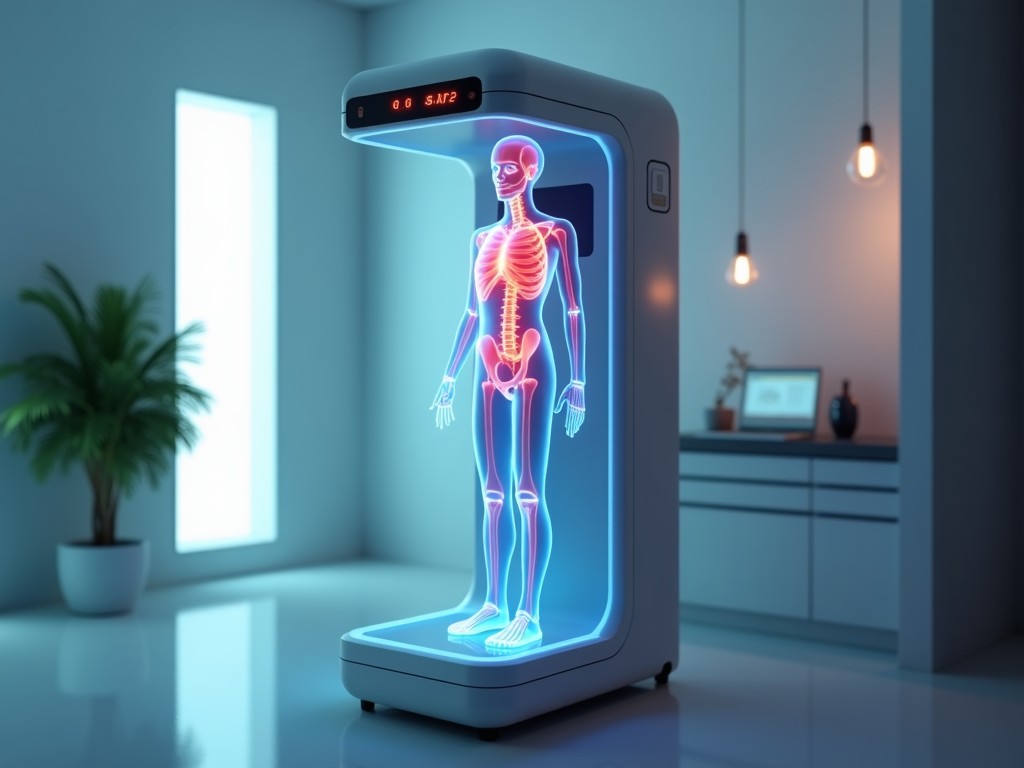
Cost Effective Body Composition Testing Machine
Body composition testing quantifies fat mass, lean tissue, and water distribution using bioelectrical impedance analysis (BIA). A cost-effective device balances measurement accuracy with lower
Inquire NowCost-Effective Body Composition Testing Machine
Overview
Body composition testing quantifies fat mass, lean tissue, and water distribution using bioelectrical impedance analysis (BIA).
A cost-effective device balances measurement accuracy with lower acquisition and maintenance expenses, making regular testing feasible for high‑volume settings.
Multi‑frequency BIA sends alternating currents at 5 kHz, 50 kHz, and 250 kHz through hand‑to‑foot electrodes, capturing intracellular and extracellular fluid pathways.
Technical Specifications
| Parameter | Typical Value | Notes |
|---|---|---|
| Measurement Method | Multi‑frequency Bioelectrical Impedance Analysis | — |
| Measured Parameters | Fat mass, Fat‑free mass, Total body water, Segmental lean mass | — |
| Accuracy (vs. DXA) | ±3 % for fat mass, ±2 % for lean mass | Based on population studies |
| Repeatability (CV) | <1.5 % for fat mass, <1 % for lean mass | Same‑day re‑test |
| Throughput | Up to 30 tests per hour | Includes subject preparation and data export |
| Power Consumption | 25 W typical | 110‑240 V AC, 50/60 Hz |
| Dimensions (W×D×H) | 380 mm × 260 mm × 150 mm | Portable enclosure |
| Weight | 4.2 kg | Includes battery option |
| Operating Temperature | 5 °C to 40 °C | Non‑condensing |
| Data Interface | USB‑C, Wi‑Fi optional | Export to CSV/XML |
| Calibration | Auto‑zero at startup | Monthly verification recommended |
Typical Applications
Fitness centers use frequent tracking to adjust training programs and monitor member progress without high per‑test costs.
Clinical settings benefit from rapid assessment of nutritional status and fluid balance in outpatient or rehabilitation environments.
Corporate wellness programs deploy the device for large‑scale employee screenings, where low operating expense supports recurring measurements.
Research studies require high throughput and portable hardware to collect composition data from diverse populations in field conditions.
Key Features
- Multi‑frequency measurement for enhanced fluid compartment resolution
- Segmental analysis providing limb‑specific lean mass values
- Touchscreen interface with guided subject positioning
- Built‑in data storage capable of holding >10,000 test records
- Wireless export via Wi‑Fi or USB‑C for seamless EMR integration
- Quick‑start protocol completing a test in under 30 seconds
- Low‑maintenance, replaceable electrodes with >500‑use lifespan
Frequently Asked Questions
Can electrode placement be customized for specific protocols?
Yes, the device supports optional adapters for hand‑to‑hand or foot‑to‑foot configurations, which can be selected based on the target population and required segmental detail.
What information is needed before a quotation is prepared?
Typical inputs include anticipated test volume, required measurement parameters, preferred power options (AC or battery), and any integration needs with existing software systems.
How is measurement accuracy verified in the field?
Accuracy checks involve comparing results against a reference method (such as DXA) on a small sample set and applying a correction factor if systematic bias exceeds 2 %.
Next Steps
To discuss how this body composition tester fits your specific testing workflow, please provide your operational requirements.
Request a quotation