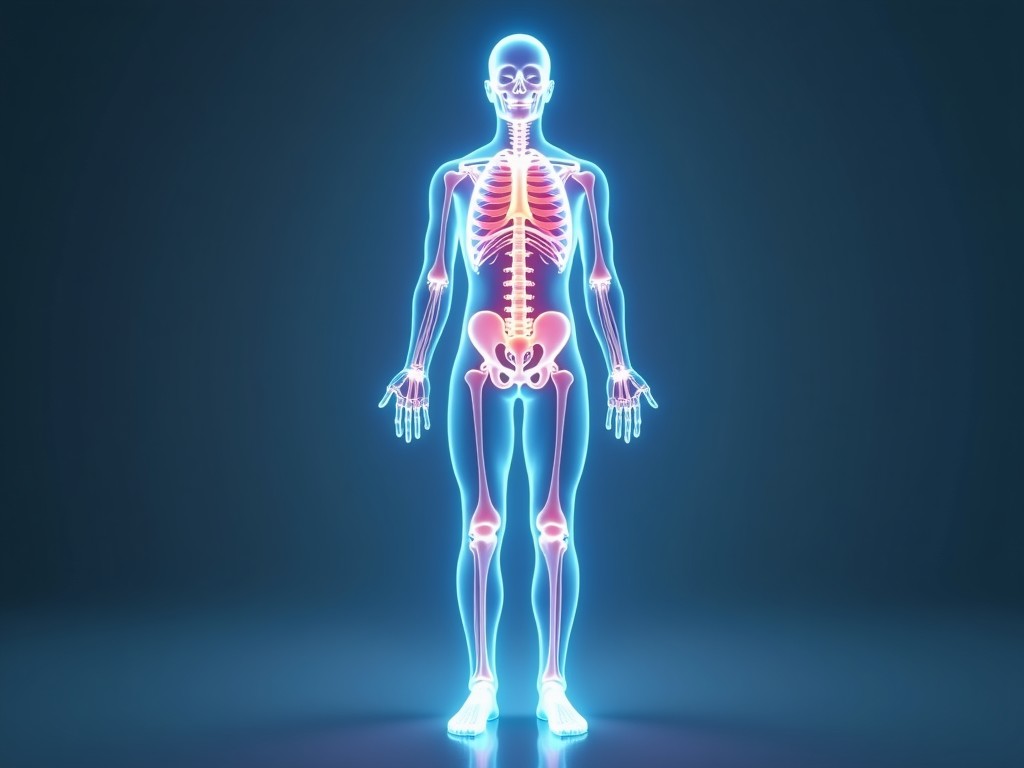
Cost Effective Advanced Body Composition Analyzer
The analyzer determines body composition by measuring bioelectrical impedance at multiple frequencies, providing quantitative estimates of fat mass, lean mass, total body water, and
Inquire NowCost-Effective Advanced Body Composition Analyzer
The analyzer determines body composition by measuring bioelectrical impedance at multiple frequencies, providing quantitative estimates of fat mass, lean mass, total body water, and intracellular/extracellular water ratios without ionizing radiation.
Operating Principle
A low‑amplitude alternating current is applied through surface electrodes, and the resulting voltage drop is measured. Impedance varies with frequency because intracellular and extracellular compartments exhibit different capacitive behavior, allowing separation of water compartments and estimation of tissue composition.
Measurement Parameters
- Fat mass (kg and %)
- Fat‑free mass (kg)
- Total body water (L)
- Intracellular water (L)
- Extracellular water (L)
- Basal metabolic rate (kcal/day)
Technical Specifications
| Parameter | Typical Value | Unit | Notes |
|---|---|---|---|
| Measurement Frequencies | 5, 50, 100 | kHz | Multi‑frequency BIA |
| Impedance Range | 100 – 1000 | Ω | Whole body |
| Segmental Analysis | 5 cylinders (arms, legs, trunk) | – | Regional composition |
| Electrode Type | Ag/AgCl snap‑on | – | Reusable up to 500 cycles |
| Power Consumption | <2 | W | Idle mode |
| Data Output | USB 2.0, Bluetooth 5.0 | – | Optional LAN |
Design and Construction
The housing is constructed from ABS‑PC blend with a flame‑rating of UL94 V‑0, providing impact resistance and chemical compatibility with cleaning agents. Electrodes are mounted on a spring‑loaded platform that maintains constant contact pressure, reducing variability in electrode‑skin impedance to less than 5 % across subjects.
Typical Applications
Fitness facilities use the analyzer to track client progress over training cycles, relying on segmental data to adjust exercise prescriptions. Medical wellness programs incorporate the device for preoperative nutritional screening, where changes in extracellular water can indicate fluid retention. Research laboratories benefit from the multi‑frequency output to validate hydration models in metabolic studies.
Key Advantages
- Multi‑frequency capability enables separate quantification of intracellular and extracellular water, improving accuracy over single‑frequency devices.
- Segmental analysis reduces whole‑body assumptions, allowing detection of regional fluid shifts.
- Low power draw and auto‑sleep mode extend battery life in portable configurations to over 8 hours continuous use.
- Electrode life exceeds 500 measurement cycles before performance degradation exceeds 2 % impedance drift.
Quality Assurance and Calibration
Each unit undergoes factory calibration against a precision resistor network traceable to national standards, with impedance accuracy verified to ±1 % across the operating range. A built‑in self‑test runs at power‑up, checking electrode continuity, isolation resistance, and amplifier offset, logging any deviation for service review.
Integration and Connectivity
The analyzer provides a USB‑CDC virtual COM port for real‑time data streaming, a Bluetooth Low Energy (BLE) profile for mobile app pairing, and an optional Ethernet port for LAN‑based database uploads. A software development kit (SDK) is available in C# and Python, enabling custom data processing workflows.
Maintenance and Service
Routine maintenance consists of wiping electrode surfaces with isopropyl alcohol and checking the spring mechanism for wear. Firmware updates are delivered via USB, allowing feature enhancements without hardware modification. Service intervals are typically 12 months, with on‑site calibration available upon request.
Frequently Asked Questions
Can the electrode spacing be adjusted for different patient sizes? The electrode array uses a fixed geometry optimized for adult torso dimensions; optional pediatric adapters are offered upon request.
What file formats are supported for exported data? Raw impedance values are exported as CSV; summary reports can be generated as PDF through the companion software.
Is the device suitable for use in wet environments? The enclosure meets IP54 protection, resisting splashes and dust, but direct immersion is not recommended.
Next Steps
To receive a formal quotation, discuss customization options, or arrange a product demonstration, please contact our technical sales team.
Request Quote & Technical Information