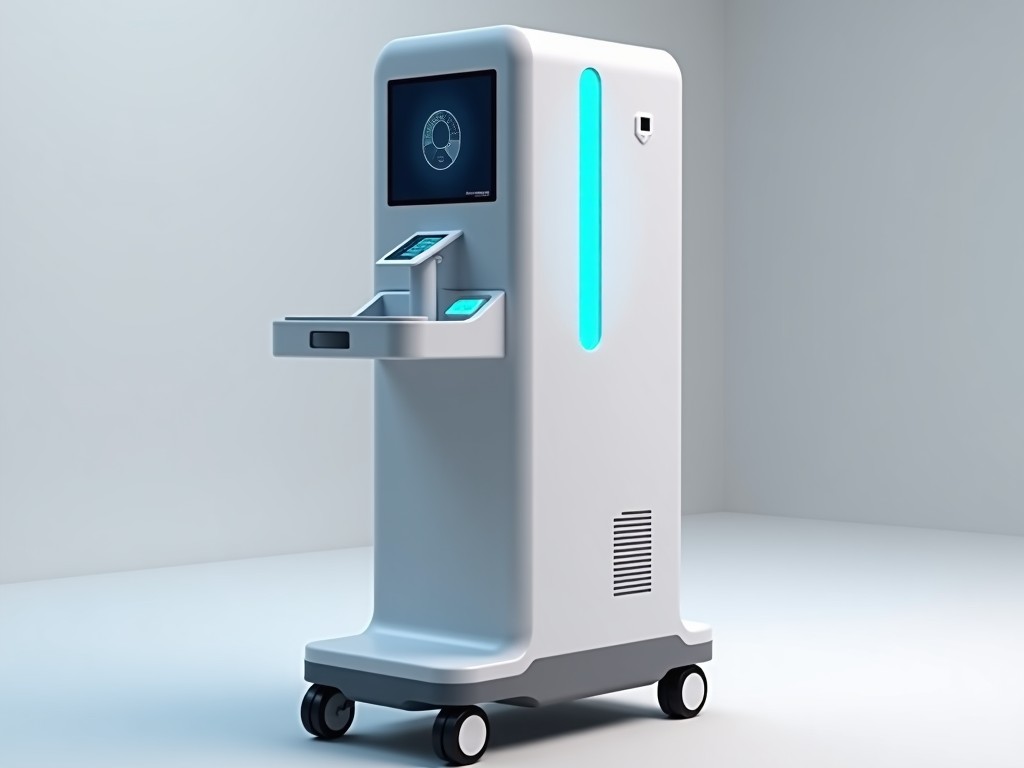
China Smart Body Fat Analyzer Manufacturer
The analyzer uses multi‑frequency bioelectrical impedance analysis (BIA) at 5 kHz, 50 kHz, and 250 kHz to estimate extracellular and intracellular water volumes. By applying a low‑amplitude
Inquire NowChina Smart Body Fat Analyzer Manufacturer
Measurement Principle and Sensor Technology
The analyzer uses multi‑frequency bioelectrical impedance analysis (BIA) at 5 kHz, 50 kHz, and 250 kHz to estimate extracellular and intracellular water volumes. By applying a low‑amplitude alternating current through four surface electrodes, the device measures segmental impedance and derives fat mass using validated population‑specific equations. Electrode material is stainless steel 316L with a surface roughness of Ra 0.4 µm to ensure consistent contact impedance.
Key Technical Specifications
| Parameter | Typical Value | Customizable Range |
|---|---|---|
| Frequency Points | 3 (5 kHz, 50 kHz, 250 kHz) | 2‑5 frequencies available on request |
| Electrode Count | 8 (segmental: arms, legs, trunk) | 4‑12 electrodes configurable |
| Measurement Range (Fat %) | 3 % – 50 % | Extended to 2 % – 60 % with calibration |
| Repeatability (CV) | ≤1.5 % (intra‑session) | Improved to ≤1.0 % with temperature compensation |
| Display Resolution | 0.1 % fat, 0.1 kg mass | 0.05 % optional |
| Power Supply | DC 5 V ± 5 % via USB‑C | AC adapter 100‑240 V available |
| Operating Temperature | 10 °C – 40 °C | 0 °C – 50 °C with insulated housing |
Typical Industrial Applications
In fitness equipment manufacturing, the analyzer provides real‑time body composition feedback for treadmill‑integrated consoles, enabling users to adjust workout intensity based on fat‑free mass trends. In corporate wellness programs, the device is installed in kiosks to collect anonymized data for health risk assessment, where segmental readings help identify visceral fat accumulation linked to metabolic syndrome. Medical device OEMs embed the BIA module into portable patient monitors for postoperative fluid status tracking, relying on the analyzer’s ability to detect shifts exceeding 0.5 L of extracellular water within 15 minutes.
Quality Control and Testing Philosophy
Each unit undergoes a three‑stage verification: (1) electrical safety test per IEC 60601‑1, measuring leakage current below 0.5 mA; (2) impedance accuracy check using precision resistors traceable to national standards, confirming measurement error within ±2 % across the frequency range; (3) biomechanical validation on a panel of 30 subjects with DEXA‑reference fat mass, ensuring correlation coefficient R² ≥ 0.92. Production lots are sampled at 1 % for repeatability testing, and any lot exceeding a CV of 1.8 % triggers a full line inspection.
Customization Options
- Electrode geometry: adjustable spacing from 20 mm to 40 mm to accommodate different grip sizes.
- Firmware: selectable calculation models (e.g., Lukaski, Deurenberg) or user‑defined equations via USB.
- Housing material: ABS‑PC blend for impact resistance or antimicrobial silicone coating for clinical environments.
- Interface: optional Bluetooth 5.0 module with GATT profile for data export to mobile apps.
- Calibration kit: includes reference impedance plates and software tool for field verification.
Frequently Asked Questions
Can the electrode layout be changed for segmental analysis of specific body parts?
Yes. The hardware supports up to 12 electrodes, and the firmware can be reconfigured to activate any subset for targeted segmental impedance, such as focusing on torso‑only measurements for abdominal fat estimation.
What information is needed to receive a quotation?
Provide the required measurement frequencies, electrode count, housing material preference, any desired certifications (e.g., CE, FCC), and expected annual volume. This enables us to calculate tooling, firmware development, and packaging costs accurately.
How is quality inspected before shipment?
Each finished unit passes a functional test suite: power‑on self‑test, impedance linearity check, and Bluetooth connectivity verification (if applicable). AQL‑based visual inspection is performed on casing and labeling, with a critical defect threshold of 0.1 %.
What packaging methods protect the analyzer during export?
Units are placed in anti‑static polyethylene foam inserts within double‑wall corrugated cartons. Corner protectors and moisture‑absorbing sachets are added, and the package complies with ISTA‑3A standards for vibration and drop resistance.
Ready to Discuss Your Requirements
If you need a detailed technical proposal, sample units, or have questions about integration into your product line, please reach out to our engineering team.
Request Technical Consultation