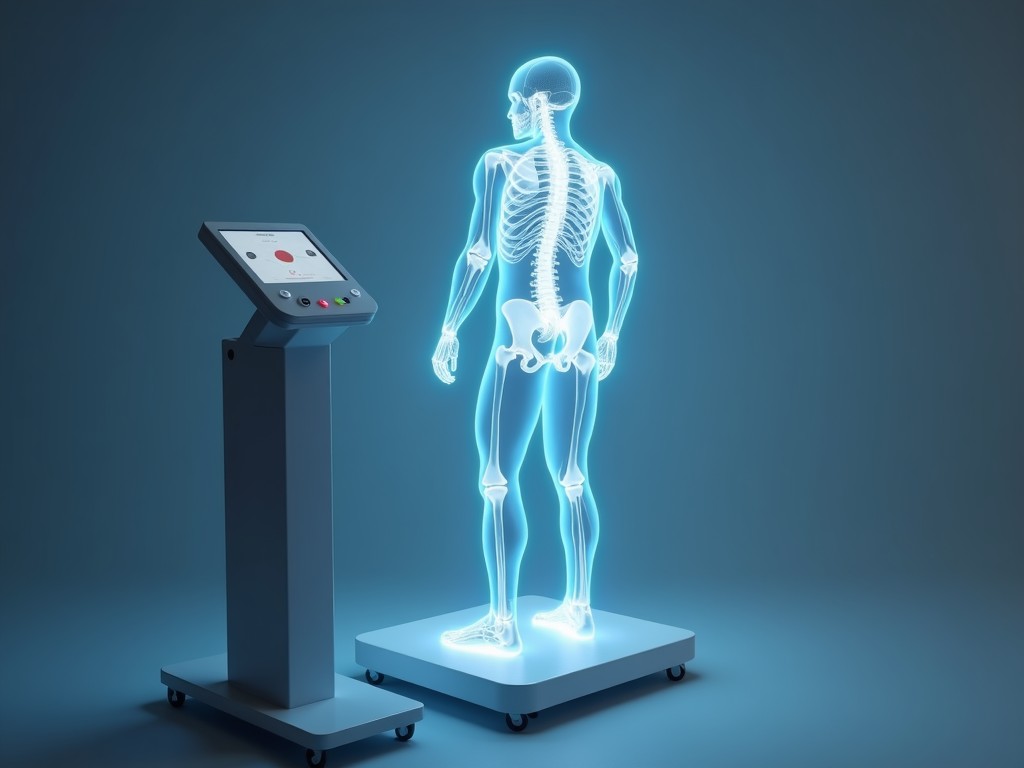
China Scale And Body Fat Analyzer
This instrument determines body fat percentage, muscle mass, and water content by sending a low‑amplitude alternating current through the torso and measuring the resulting voltage drop. Four
Inquire NowChina Scale and Body Fat Analyzer
This instrument determines body fat percentage, muscle mass, and water content by sending a low‑amplitude alternating current through the torso and measuring the resulting voltage drop. Four stainless‑steel electrodes are positioned on the hands and feet to ensure a consistent current path.
Measurement Principle and Technology
Multi‑frequency BIA operates at 5 kHz, 50 kHz, and 250 kHz to differentiate extracellular and intracellular fluid compartments. The analyzer calculates impedance vectors and applies empirically derived equations that correlate resistance and reactance with body composition.
Sampling rate is 1 kHz per frequency, providing a stable reading within 8 seconds after electrode contact. The device auto‑zeroes before each measurement to eliminate offset errors.
Key Technical Specifications
| Parameter | Typical Value |
|---|---|
| Weight measurement range | 0.5 kg – 200 kg |
| Weight resolution | 0.1 kg |
| Body fat range | 3 % – 50 % |
| Body fat accuracy | ±1.5 % (vs. DXA reference) |
| Impedance measurement range | 150 Ω – 800 Ω |
| Display | 128 × 64 px LCD with backlight |
| Power supply | 4 × AA alkaline batteries (≈2000 measurements) or USB‑C 5 V |
| Operating temperature | 0 °C – 40 °C |
| Dimensions (L×W×H) | 280 mm × 280 mm × 55 mm |
| Net weight | 1.2 kg |
Typical Industrial Applications
Corporate wellness programs use the analyzer to track employee health trends over quarterly screenings, enabling data‑driven intervention strategies.
Fitness centers integrate the device into member assessment stations, providing repeatable baselines for personalized training plans without the need for clinical staff.
Research laboratories employ the analyzer in longitudinal studies on nutrition and aging, valuing its portability and quick throughput for large cohort measurements.
Material and Construction
The housing is made of ABS‑PC blend with a UL‑94 V‑0 flame rating, providing impact resistance up to 2 J and protection against surface scratches.
Electrodes utilize 316L stainless steel with a gold‑plated contact surface to minimize oxidation and ensure consistent impedance readings over thousands of cycles.
Internal circuitry is conformal‑coated with acrylic resin to guard against humidity, allowing operation in environments up to 85 % RH non‑condensing.
Customization Options
- Electrode material: optional titanium nitride coating for enhanced wear resistance.
- Cable length: detachable leads available in 0.5 m, 1.0 m, or 1.5 m lengths.
- Housing color: standard gray, corporate blue, or custom Pantone‑matched finishes.
- Firmware: adjustable athlete vs. general population modes, selectable via USB.
- OEM labeling: laser‑etched logo or silkscreen on the top cover.
Quality Control and Testing
Each unit undergoes a four‑point impedance verification using precision resistors traceable to national standards, ensuring measurement error remains within ±0.5 % of the reference.
Functional testing includes a drop test from 75 mm onto a steel surface, followed by a repeatability check of ten consecutive measurements to confirm stability.
Batch sampling performs a 48‑hour soak at 40 °C/90 % RH to validate coating integrity and electrode drift under accelerated aging.
Frequently Asked Questions
Can the electrode spacing be adjusted for different user sizes?
The electrode positions are fixed at 100 mm hand‑to‑hand and 120 mm foot‑to‑foot spacing, which accommodates the 5th to 95th percentile adult anthropometry based on ISO 7250‑1.
What information is required before quotation?
Please provide intended usage environment, required measurement throughput, any specific certification needs (e.g., CE, FCC), and desired customization items such as housing color or cable length.
How is quality inspected?
Every lot receives incoming material inspection, in‑process functional checks, and final acceptance testing per AQL 0.65 for critical parameters.
What packaging methods are available?
Standard packaging includes a corrugated carton with internal foam inserts; optional anti‑static bags and wooden pallets are available for export shipments.