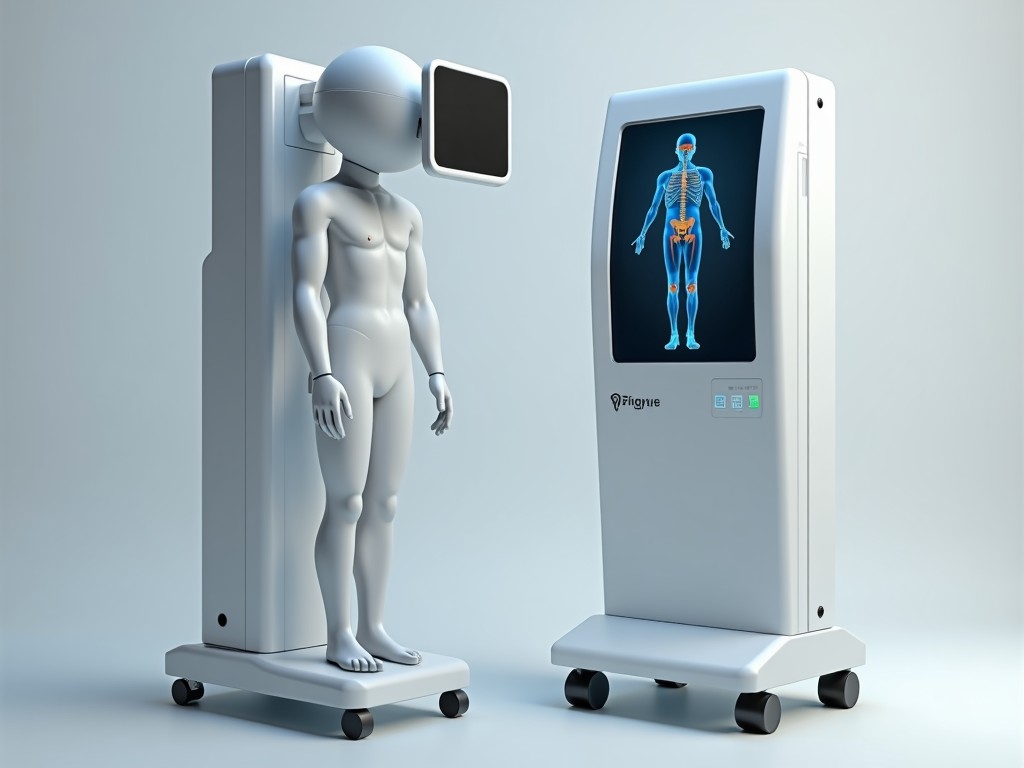
China Body Composition Testing Machine
A body composition testing machine quantifies the proportions of fat, muscle, water, and bone in a human body using non‑invasive methods. The most common approach in industrial devices is
Inquire NowChina Body Composition Testing Machine
Overview
A body composition testing machine quantifies the proportions of fat, muscle, water, and bone in a human body using non‑invasive methods. The most common approach in industrial devices is multi‑frequency bioelectrical impedance analysis (MF‑BIA), which sends low‑level alternating currents through tissue and measures the resulting impedance. This technique provides segmental and whole‑body estimates that are repeatable within defined tolerances when electrode placement and subject preparation are standardized.
Industrial buyers select these instruments for applications where longitudinal tracking of composition changes is required, such as monitoring rehabilitation progress, assessing nutritional interventions, or evaluating occupational health programs. The device’s value lies in its ability to the extent that its measurement error is known, traceable to reference methods, and expressed in clear units (percent body fat, kilograms of fat‑free mass, liters of total body water).
Working Principle
Multi‑frequency BIA applies a series of sinusoidal currents, typically ranging from 1 kHz to 1 MHz, through surface electrodes placed on the hands and feet. At low frequencies the current flows mainly through extracellular water, while higher frequencies penetrate cell membranes, allowing estimation of intracellular water. The impedance magnitude and phase angle at each frequency are recorded and fed into empirically derived equations that separate fat mass, fat‑free mass, and total body water.
The accuracy of the derived values depends on controlling variables such as electrode contact resistance, subject hydration status, and posture. Manufacturers mitigate these influences by using standardized electrode gels, providing positioning guides, and incorporating automatic impedance verification cycles before each measurement.
Key Technical Parameters
| Parameter | Typical Value | Unit | Notes |
|---|---|---|---|
| Measurement Technology | Multi‑frequency Bioelectrical Impedance Analysis | – | 5 frequencies: 5, 50, 100, 200, 500 kHz |
| Electrode Count | 8 (tetrapolar) | – | Hand‑to‑foot configuration |
| Impedance Measurement Range | 150 – 1200 | Ω | Auto‑range selection |
| Body Fat % Accuracy | ±1.5 | % points | Versus DEXA reference |
| Total Body Water Accuracy | ±0.5 | L | Versus isotope dilution |
| Weight Capacity | 200 | kg | With safety overload detection |
| Height Range | 100 – 220 | cm | Adjustable footplate |
| Display | 7‑inch capacitive touchscreen | – | 800×480 px, anti‑glare coating |
| Power Supply | 100‑240 VAC, 50/60 Hz | V | Internal SMPS, < 30 W consumption |
| Operating Temperature | 10 – 35 | °C | Non‑condensing |
| Dimensions (W×D×H) | 380 × 340 × 110 | mm | Desktop footprint |
Applications
In fitness and wellness centers the machine supports member onboarding by establishing baseline composition, which informs personalized training and nutrition plans. Repeat measurements every 4‑6 weeks enable objective tracking of fat loss or muscle gain, improving client retention through demonstrable progress.
Clinical settings use the device for rapid assessment of edema, sarcopenia, or malnutrition, especially when bedside scanning is required and radiation‑based methods are contraindicated. The segmental output helps clinicians identify fluid shifts in specific limbs, guiding dialysis or cardiac failure management.
Research laboratories rely on the instrument’s reproducibility for longitudinal studies on aging, intervention trials, or occupational exposure studies. The ability to export raw impedance data permits re‑analysis with alternative equations, enhancing methodological transparency.
Design Features
- Modular electrode sockets allow quick replacement of worn contacts without recalibration.
- Capacitive touchscreen provides guided measurement protocols with visual electrode placement cues.
- Built‑in memory stores up to 10,000 test records; data export via USB‑C or optional Bluetooth LE.
- Automatic impedance verification circuit checks electrode contact before each test, flagging high resistance.
- Electrical isolation meets IEC 60601‑1 standards, ensuring patient‑operator safety during continuous operation.
Customization Options
- Electrode layout: hand‑to‑hand, foot‑to‑foot, or segmental configurations available upon request.
- Software interface: language packs, custom report templates, and API integration for EMR or gym management systems.
- Enclosure material: ABS plastic standard; antimicrobial coating or stainless‑steel front panel optional.
- Power plug type: region‑specific adapters (EU, UK, US, AU) included with each unit.
Quality Assurance
Each unit undergoes a three‑stage validation: (1) electrical safety testing per IEC 60601‑1, (2) impedance accuracy verification against a precision resistor network traceable to national standards, and (3) biological validation where a subset of devices is compared to DEXA scans on a diverse volunteer pool (n ≥ 30) to confirm limits of agreement for body fat and total body water. Calibration certificates are supplied with every shipment, documenting the reference values used and the measurement uncertainty.
Manufacturing follows ISO 9001‑controlled processes, with in‑process inspections of electrode solder joints, touchscreen responsiveness, and firmware checksums. Final acceptance includes a functional test cycle of 50 consecutive measurements to ensure repeatability within the specified tolerance.
Frequently Asked Questions
- Can the electrode placement be adjusted for special populations? Yes, the device supports pediatric adapters and wheelchair‑compatible footplates; custom jigs can be quoted.
- What information is required before quotation? Please provide intended use environment, required measurement frequencies, any regulatory certifications needed (e.g., CE, FDA), and desired accessories such as a printer or cart.
- How is quality inspected? Each unit receives electrical safety testing, impedance accuracy checks, and a biological validation report; documentation is included in the shipment.
- What packaging methods are available for export? Standard packaging is a double‑wall corrugated box with internal foam cushions; wooden crates or palletized options are available for bulk orders.
- What is the typical production lead time? Lead time ranges from 4‑6 weeks for standard configurations; custom electrode or enclosure changes may extend this by 1‑2 weeks.
Contact for Inquiry
To receive a detailed quotation, discuss customization options, or request a sample unit, please reach out via our contact page: Contact Us.