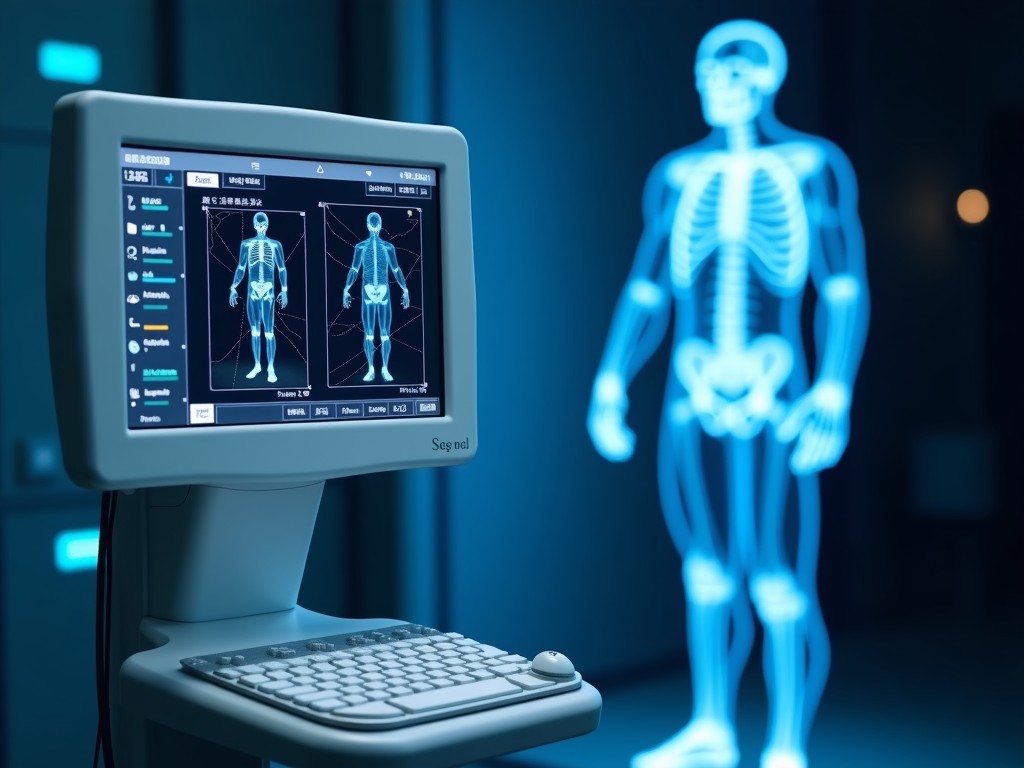
China Body Composition Testing Machine Supplier
Selecting a body composition testing machine involves evaluating measurement accuracy, repeatability, and suitability for the intended population. Most commercial devices use multi‑frequency
Inquire NowChina Body Composition Testing Machine Supplier – Technical Overview
Selecting a body composition testing machine involves evaluating measurement accuracy, repeatability, and suitability for the intended population.
Measurement Technology
Most commercial devices use multi‑frequency bioelectrical impedance analysis (MF‑BIA) to estimate fat mass, lean mass, and total body water.
Segmental MF‑BIA improves accuracy for limb‑specific assessment, which is valuable in sports training, clinical nutrition, and occupational health.
Key Specifications
| Parameter | Typical Value / Option |
|---|---|
| Measurement Frequencies | 5 kHz, 50 kHz, 100 kHz, 200 kHz, 500 kHz (configurable) |
| Electrode Configuration | 8‑point tactile electrodes (hand‑to‑foot, segmental) |
| Output Parameters | Fat mass, fat‑free mass, total body water, intracellular water, extracellular water, basal metabolic rate, segmental lean mass (arms, legs, trunk) |
| Display | 7‑inch touchscreen LCD, 800×480 resolution |
| Power Supply | AC 100‑240 V, 50/60 Hz, 60 W max |
Typical Applications
Body composition analyzers support decision‑making where accurate tissue quantification impacts performance, health monitoring, or safety.
- Sports science laboratories – tracking muscle hypertrophy and fat loss over training cycles.
- Clinical nutrition programs – assessing malnutrition, edema, and dialysis‑related fluid shifts.
- Occupational health centers – evaluating body composition risk factors for metabolic syndrome.
- Corporate wellness facilities – providing employees with actionable fitness metrics.
- Research institutions – validating new predictive equations across ethnic groups.
Design and Construction
Machines are built with ABS‑PC housing for impact resistance and easy cleaning.
Portability options vary: bench‑top models weigh approximately 12 kg with a built‑in handle, while floor‑standing units incorporate a reinforced base and leveling feet for stable operation on uneven surfaces.
Quality Assurance
Suppliers typically perform a three‑stage inspection: (1) incoming material verification for electrode conductivity and housing dimensions, (2) in‑process functional testing of impedance measurement repeatability (target coefficient of variation < 1.5 % across 10 consecutive measurements), and (3) final safety check including leakage current (< 0.5 mA) and electromagnetic compatibility compliance.
Documentation such as calibration certificates, user manuals, and ISO 13485 conformity declarations are provided upon request. Traceability of critical components (e.g., analog front‑end ICs) is maintained for a minimum of five years.
Customization Options
Industrial buyers often require adaptations to fit specific workflows or regulatory environments.
- Alternative electrode layouts (e.g., 4‑point for rapid screening).
- Software language packs and local regulatory reporting templates.
- Enhanced data connectivity options (HL7, CSV export, Wi‑Fi).
- Custom branding on housing and startup screen.
- Extended warranty or on‑site calibration service packages.
Frequently Asked Questions
Can the measurement frequencies be adjusted for specific research protocols?
Yes, the MF‑BIA module supports user‑defined frequency sets within the 5 kHz–500 kHz range, enabling custom protocols for segmental water shift studies.
What information is needed to obtain a quotation?
Please provide the intended application environment (e.g., clinical, fitness, research), required output parameters, any desired software integrations, and estimated annual volume. This allows the supplier to configure the hardware and software package accordingly.
How are the machines protected during international shipment?
Units are packed in double‑wall corrugated cartons with interior foam inserts that immobilize the electrode array and display. Each package includes shock‑indicating labels and is sealed with poly‑strapping to meet ISTA‑3A standards.