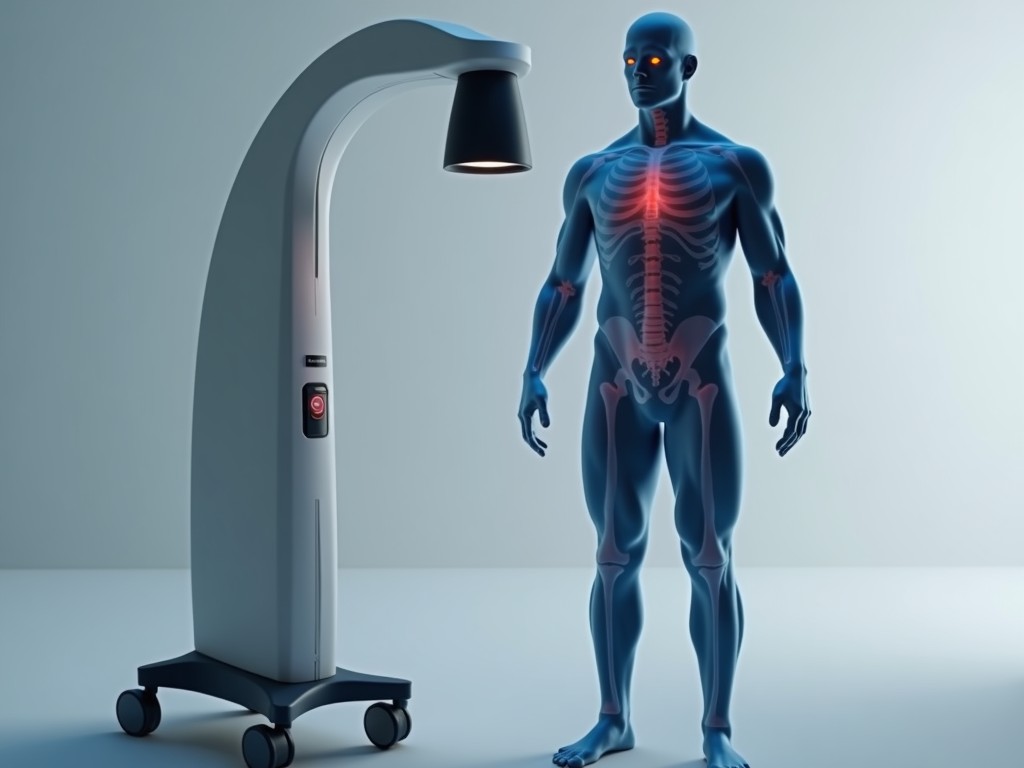
Buy Medical Body Composition Analyzer
A medical body composition analyzer quantifies the proportions of fat, lean mass, and total body water in a patient. The device typically uses multi‑frequency bioelectrical impedance analysis (BIA)
Inquire NowMedical Body Composition Analyzer
A medical body composition analyzer quantifies the proportions of fat, lean mass, and total body water in a patient. The device typically uses multi‑frequency bioelectrical impedance analysis (BIA) to segmentally measure impedance across the trunk, arms, and legs. Results support clinical assessments of nutritional status, fluid balance, and changes during rehabilitation or training.
Measurement Technology
The analyzer applies a low‑amplitude alternating current at several frequencies (typically 5 kHz to 500 kHz) through surface electrodes. Impedance values at each frequency are used to differentiate extracellular and intracellular water, enabling calculation of fat‑free mass and fat mass. Segmental electrodes (usually eight) allow separate analysis of the right arm, left arm, trunk, right leg, and left leg, improving accuracy for patients with atypical fluid distribution.
Measurement repeatability is expressed as a coefficient of variation under 1.5 % for total body water when tested on a stable phantom under controlled temperature. The device automatically corrects for skin temperature and electrode contact impedance using built‑in sensors.
Technical Specifications
| Parameter | Typical Value / Customizable |
|---|---|
| Measurement Method | Multi‑frequency Bioelectrical Impedance Analysis (BIA) |
| Frequency Range | 5 kHz – 500 kHz (8 frequencies) |
| Number of Electrodes | 8 (tetrapolar arrangement) |
| Measurement Sites | Right arm, left arm, trunk, right leg, left leg |
| Output Parameters | Fat mass, fat‑free mass, total body water, extracellular water, intracellular water, skeletal muscle index, basal metabolic rate |
| Display | 7‑inch touchscreen, 800×480 pixels |
| Power Supply | 100‑240 V AC, 50/60 Hz, 60 W max |
| Dimensions (W×D×H) | 380 mm × 340 mm × 110 mm |
| Weight | 5.2 kg |
| Operating Temperature | 10 °C – 40 °C |
| Data Storage | Internal memory for 10 000 tests, USB export |
| Interface | USB‑host, RJ45 Ethernet, optional HL7 |
Applications
In hospitals, the analyzer assists physicians in evaluating edema, malnutrition, and sarcopenia by providing objective fluid and tissue metrics. Serial measurements enable tracking of fluid shifts during dialysis or chemotherapy, supporting timely intervention.
Wellness and sports medicine facilities use the segmental data to assess training effectiveness, detect asymmetries in muscle development, and guide personalized nutrition plans. The ability to separate trunk and limb composition is valuable for athletes recovering from injury where localized atrophy occurs.
Research laboratories employ the device for longitudinal studies on aging, obesity, and metabolic syndrome because the multi‑frequency BIA method offers good correlation with reference techniques such as DXA while being non‑invasive and repeatable.
Design and Construction
The housing is constructed from medical‑grade ABS polymer with a smooth, chemical‑resistant surface that withstands frequent disinfection with alcohol‑based wipes. Electrode contacts are made of stainless steel with a silver‑plated finish to ensure stable impedance over thousands of cycles.
The device meets IEC 60601‑1 safety standards for medical electrical equipment, including protection against electric shock and electromagnetic compatibility. A built‑in self‑test routine runs at power‑on to verify electrode integrity and measurement circuitry before each session.
User interaction is via a capacitive touchscreen with glove‑compatible sensitivity, allowing operation in clinical settings where staff wear protective gloves. The interface presents results in both numeric and graphical formats, with optional PDF report generation.
Quality Control
Each unit undergoes a two‑stage calibration: first, a factory‑adjusted gain using precision resistors; second, a verification step with a multi‑compartment phantom that mimics known fat, muscle, and water fractions. The deviation from reference values must remain within ±2 % for fat‑free mass.
Production follows ISO 13485 quality‑management procedures, including traceability of critical components such as electrodes and measurement boards. Finished devices are subjected to a 48‑hour burn‑in test at elevated temperature to identify early‑life failures.
Before shipment, a random sample from each batch is tested for repeatability and inter‑unit variability, ensuring that the standard deviation of measurements across units stays below 1.0 % for total body water.
Customization Options
- Electrode layout – choice of 4‑electrode whole‑body or 8‑electrode segmental configurations
- Software language – interface available in English, Spanish, Mandarin, and additional languages on request
- Report formats – PDF, CSV, or HL7‑compatible XML output
- Mounting – desktop stand, wall‑mount bracket, or mobile cart with lockable wheels
- Accessories – disposable electrode covers, extra‑large footplate for bariatric patients, barcode scanner for patient ID
Frequently Asked Questions
- Can the electrode positions be adjusted for pediatric patients? Yes, the analyzer includes adjustable straps and smaller electrode pads suitable for subjects down to 5 years of age.
- What information is required before quotation? We need the intended use environment (hospital, clinic, research), desired electrode configuration, any language or interface preferences, and estimated annual volume.
- Which materials are available for the housing? Standard is medical‑grade ABS; optional antimicrobial‑coated ABS or polycarbonate versions are offered upon request.
- How is quality inspected before delivery? Each unit undergoes functional testing, safety compliance verification, and a visual inspection for surface defects; a test report is shipped with the device.
- What is the typical production lead time? Lead time ranges from 4 to 6 weeks after receipt of a confirmed purchase order, depending on selected options and current capacity.