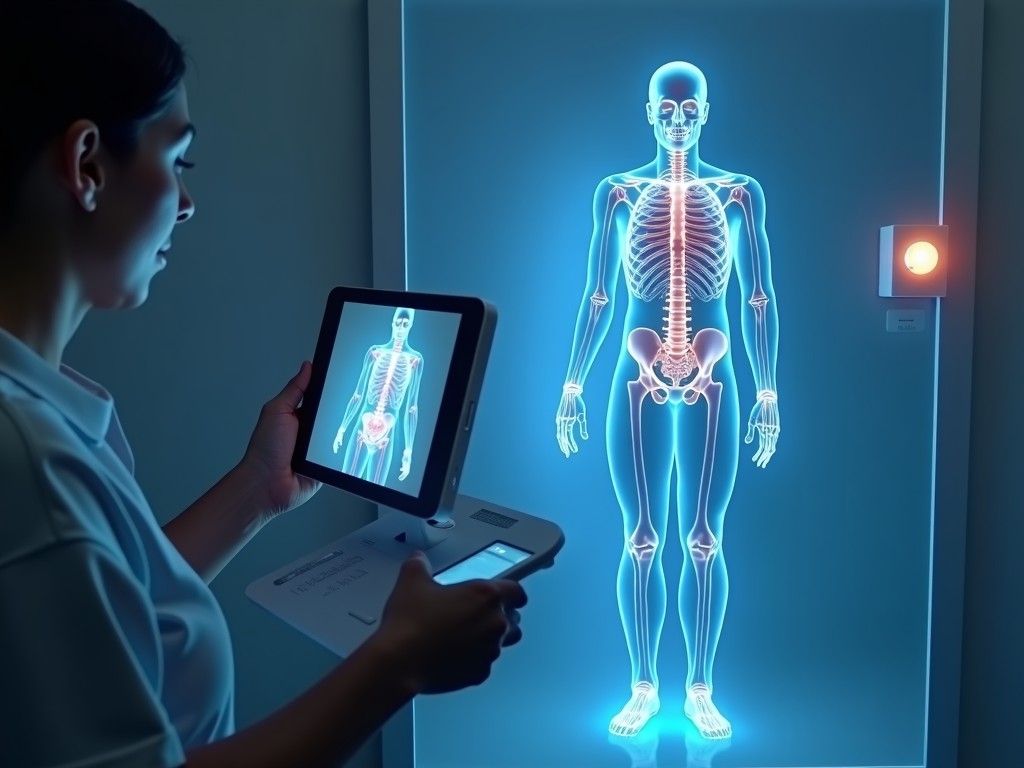
Buy Ffm Body Composition Analyzer
A free‑fat‑mass (FFM) body composition analyzer estimates the proportion of lean tissue, fat mass, and body water using multi‑frequency bioelectrical impedance analysis (BIA). By sending low‑level
Inquire NowBuy FFM Body Composition Analyzer
A free‑fat‑mass (FFM) body composition analyzer estimates the proportion of lean tissue, fat mass, and body water using multi‑frequency bioelectrical impedance analysis (BIA). By sending low‑level alternating currents through segmental electrodes and measuring the resulting voltage drop, the device derives impedance values that correlate with intracellular and extracellular fluid volumes. This method provides repeatable, non‑invasive assessments suitable for clinical, fitness, and industrial health monitoring.
Measurement Principle
The analyzer applies a range of frequencies from 5 kHz to 500 kHz. Low frequencies primarily reflect extracellular water, while higher frequencies penetrate cell membranes to sense intracellular water. By fitting the measured impedance spectrum to a Cole‑Cole model, the device calculates fat‑free mass, fat mass, total body water, intracellular water, extracellular water, and phase angle. Electrode placement follows a standard eight‑point tactile layout (hand‑to‑foot, hand‑to‑hand, foot‑to‑foot) to enable segmental analysis of arms, legs, and trunk.
Key Technical Specifications
| Parameter | Typical Value | Notes |
|---|---|---|
| Weight Capacity | 0–300 kg | Increment 0.1 kg |
| Height Range | 80–220 cm | Increment 0.1 cm |
| Measurement Frequencies | 5, 50, 100, 200, 500 kHz | 5‑point spectrum |
| Impedance Accuracy | ±0.5 Ω | At 50 kHz, 25 Ω reference |
| Repeatability (CV) | ≤1 % | Test‑retest on same subject |
| Output Interfaces | USB 2.0, Bluetooth 5.0, LAN (RJ45) | Configurable per order |
| Power Consumption | 15 W max | 100–240 VAC, 50/60 Hz |
| Operating Temperature | 10 °C–40 °C | Relative humidity 30 %–80 % non‑condensing |
Typical Applications
In occupational health programs, the analyzer tracks changes in lean mass and hydration status among workers exposed to physically demanding tasks, enabling early detection of over‑training or dehydration. Rehabilitation centers use segmental outputs to monitor muscle atrophy or edema progression in limbs during post‑operative recovery. Fitness facilities rely on the device’s ability to differentiate visceral fat from subcutaneous fat, providing data for personalized exercise and nutrition plans. Research laboratories benefit from the multi‑frequency impedance spectrum for studies on fluid shifts, electrolyte balance, and body composition modeling.
- Occupational health surveillance – quantifies lean mass loss linked to repetitive strain.
- Cardiac rehabilitation – evaluates fluid accumulation and muscle wasting.
- Sports science – tracks seasonal changes in fat‑free mass and phase angle.
- Bariatric clinics – monitors pre‑ and post‑surgical body composition shifts.
Design and Construction
The housing is constructed from ABS‑PC blend with a flame‑rating of UL‑94 V‑0, providing impact resistance and protection against ingress of dust (IP20). Electrodes consist of stainless‑steel pins coated with a thin layer of conductive silver‑silver chloride paste to ensure stable contact impedance across repeated uses. A detachable foot platform features a silicone‑rubber surface that prevents slippage while distributing load evenly across the load cells. Internal circuitry is mounted on a double‑sided FR‑4 board with conformal coating to guard against moisture and corrosion.
Customization Options
- Electrode configuration – choose between standard eight‑point or twelve‑point segmental layout.
- Software package – basic analytics, advanced hydration tracking, or API‑enabled data export.
- Enclosure color – standard gray, white, or custom Pantone match for corporate branding.
- Power supply – medical‑grade isolated adapter or internal battery pack for mobile use.
Quality Control and Compliance
Each unit undergoes a four‑stage test protocol: (1) electrical safety verification per IEC 60601‑1, (2) impedance accuracy calibration against a precision resistor network, (3) mechanical load‑cell linearity check across the full weight range, and (4) software firmware validation for data integrity and communication reliability. Manufacturing follows ISO 13485‑aligned processes with traceable component lot numbers and final inspection reports retained for a minimum of five years. While specific certifications depend on the target market, the design meets the essential requirements of the EU MDR and FDA 21 CFR 820 for Class II medical devices when configured accordingly.
Frequently Asked Questions
-
Can the electrode spacing be adjusted for pediatric patients?
Yes, optional shorter electrode arms are available for subjects under 140 cm height. -
What information is required before quotation?
Desired measurement range, electrode configuration, software module, and any enclosure or power‑supply preferences. -
How is quality inspected for bulk orders?
Each lot receives a sample‑size statistical process control check, with acceptance criteria based on impedance repeatability ≤1 % and safety test pass rate of 100 %.