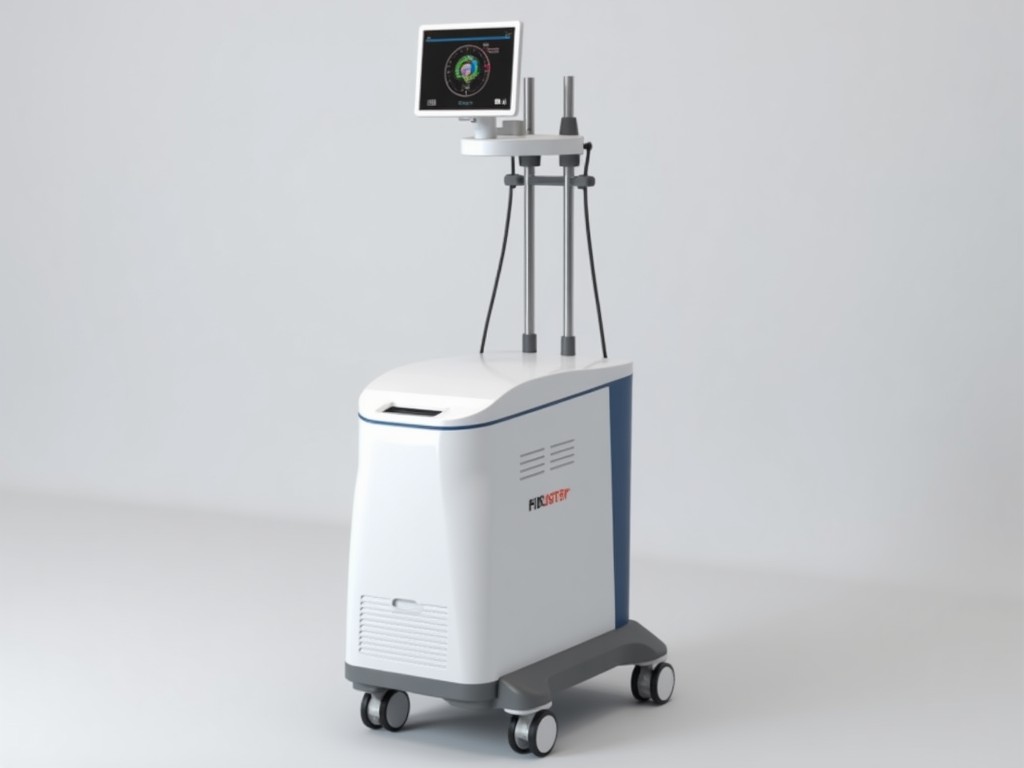
Buy Body Composition Analyzer Ffm Machine
This instrument measures fat‑free mass (FFM) using multi‑frequency bioelectrical impedance analysis (BIA). It sends low‑amplitude alternating currents through the body and records the resulting
Inquire NowBody Composition Analyzer FFM Machine
This instrument measures fat‑free mass (FFM) using multi‑frequency bioelectrical impedance analysis (BIA). It sends low‑amplitude alternating currents through the body and records the resulting impedance at several frequencies to separate extracellular and intracellular water compartments. The derived FFM value supports assessments in clinical nutrition, sports science, occupational health, and research cohorts.
Unlike single‑frequency devices, the multi‑frequency approach reduces reliance on empirical assumptions about tissue hydration, improving accuracy across varied populations and fluid states. The measurement is non‑ionizing, completed in under 30 seconds, and requires only surface electrodes placed on hands and feet.
Technical Specifications
| Parameter | Typical Value / Customizable |
|---|---|
| Measurement Method | Multi‑frequency BIA (1‑1000 kHz) |
| Electrode Configuration | 8‑point tactile (hand‑foot), optional disposable or reusable |
| Measurement Duration | ≤30 seconds per test |
| Repeatability (CV) | ≤1.5 % on FFM |
| Input Power | 100‑240 V AC, 45 W max |
| Dimensions (W×D×H) | 350 mm × 260 mm × 110 mm |
| Weight | 4.2 kg |
| Operating Temperature | 10 °C – 40 °C |
| Data Output | USB, RS‑232, Ethernet (configurable) |
| Calibration | Factory traceable to precision resistors; user verification kit available |
Key Features
- Measurement duration ≤30 seconds enables high‑throughput screening.
- Electrode contact impedance <10 kΩ ensures signal stability.
- Built‑in motion artifact compensation reduces variance from subject movement.
- Data export in CSV, JSON, and HL7‑compatible formats.
- User‑definable test protocols (e.g., fasting, post‑exercise).
- Remote diagnostics via Ethernet for firmware updates and error logging.
Applications
In clinical settings the FFM machine provides rapid, repeatable tracking of lean mass changes during nutritional interventions or dialysis, helping clinicians adjust prescriptions without relying on weight alone.
Sports science laboratories use segmental FFM data to monitor training‑induced hypertrophy or atrophy in specific limbs, allowing coaches to tailor load programs based on actual tissue changes rather than performance proxies.
Large‑scale epidemiological studies benefit from the device’s low operator dependency and short test time, facilitating collection of body composition data from thousands of participants with minimal disruption to field workflows.
Occupational health programs deploy the analyzer for periodic employee wellness screenings, detecting early signs of sarcopenia or fluid shifts linked to shift work, thereby supporting preventive health strategies.
Quality Assurance
Housing is formed from medical‑grade ABS with flame‑retardant rating, providing impact resistance and ease of cleaning. Electrode contacts are gold‑plated stainless steel to maintain low, stable impedance over thousands of mating cycles.
The measurement front‑end uses a 24‑bit delta‑sigma ADC with programmable gain, calibrated against a network of precision resistors traceable to national standards. Each unit undergoes a 48‑hour burn‑in cycle followed by automated test sequences verifying linearity, noise floor, and safety leakage current (<10 µA).
Final inspection includes a phantom test with known impedance values to confirm measurement accuracy within ±1.5 % FFM before packaging.
Customization Options
- Electrode type: reusable stainless steel with snap‑on connectors or disposable adhesive pads.
- Cable length: standard 1.5 m, optional 3 m or coiled versions.
- Enclosure color: standard white, customizable to corporate palette.
- Software: language packs, API for HL7/FDA integration, optional on‑device touchscreen.
- Power: internal lithium‑ion battery pack for mobile field use (up to 8 hours continuous operation).
Frequently Asked Questions
Can the electrode configuration be changed for segmental analysis?
Yes. The system supports 4‑point (hand‑to‑hand) and 8‑point (hand‑to‑foot) setups; additional ankle electrodes can be added for limb‑specific FFM estimation.
What information is needed before quotation?
Required details include intended electrode type, desired data output interfaces, any software customizations, and order volume for pricing and lead‑time calculation.
How is quality inspected for each unit?
Every unit undergoes electrical safety testing, impedance linearity verification with traceable resistors, and a functional test using a multi‑compartment phantom to confirm FFM accuracy within specification.
What packaging options are available for export?
Standard packaging is a double‑wall corrugated box with internal foam inserts; optional wooden crates and moisture‑barrier bags are available upon request for long‑distance transport.