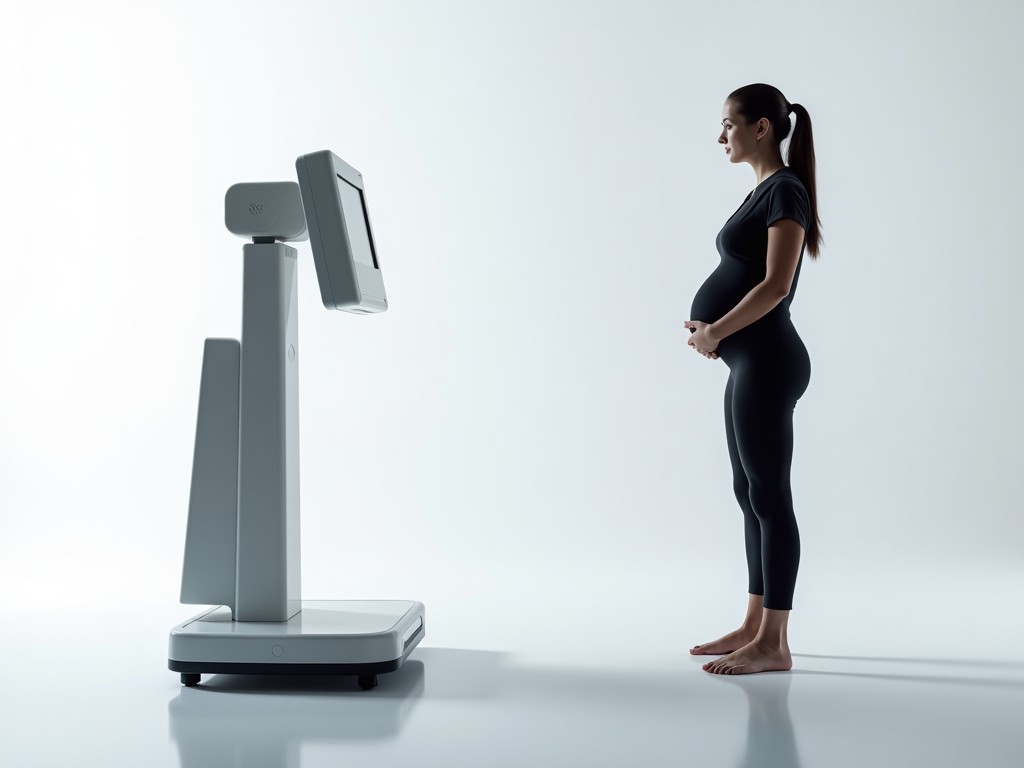
Budget Friendly Scale And Body Fat Analyzer Machine
This device combines a precision load‑cell weighing system with bioelectrical impedance analysis (BIA) to provide body weight, fat percentage, and related metrics in a single compact unit. It is
Inquire NowBudget Friendly Scale and Body Fat Analyzer Machine
This device combines a precision load‑cell weighing system with bioelectrical impedance analysis (BIA) to provide body weight, fat percentage, and related metrics in a single compact unit. It is intended for use in industrial wellness programs, occupational health screening, and fitness facilities where cost‑effective, repeatable measurements are required.
Operating Principle
The scale component uses a strain‑gauge load cell calibrated to measure force with a resolution of 0.1 kg across a 0–200 kg range. Simultaneously, four stainless‑steel electrodes send a low‑amplitude alternating current through the body; the resulting impedance is processed to estimate total body water, from which fat‑free mass and fat mass are derived using empirically validated equations.
Key Technical Specifications
| Parameter | Typical Value |
|---|---|
| Weight Capacity | 0–200 kg |
| Weight Resolution | 0.1 kg |
| Weight Accuracy | ±0.5 % of reading |
| Impedance Measurement Frequency | 50 kHz (single frequency) |
| Body Fat Range | 3 %–50 % |
| Body Fat Accuracy | ±1.5 % absolute (vs. DXA reference) |
| Power Supply | AC 100–240 V, 50/60 Hz, 15 W max |
| Display | LCD, 128 × 64 px, backlit |
| Output Interface | USB‑C (device), optional RS‑232 or Bluetooth 4.0 |
| Overall Dimensions | 350 mm × 340 mm × 110 mm (L × W × H) |
| Net Weight | 4.2 kg |
Design and Construction
The weighing platform is formed from reinforced ABS plastic with a tempered glass top plate rated for 5 mm thickness, providing a smooth, easy‑to‑clean surface. Load‑cell mounting points are machined from aluminum to minimize thermal drift. Electrodes are fabricated from 316L stainless steel, polished to reduce contact resistance and resist corrosion in humid environments.
Applications in Industrial Settings
In large‑scale manufacturing, periodic body‑composition tracking helps assess the effectiveness of workplace wellness initiatives, monitor changes associated with shift work, and support ergonomic assessments. The device’s modest footprint allows placement in break rooms, medical offices, or on‑site fitness centers without requiring dedicated floor space.
- Occupational health screening programs
- Corporate wellness and incentive tracking
- Physical‑readiness testing for safety‑critical roles
- Research studies requiring repeatable field measurements
Quality Assurance and Calibration
Each unit undergoes a two‑point load‑cell calibration using certified traceable weights (5 kg and 100 kg) before shipment. Impedance circuitry is verified against a precision resistor network to ensure phase accuracy within 0.5 °. A functional test confirms that weight and fat‑percentage readings repeat within ±0.2 kg and ±0.3 % respectively over ten consecutive measurements.
Customization Options
While the base configuration meets most general‑purpose needs, several parameters can be adjusted to align with specific facility requirements or regulatory constraints.
- Load‑cell capacity up to 300 kg for heavy‑duty applications
- Electrode spacing adjustable between 80 mm and 120 mm to accommodate different foot sizes
- Firmware language selection (English, Spanish, Mandarin) and units (kg/lb, %/cm)
- Enclosure rating upgrade to IP65 for wash‑down environments
- Alternative output interfaces: Ethernet (Modbus TCP) or CAN‑bus for integration with plant SCADA systems
Integration and Data Output
The standard USB‑C port presents data as a CSV string containing timestamp, weight (kg), impedance (Ω), estimated fat (%), and fat‑free mass (kg). Optional RS‑232 delivers the same frame at 9600 baud with configurable framing. Bluetooth 4.0 transmits a Bluetooth Low Energy (BLE) advertisement that can be captured by custom mobile apps or gateway devices.
Ordering Information
To request a quotation, please provide the desired load‑cell capacity, electrode spacing, output interface, and any environmental certification needed. Our technical team will review the specifications and return a detailed proposal including lead time, pricing, and documentation.