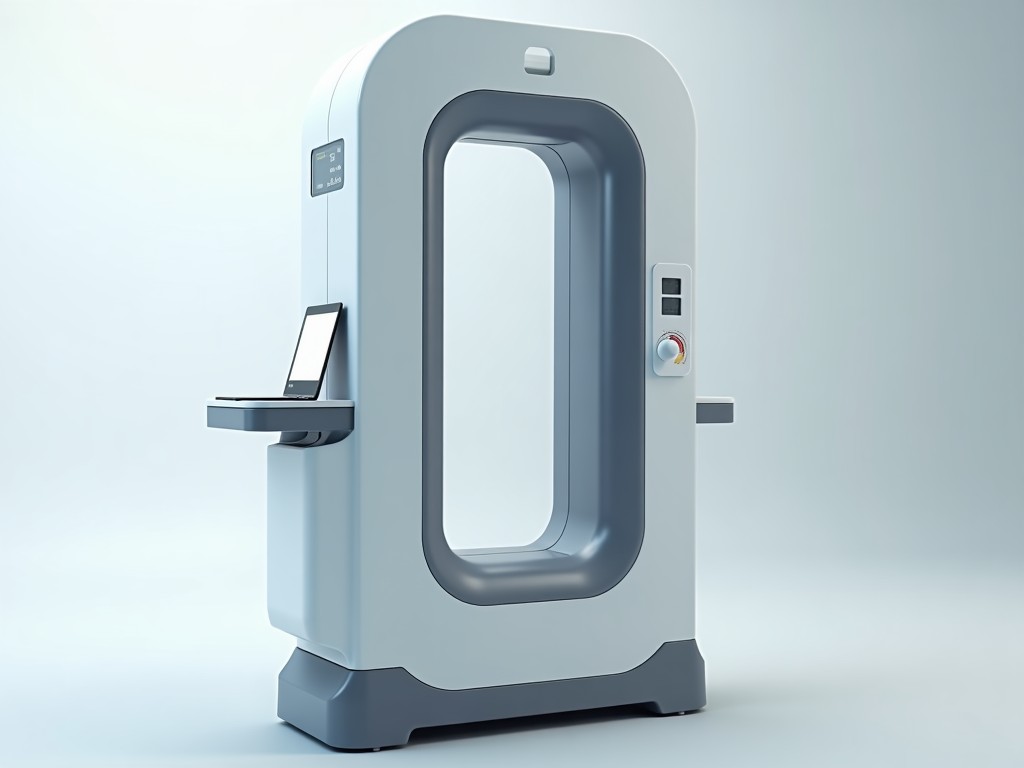
Budget Friendly Body Fat Measurement Machine Supplier
The device uses bioelectrical impedance analysis (BIA) at multiple frequencies to estimate total body water, fat-free mass, and fat mass. By sending a low‑amplitude alternating current through
Inquire NowBudget Friendly Body Fat Measurement Machine Supplier
Measurement Technology Overview
The device uses bioelectrical impedance analysis (BIA) at multiple frequencies to estimate total body water, fat-free mass, and fat mass. By sending a low‑amplitude alternating current through electrodes placed on the hands and feet, the instrument measures resistance and reactance at 5 kHz, 50 kHz, and 250 kHz. These multi‑frequency readings allow separation of extracellular and intracellular water compartments, improving accuracy across diverse body types.
Electrode contact is maintained through disposable, silver‑silver chloride pads that reduce skin impedance variation to less than 5 Ω. The measurement cycle completes in under 10 seconds, with results displayed on a 2.4‑inch LCD showing percent body fat, visceral fat rating, basal metabolic rate, and skeletal muscle index. Calibration against dual‑energy X‑ray absorptiometry (DXA) reference data yields a typical standard error of estimate of 1.5 % body fat for adults aged 18‑65.
Typical Specifications
| Parameter | Value / Range |
|---|---|
| Measurement Frequencies | 5 kHz, 50 kHz, 250 kHz |
| Current Amplitude | ≤ 0.8 mA rms |
| Input Impedance Range | 150 Ω – 1200 Ω |
| Display Resolution | 0.1 % body fat, 0.1 kg fat‑free mass |
| Power Supply | 4 × AA alkaline batteries or USB‑C 5 V/1 A |
| Operating Temperature | 10 °C – 40 °C |
| Storage Temperature | ‑20 °C – 60 °C |
| Dimensions (L×W×H) | 120 mm × 78 mm × 22 mm |
| Weight (including batteries) | 140 g |
Industrial and Commercial Applications
Fitness centers employ the analyzer for member onboarding, allowing trainers to establish baseline body composition and track progress over 8‑week cycles. The short measurement time supports high‑throughput screening during peak hours without creating queues.
Corporate wellness programs integrate the device into annual health assessments, providing employees with actionable data on visceral fat levels, which correlate with cardiovascular risk. Employers use aggregated, anonymized results to tailor intervention programs such as nutrition workshops or activity challenges.
Clinical research facilities utilize the unit as a field‑portable alternative to DXA when studying large cohorts in community settings. Its repeatability (coefficient of variation < 1.2 % for consecutive measurements) supports longitudinal studies on interventions like caloric restriction or resistance training.
Customization Options
Housing colors can be matched to corporate branding using UV‑stable ABS polymer, available in standard RAL 9005 (black), RAL 9010 (white), or custom Pantone shades upon request.
Firmware can be adjusted to output specific metrics required by partner software, such as lean body mass in kilograms, phase angle, or intracellular/extracellular water ratio. Communication protocols include Bluetooth Low Energy (BLE 5.0) with GATT profiles for seamless data export to mobile apps or enterprise health platforms.
Optional accessories comprise a reusable stainless‑steel electrode set for high‑volume environments, a protective silicone sleeve rated to IP54 for dust and splash resistance, and a docking station that charges up to ten units simultaneously via a single 12 V DC input.
Quality Assurance and Testing
Each production lot undergoes incoming inspection of electrode pads for silver‑chloride coating thickness (target 2 µm ± 0.3 µm) and conductivity (≥ 12 mS/cm). Functional testing verifies impedance measurement accuracy within ± 2 % of a calibrated precision resistor network across the full frequency range.
Environmental stress screening includes thermal cycling (‑20 °C to 60 °C, 20 cycles) and humidity exposure (90 % RH, 48 h) to ensure no drift in baseline resistance beyond 0.5 %. Final validation compares batch results against a reference DXA scanner on a sample of 30 subjects, confirming mean absolute error remains under 1.8 % body fat.
Frequently Asked Questions
- Can the measurement electrodes be customized for specific skin types? Yes, electrode geometry and adhesive formulation can be altered to improve contact on oily or dry skin; sample evaluation is available upon request.
- What information is needed to receive a quotation? Provide expected annual volume, required communication interface (BLE, USB, or custom), any branding or housing color specifications, and preferred accessory package.
- Is firmware upgradable in the field? The unit supports over‑the‑air updates via BLE; a secure bootloader validates signed images before installation.
- What is the typical lead time for a production run? Standard lead time is 6‑8 weeks after approval of final artwork and specifications; expedited options are available for tooling‑free configurations.
Next Steps
To discuss how this body fat analyzer can be integrated into your facility’s workflow, share your volume estimate and any specific data output requirements. Our engineering team will prepare a detailed technical proposal, including sample units for evaluation.