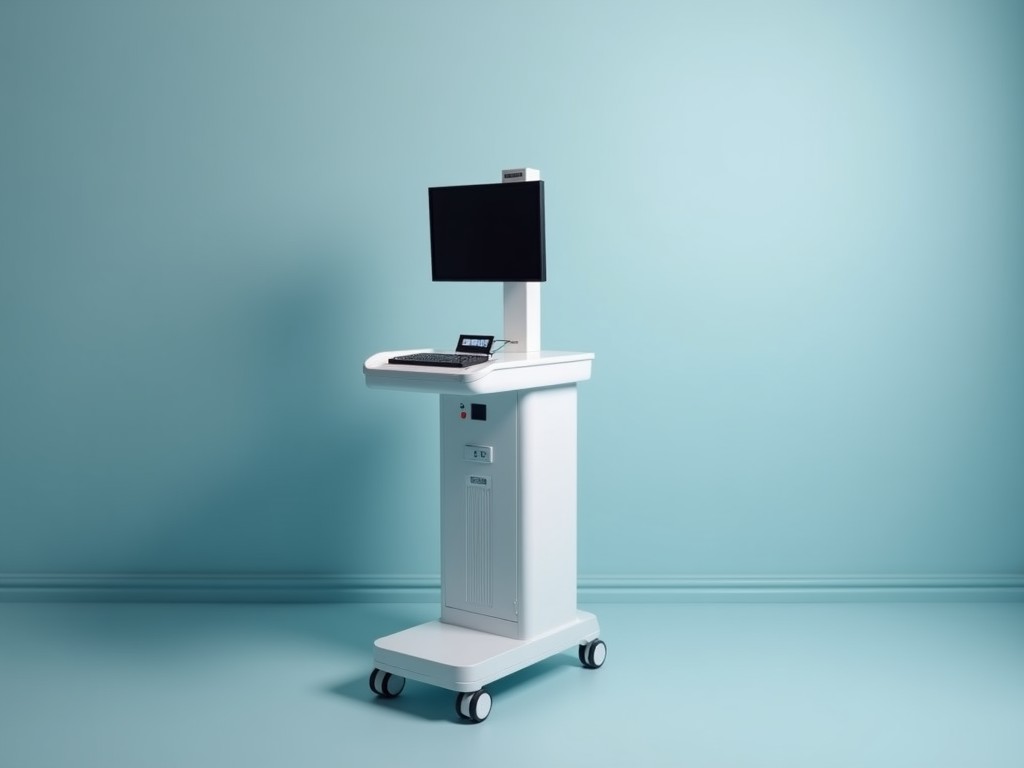
Budget Friendly Body Fat Analyzer With Printer Machine
This device combines bioelectrical impedance analysis (BIA) for body composition assessment with a compact thermal printer to provide immediate, hard‑copy results. The design targets facilities that
Inquire NowBudget Friendly Body Fat Analyzer with Integrated Printer
This device combines bioelectrical impedance analysis (BIA) for body composition assessment with a compact thermal printer to provide immediate, hard‑copy results. The design targets facilities that require repeatable measurements without the expense of laboratory‑grade systems.
Measurement Principle and Performance
BIA passes a low‑level alternating current through the torso and limbs; the impedance magnitude and phase angle are used to estimate total body water, fat‑free mass, and subsequently body fat percentage. Typical measurement repeatability (standard deviation) is within ±0.5 % body fat for subjects with stable hydration, and the overall accuracy relative to dual‑energy X‑ray absorptiometry (DXA) is commonly reported as ±3 % body fat in the 5 %–50 % range.
Measurement time is usually under 10 seconds per test, and the device can store up to 200 recent readings internally before requiring data offload.
Key Technical Specifications
| Parameter | Typical Value / Option |
|---|---|
| Measurement Method | Tetra‑polar BIA (50 kHz) |
| Body Fat Range | 3 % – 50 % |
| Accuracy (vs. DXA) | ±3 % body fat |
| Repeatability (SD) | ±0.5 % body fat |
| Measurement Time | ≤10 s |
| Printer Type | Direct thermal line printer |
| Print Resolution | 203 dpi (8 dots/mm) |
| Paper Width | 57 mm (standard) – optional 80 mm |
| Power Supply | AC 100‑240 V, 50/60 Hz, 15 W max |
| Dimensions (W×D×H) | 210 mm × 150 mm × 65 mm |
| Weight | 1.2 kg |
| Operating Temperature | 10 °C – 40 °C |
| Interface | USB‑C for data export; optional Bluetooth LE |
Typical Applications
Fitness centers and personal training studios use the analyzer to track client progress over weeks, providing printed sheets that reinforce accountability. Corporate wellness programs benefit from the low‑cost per‑test model, enabling periodic screenings without recurring lab fees.
Rehabilitation clinics find the immediate printout useful for documenting baseline body composition before therapy and for monitoring changes during recovery. In research settings where large sample sizes are needed, the device’s portability and quick turnaround support field studies.
Design and Construction Considerations
The enclosure is constructed from ABS plastic with a matte finish to resist fingerprints and minor impacts. The electrode array consists of four stainless‑steel contact pads arranged for hand‑to‑foot measurement, minimizing variability caused by electrode placement.
The thermal printer employs a heated line head that activates only during printing, reducing power draw and eliminating the need for ink or ribbons. Paper rolls are loaded via a front‑access slot, allowing replacement in under 30 seconds.
Customization Options
- Alternative electrode configurations (hand‑hand or foot‑foot) for specific population studies
- Extended internal memory (up to 1000 records) with optional SD‑card slot
- Wi‑Fi module for wireless transfer to practice management software
- Customizable print header/footer (clinic logo, contact info)
Quality Assurance
Each unit undergoes factory calibration using precision resistors to verify impedance measurement accuracy within ±2 % of the reference value. A functional test confirms printer head temperature uniformity and paper feed reliability across the full roll length.
Before shipment, a sample of devices from each production lot is subjected to repeatability testing on a cohort of volunteers; results are logged and available to customers upon request.
Integration and Support
Exported data files are comma‑separated values (CSV) containing timestamp, impedance values, derived body fat, fat‑free mass, and optional user ID. The CSV format is compatible with most spreadsheet and database applications, facilitating trend analysis.
Technical documentation includes a user manual, calibration procedure, and troubleshooting guide. Firmware updates are delivered via USB‑C, allowing field upgrades without returning the unit to the factory.
Inquiry
To discuss configuration options, obtain a formal quotation, or request a sample unit for evaluation, please contact our sales team using the link below.
Request Quotation