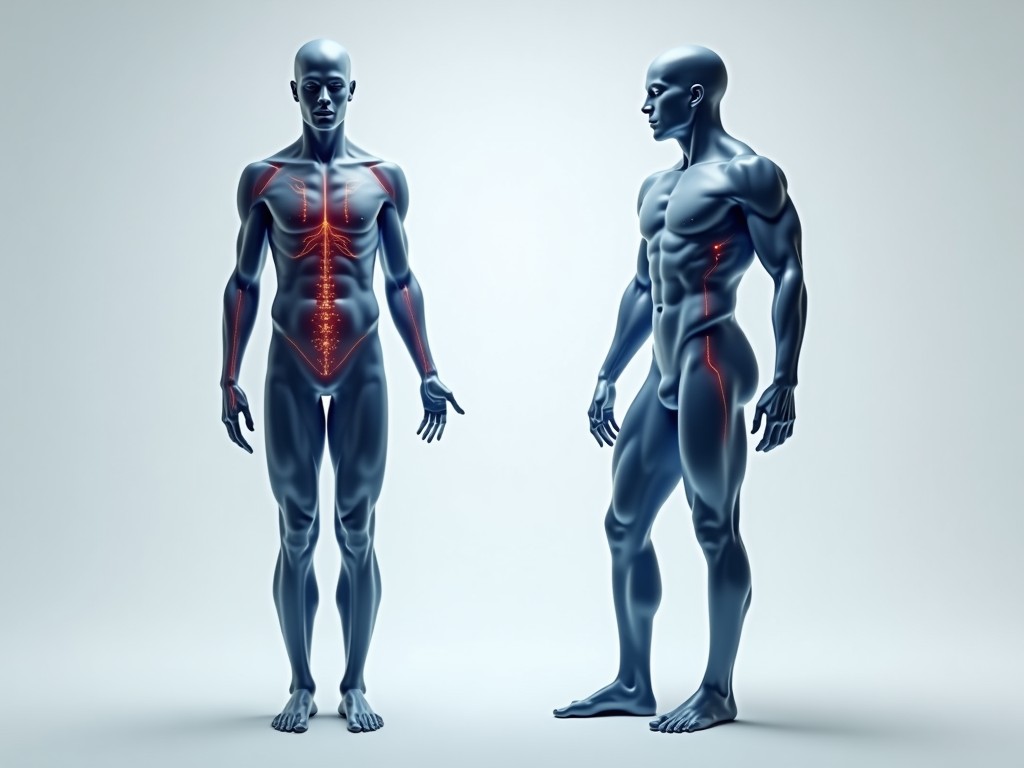
Budget Friendly Body Composition Analysis Testing Machine
Overview
This instrument provides multi‑frequency bioelectrical impedance analysis (BIA) for estimating fat mass, lean mass, and total body water in adults. It is designed for settings where acquisition cost must be balanced with measurement consistency, such as community fitness centers, small clinics, and corporate wellness programs.
The hardware uses eight tactile electrodes (four for hands, four for feet) to drive alternating currents at 5 kHz, 50 kHz, and 100 kHz, enabling segmental and whole‑body assessments within a single measurement cycle.
Technical Specifications
The following table lists typical performance characteristics; exact values can be adapted to specific project requirements.
| Parameter | Typical Value / Option |
|---|---|
| Measurement method | Multi‑frequency bioelectrical impedance analysis |
| Excitation frequencies | 5 kHz, 50 kHz, 100 kHz (selectable) |
| Electrode configuration | 8 tactile electrodes (hand‑to‑foot, hand‑to‑hand, foot‑to‑foot) |
| Output parameters | Fat mass, fat‑free mass, total body water, intracellular water, extracellular water, basal metabolic rate, segmental lean distribution |
| Accuracy (vs. DXA) | ±1.5 % body fat (typical) |
| Repeatability | ±0.5 % body fat (short‑term) |
| Measurement time | <30 seconds per subject |
| Power consumption | <15 W (idle <2 W) |
| Dimensions (W×D×H) | 350 mm × 250 mm × 120 mm |
| Weight | 4.5 kg |
| Operating temperature | 0 °C to 40 °C |
| Interface | USB 2.0, optional RS‑232 |
| Compliance | IEC 60601‑1‑2, FCC Part 15 Class B |
Applications
The system supports rapid screening in environments where throughput and ease of use are critical.
- Fitness centers – baseline and progress tracking for members, enabling personalized program adjustments.
- Rehabilitation clinics – monitoring fluid shifts and muscle atrophy during therapy cycles.
- Corporate wellness – aggregated data for health risk assessment while maintaining employee privacy.
- Research labs – cost‑effective tool for longitudinal studies requiring frequent body composition sampling.
Customization Options
Several aspects of the instrument can be adapted to match specific workflow or regulatory needs.
- Electrode gel type – dry‑contact, hydrogel, or disposable adhesive pads.
- Software language packs – English, Spanish, Mandarin, with optional local units (kg/lb, cm/in).
- Report templates – PDF, CSV, or HL7‑compatible output for EMR integration.
- Enclosure color – standard gray or custom RAL‑matched finish for branding.
Quality Control & Calibration
Each unit undergoes factory verification against a precision resistor network to confirm impedance accuracy within ±0.5 % across the three test frequencies.
Field calibration is recommended every 12 months using the supplied calibration block; the process takes under five minutes and adjusts gain factors stored in non‑volatile memory.
Built‑in self‑diagnostics check electrode contact quality before each measurement and flag insufficient contact to prevent erroneous readings.
Frequently Asked Questions
Can the electrode spacing be adjusted for different subject sizes?
The device uses fixed‑position hand and foot platforms; however, optional wide‑stance adapters are available to accommodate larger statures without compromising measurement repeatability.
What data is required before a quotation can be prepared?
Please provide the intended measurement volume (samples per day), required output formats, any regulatory certifications needed for your region, and whether you need optional accessories such as a printer or cart.
How are export shipments protected against damage?
Units are packed in double‑wall corrugated cartons with internal foam inserts, sealed with humidity‑indicating desiccant packs, and marked with handling labels for upright transport.
Next Steps
To discuss how this body composition analyzer can be integrated into your facility’s assessment workflow, please contact our technical sales team.