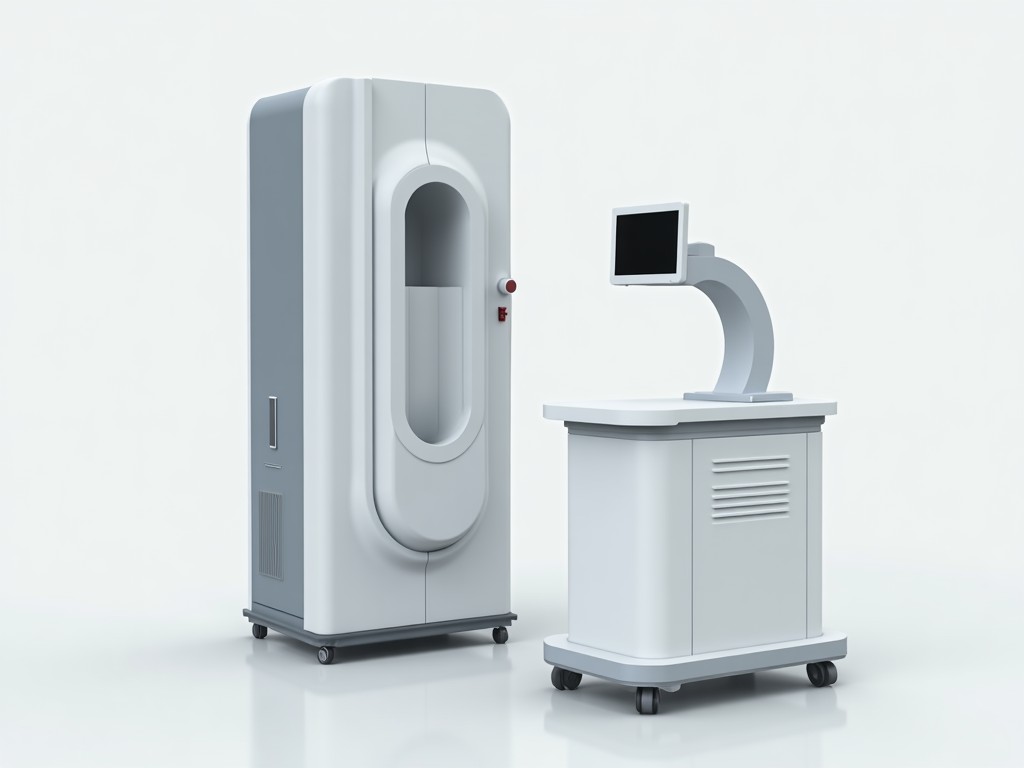
Body Fat Analyzer With Printer Supplier
The analyzer combines multi‑frequency bioelectrical impedance analysis (BIA) with a built‑in thermal printer to deliver immediate, hard‑copy body composition reports without relying on external
Inquire NowBody Fat Analyzer with Integrated Printer
The analyzer combines multi‑frequency bioelectrical impedance analysis (BIA) with a built‑in thermal printer to deliver immediate, hard‑copy body composition reports without relying on external computers or manual data entry.
Measurement is performed by sending low‑level alternating currents through the body at frequencies ranging from 5 kHz to 500 kHz. Impedance values at each frequency are used to calculate extracellular water, intracellular water, fat mass, and fat‑free mass using validated population‑specific equations.
Typical measurement range: fat mass 2 %–50 % of body weight; fat‑free mass 15 kg–200 kg; total body water 20 L–70 L. Accuracy compared to dual‑energy X‑ray absorptiometry (DXA) is within ±2.5 % for fat mass and ±1.5 % for fat‑free mass in adults aged 18–65.
Repeatability (coefficient of variation) across three consecutive measurements on the same subject is ≤0.8 % for impedance and ≤1.2 % for derived fat percentage when measurements are taken under standardized fasting and posture conditions.
The integrated printer uses a 58 mm wide thermal roll with a resolution of 203 dpi (8 dots/mm). Print speed is approximately 25 mm/s, allowing a full report (including graphical trends) to be output in under 4 seconds per test.
Report content includes: weight, BMI, body fat percentage, fat mass, fat‑free mass, skeletal muscle mass, total body water, visceral fat rating, basal metabolic rate, and segmental analysis (arms, legs, trunk). Users can select predefined templates or customize layout via the device menu.
Connectivity options: USB‑type C for firmware updates and data export, RS‑232 serial port for interfacing with legacy hospital systems, and Bluetooth 5.0 for wireless transfer to tablets or smartphones. Internal memory stores up to 10 000 test records, which can be downloaded as CSV or PDF files.
Power consumption during measurement is <2 W; standby power is <0.2 W. The unit operates from a 100‑240 VAC, 50/60 Hz external power adapter providing 12 VDC output. Battery operation (optional) supports up to 8 hours of continuous use on a 2600 mAh Li‑ion pack.
Typical applications include fitness center member assessments, clinical nutrition clinics, corporate wellness programs, sports performance labs, and academic research on body composition changes. The immediate printed report reduces transcription errors and provides clients with a tangible record they can retain for follow‑up visits.
Quality control begins with sensor calibration traceable to NIST‑certified resistance standards. Each unit undergoes a three‑point impedance verification (100 Ω, 1 kΩ, 10 kΩ) before shipment. Firmware includes automatic self‑test at power‑on, checking electrode contact quality, battery voltage, and printer head temperature.
Customization possibilities: choice of printer technology (thermal direct or inkjet for color logos), optional barcode/QR code generation on reports, multi‑language interface (English, Spanish, Mandarin, Arabic), and custom housing colors or branding OEM logos. Electrical interfaces can be adapted to RS‑485 or Modbus TCP upon request for integration with facility management systems.
| Parameter | Typical Value / Option |
|---|---|
| Measurement Method | Multi‑frequency BIA (5 kHz‑500 kHz) |
| Fat Mass Range | 2 %–50 % of body weight |
| Fat‑Free Mass Range | 15 kg–200 kg |
| Impedance Repeatability (CV) | ≤0.8 % |
| Printer Type | Thermal direct (58 mm width, 203 dpi) |
| Print Speed | ≈25 mm/s |
| Report Memory | 10 000 records |
| Power Supply | 100‑240 VAC adapter, 12 VDC output |
| Operating Temperature | 0 °C‑40 °C (non‑condensing) |
| Dimensions (W×D×H) | 210 mm × 150 mm × 65 mm |
| Weight | 1.2 kg (excluding battery) |
Frequently Asked Questions
- Can the analyzer be calibrated on site? Yes, the device includes a calibration mode that uses a precision resistor kit supplied with the unit; procedures are detailed in the service manual.
- What paper roll sizes are compatible? The printer accepts 58 mm width thermal rolls with lengths from 10 m to 50 m; custom widths are available upon request for OEM integration.
- Is data export possible without using the printer? Absolutely. Test results can be exported via USB‑C as CSV or PDF files, or transmitted wirelessly via Bluetooth to a paired device.
- How are electrode contacts maintained? The analyzer uses disposable, silver‑silver chloride electrodes with a snap‑on mechanism; replacement kits are sold separately and typically last for 100 tests per set.
- What is the typical lead time for a standard order? Production lead time is 3‑4 weeks for stock configurations; customized units (printer type, branding, language) require an additional 1‑2 weeks.
To discuss your specific requirements, request a quotation, or arrange a sample unit, please contact our technical sales team.
Request Quote / Contact Us