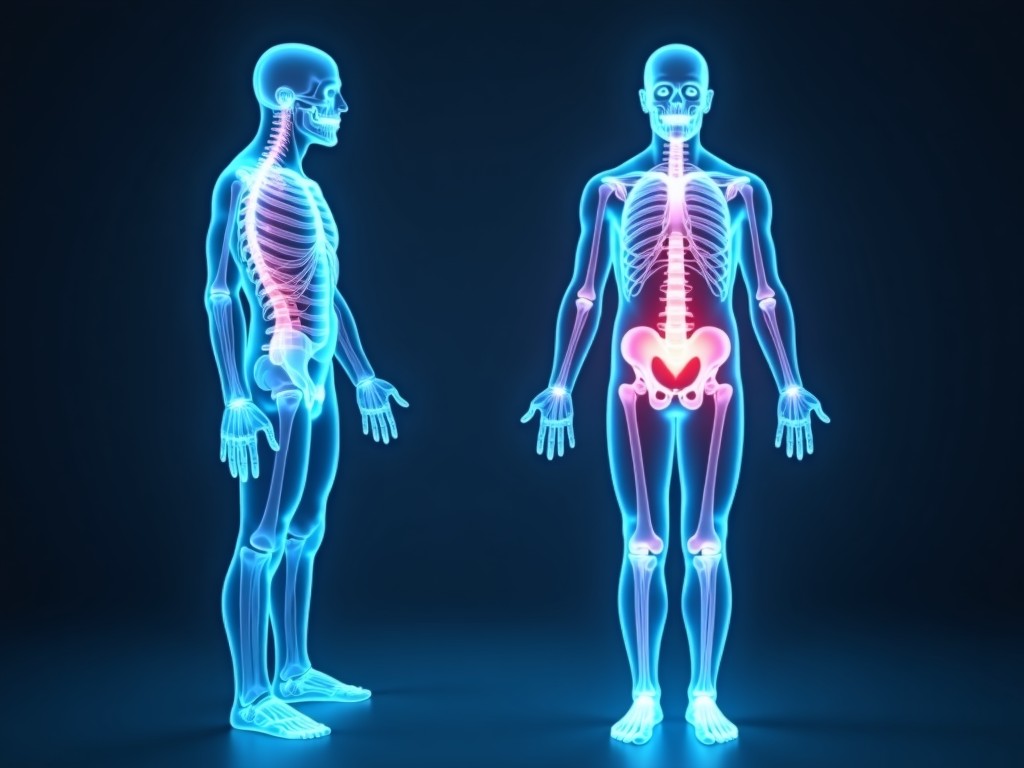
Body Composition Monitor Supplier Manufacturer
Body composition monitors quantify the proportion of fat, lean tissue, and water in the human body using electrical impedance methods. In occupational health, sports science, and clinical research,
Inquire NowBody Composition Monitor Supplier Manufacturer
Body composition monitors quantify the proportion of fat, lean tissue, and water in the human body using electrical impedance methods. In occupational health, sports science, and clinical research, repeatable measurements support tracking of nutritional status, training adaptation, and disease risk.
Suppliers that manufacture these instruments must ensure electrode consistency, signal stability, and compliance with safety limits for current injection. The following sections describe the measurement principle, technical characteristics, and factors that influence long‑term reliability.
Measurement Principle
The devices apply a low‑amplitude alternating current (typically 50 kHz to 500 kHz) through surface electrodes and measure the resulting voltage drop. Impedance varies with the conductive pathways of intracellular and extracellular fluid, allowing estimation of total body water, fat‑free mass, and fat mass via empirically derived equations.
Multi‑frequency models acquire data at several frequencies, improving separation of intracellular and extracellular compartments. Segmental arrangements place electrodes on limbs and torso to provide regional estimates, useful for identifying asymmetries in training or rehabilitation.
Key Technical Specifications
| Parameter | Typical Value / Range |
|---|---|
| Excitation Frequency | 5 kHz – 1 MHz (selectable) |
| Current Amplitude | ≤ 0.8 mA rms (ISO 60601‑2‑47 limit) |
| Measured Parameters | Fat mass, fat‑free mass, total body water, intracellular water, extracellular water, segmental lean mass (arms, legs, trunk) |
| Repeatability (CV) | ≤ 1.5 % under standardized posture and hydration |
| Power Supply | Internal rechargeable Li‑ion (≈ 8 h operation) or external 12 V DC |
| Operating Temperature | 10 °C – 40 °C |
| Dimensions (W×H×D) | ≈ 340 mm × 210 mm × 120 mm (handheld) |
| Weight | ≈ 1.2 kg (including battery) |
Industrial Applications
In corporate wellness programs, regular monitoring helps employers assess the impact of nutrition interventions and physical activity initiatives on employee health metrics.
Sports performance centers use segmental data to tailor strength and conditioning programs, tracking changes in limb‑specific lean mass that may indicate overuse or imbalance.
Clinical research facilities rely on the devices for longitudinal studies of sarcopenia, edema, and nutritional rehabilitation, where traceability to reference methods (DXA, MRI) is required for validation.
- Occupational health surveillance in manufacturing and logistics
- Weight‑management clinics and bariatric surgery follow‑up
- Military and first‑responder readiness assessment
- Academic labs studying metabolism and aging
Material and Design Considerations
Electrode surfaces are typically made of stainless steel or conductive rubber coated with a hypoallergenic gel to reduce skin impedance and ensure reproducible contact.
Housing materials combine ABS plastic for impact resistance with antimicrobial additives, allowing repeated cleaning in shared environments.
Cable strain relief and connector locking mechanisms prevent signal loss during frequent repositioning, a common requirement in high‑throughput screening stations.
Quality Assurance Process
Each unit undergoes factory calibration against a reference resistor network to verify excitation current and voltage measurement accuracy within ±0.5 %.
Functional testing includes impedance measurement on saline phantoms of known conductivity, confirming that the device translates resistance to body‑water estimates within the specified repeatability envelope.
Before shipment, a visual inspection checks electrode integrity, display readability, and button tactile response, while a safety leakage current test confirms compliance with medical‑equipment standards.
Customization Options
Manufacturers can adjust electrode layout to accommodate specific segmental protocols, such as extra electrodes for abdominal adiposity assessment.
Firmware can be configured to output data via Bluetooth LE, USB‑CDC, or Modbus RTU, enabling integration with existing health‑management software or enterprise resource planning systems.
Branding options include laser‑etched logos, custom color housings, and tailored user‑interface language packs for multinational deployments.
- Alternative electrode materials (titanium, silver‑plated)
- Extended battery capacity for 24‑hour operation
- Protective carrying case with foam inserts
- Calibration certificate traceable to national standards
Frequently Asked Questions
Can the measurement frequency be customized? Yes, the excitation frequency range can be limited to specific bands (e.g., 5 kHz, 50 kHz, 500 kHz) according to the validation study requirements.
What information is needed for a quotation? Required details include desired measurement parameters, electrode configuration, output interface, expected annual volume, and any regulatory certifications (e.g., CE, FDA) that must be demonstrated.
How is quality verified before delivery? Each unit receives a factory calibration report, a functional test sheet, and a safety compliance checklist; copies are available upon request.
Lead time for standard models typically ranges from four to six weeks after purchase order confirmation.
To discuss how these body composition monitors can be adapted to your facility’s workflow, request a detailed quotation or arrange a sample evaluation.
Contact Supplier