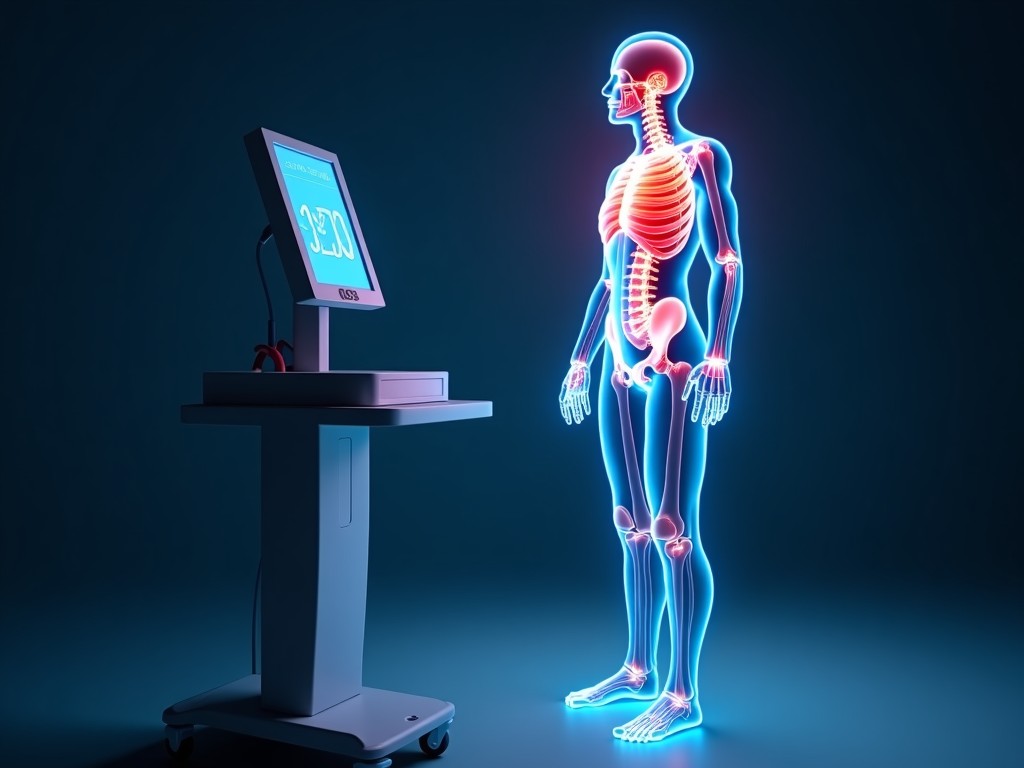
Body Composition Measuring Device Manufacturer
Manufacturers of body composition measuring devices focus on delivering instruments that quantify fat, muscle, bone, and water fractions with repeatable precision for clinical, fitness, and research
Inquire NowBody Composition Measuring Device Manufacturer Overview
Manufacturers of body composition measuring devices focus on delivering instruments that quantify fat, muscle, bone, and water fractions with repeatable precision for clinical, fitness, and research settings. The design process integrates bioelectrical impedance analysis (BIA), dual‑energy X‑ray absorptiometry (DXA), or air‑displacement plethysmography (ADP) depending on the target accuracy and portability requirements. Understanding the underlying measurement principle is essential for selecting a device that aligns with the intended application’s error tolerance.
Measurement Principles and Technologies
BIA devices pass a low‑amplitude alternating current through the body and measure the resulting impedance; the resistance and reactance values are then correlated with tissue composition using empirically derived equations. DXA systems emit two distinct X‑ray energy levels to differentiate bone mineral content from soft tissue, providing a three‑compartment model with typical precision errors below 1 % for fat mass. ADP devices determine body volume by measuring pressure changes within a sealed chamber, from which density and subsequently fat‑free mass are calculated using Siri’s equation.
Technical Specifications
| Parameter | Typical Range / Value | Notes |
|---|---|---|
| Measurement Method | BIA, DXA, ADP | Select based on required accuracy and portability |
| Frequency Range (BIA) | 5 kHz – 1 MHz | Multi‑frequency improves extracellular/intracellular separation |
| Voltage Excitation (BIA) | < 1 mA RMS | Ensures safety and minimal tissue heating |
| Scan Time (DXA) | 4 – 12 min | Includes positioning and image acquisition |
| Chamber Volume (ADP) | 300 – 500 L | Accommodates subjects up to 250 kg |
| Output Parameters | Fat mass, fat‑free mass, total body water, bone mineral content | Derived from raw impedance or attenuation data |
| Power Supply | 100‑240 V AC, 50/60 Hz | Universal input for global deployment |
| Data Interface | USB, Ethernet, Wi‑Fi (optional) | Enables EMR integration and remote monitoring |
Industrial Applications
In clinical nutrition, devices support longitudinal tracking of patients undergoing bariatric surgery or dialysis, where changes in extracellular water can confound weight‑based assessments. Sports science laboratories employ multi‑frequency BIA to monitor seasonal shifts in muscle mass among athletes, allowing training load adjustments based on lean tissue trends rather than total weight. Corporate wellness programs utilize portable ADP units for on‑site employee health screenings, providing immediate feedback that encourages participation in lifestyle interventions.
Design and Construction Considerations
Electrode materials for BIA typically consist of stainless steel or silver‑silver chloride coatings to ensure stable impedance over thousands of cycles; surface treatments reduce oxidation and maintain contact resistance below 10 kΩ. Mechanical enclosures are fabricated from ABS polycarbonate blends, offering impact resistance (IK08 rating) while keeping weight under 2 kg for handheld models. Internal shielding minimizes electromagnetic interference from nearby equipment, a critical factor in hospital environments where devices share power lines with imaging systems.
Quality Control and Validation
Each production lot undergoes a three‑stage verification: (1) electrical safety testing per IEC 60601‑1, (2) measurement accuracy assessment against reference methods (DXA for BIA, hydrostatic weighing for ADP), and (3) repeatability trials with ten consecutive measurements on a phantom torso to confirm coefficient of variation under 0.5 %. Calibration curves are stored in non‑volatile memory and can be updated via secure firmware upload, ensuring traceability to national metrology institutes.
Customization and Integration Options
Clients may request alternative electrode arrays (e.g., 8‑point tactile sensors for segmental analysis) or modified firmware algorithms tailored to specific ethnic populations where hydration constants differ. Integration packages include HL7‑compliant APIs for exporting results directly to hospital information systems, and optional barcode scanners for automated patient identification. Enclosure colors, labeling languages, and mounting brackets (wall‑mount, cart‑mount, or tabletop) are adjustable according to facility layout and infection‑control protocols.
Frequently Asked Questions
- Can dimensions be customized? Yes, enclosure length, width, and height can be adjusted within mechanical limits; detailed CAD files are shared after NDA execution.
- What information is required before quotation? Application environment (clinical, field, lab), desired measurement method, required throughput, and any regulatory certifications needed.
- What materials are available for electrodes? Standard offerings include stainless steel, Ag/AgCl, and gold‑plated variants; alternative biocompatible materials are available upon request.
- How is quality inspected? Each unit receives functional test, safety test, and accuracy verification against traceable references before packaging.
- What packaging methods are available? Anti‑static foam inserts within double‑wall corrugated cartons, with optional wooden crates for overseas shipments.
- How are export shipments protected? Packages include shock indicators, humidity cards, and compliance with ISTA 3A standards.
- What is the typical production lead time? 6‑8 weeks for standard configurations; custom electrode arrays may extend to 10‑12 weeks.
- How are samples arranged? Evaluation units are shipped with a calibrated phantom and a short‑term loan agreement; return shipping is prepaid.
Contact for Technical Inquiry
Engineers and procurement specialists seeking detailed performance data, customization timelines, or regulatory documentation can reach out via the contact form. Providing the intended use case, required measurement precision, and volume estimates enables our application team to prepare a accurate quotation and lead‑time schedule.