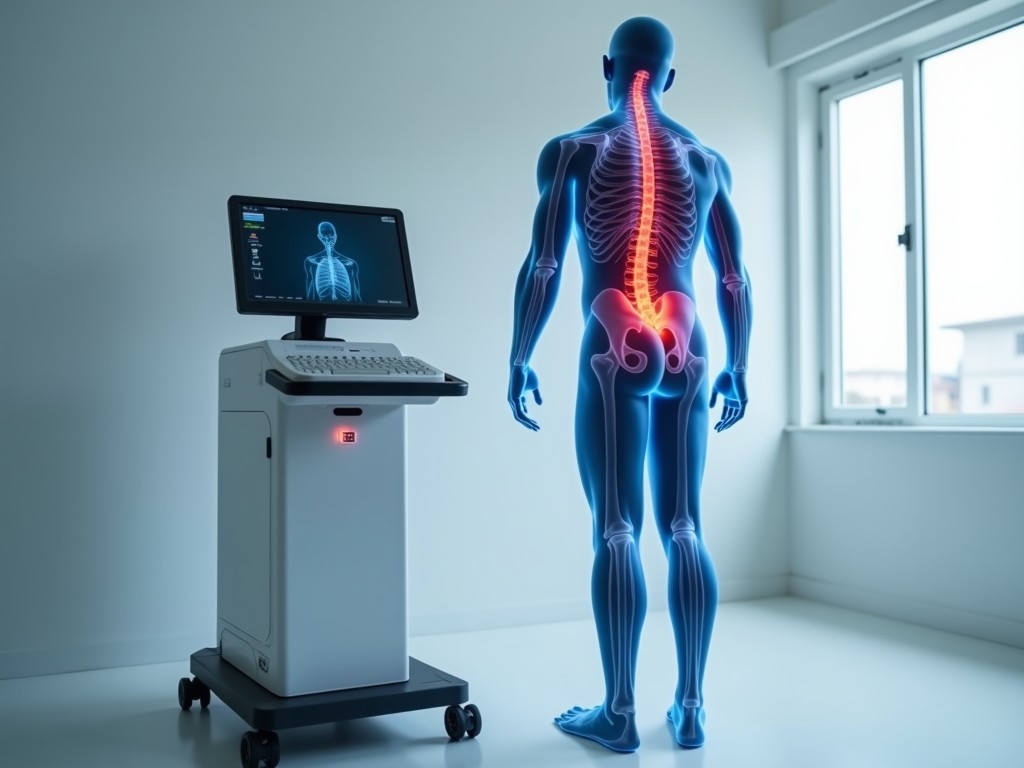
Body Composition Analyser Machine Supplier
The analyser determines fat mass, lean mass, total body water and bone mineral content using multi‑frequency bioelectrical impedance. By sending low‑level alternating currents through segmental
Inquire NowBody Composition Analyser Machine Supplier
The analyser determines fat mass, lean mass, total body water and bone mineral content using multi‑frequency bioelectrical impedance. By sending low‑level alternating currents through segmental electrodes, the device derives impedance values at frequencies ranging from 5 kHz to 500 kHz. These measurements are converted to compartment volumes via validated population‑specific equations.
Measurement principle relies on the differing conductive properties of fat and lean tissue; at lower frequencies current flows mainly through extracellular water, while higher frequencies penetrate cell membranes, enabling intracellular water estimation. The device applies a constant current of less than 0.8 mA, ensuring safety for repeated testing. Impedance is measured separately for each limb and the trunk, allowing segmental analysis of muscle distribution.
| Parameter | Typical Value / Range | Notes |
|---|---|---|
| Measurement Frequencies | 5 kHz, 50 kHz, 100 kHz, 250 kHz, 500 kHz | Multi‑frequency enables extracellular and intracellular water separation |
| Electrode Configuration | 8‑point tactile electrodes (hand‑to‑hand, foot‑to‑foot) | Segmental analysis of arms, legs and trunk |
| Output Parameters | Fat mass, fat‑free mass, total body water, intracellular water, extracellular water, skeletal muscle mass, basal metabolic rate | Derived via validated BIA equations |
| Repeatability (CV) | ≤1.5 % for fat mass | Measured under standardized fasting and hydration conditions |
| Power Supply | 100‑240 V AC, 50/60 Hz, 30 VA | Medical‑grade isolated transformer |
Industrial facilities utilise the analyser to monitor workforce health where physical strain and environmental exposure affect fluid balance. In manufacturing plants with high‑temperature processes, regular assessment of extracellular water helps detect early signs of dehydration or heat stress. In logistics centres, tracking changes in skeletal muscle mass informs ergonomic interventions aimed at reducing manual‑handling injuries.
- Corporate wellness programs – tracking employee health trends to inform preventive interventions
- Sports performance centers – monitoring training‑induced changes in muscle and fluid compartments
- Clinical research – providing reference data for studies on nutrition, ageing and rehabilitation
- Occupational health – assessing fluid balance in workers exposed to hot environments or protective clothing
Quality assurance follows a traceable calibration schedule using precision resistors and phantom tanks with known conductivity. Each unit undergoes a linearity check across the full frequency spectrum before shipment. Validation against dual‑energy X‑ray absorptiometry (DXA) is performed on a representative sample; results are documented in the accompanying test report. Firmware includes self‑diagnostic routines that flag electrode contact issues or out‑of‑range impedance values.
Customization options address specific site requirements. Electrode spacing can be adjusted for pediatric or obese populations, and enclosure ratings are available up to IP65 for dust‑ and wash‑down environments. Software interfaces support HL7, CSV export, and RESTful API integration with existing occupational health platforms. Optional accessories include a portable battery pack for mobile testing stations and a barcode scanner for automated subject identification.
For further information, a quotation, or to request a detailed datasheet, please contact our technical team using the link below.
Contact Technical Team