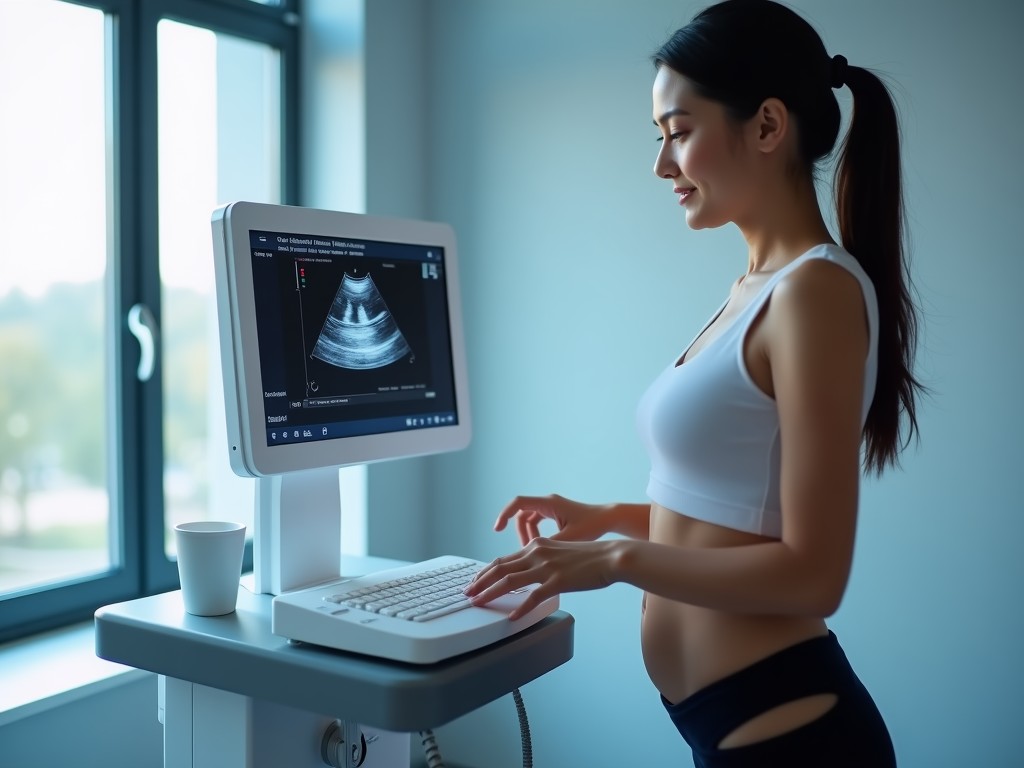
B2B Ultrasound Body Fat Analyzer Supplier
The device emits focused ultrasound pulses at frequencies between 2 MHz and 15 MHz into subcutaneous tissue. Reflections from tissue interfaces are captured by a piezoelectric array, and the
Inquire NowB2B Ultrasound Body Fat Analyzer Supplier
Principle of Operation
The device emits focused ultrasound pulses at frequencies between 2 MHz and 15 MHz into subcutaneous tissue. Reflections from tissue interfaces are captured by a piezoelectric array, and the time‑of‑flight differences are processed to estimate fat layer thickness. Multi‑frequency operation compensates for variations in skin hydration and tissue density, improving measurement repeatability across subjects.
Typical penetration depth reaches 30 mm with axial resolution better than 0.5 mm. Calibration against dual‑energy X‑ray absorptiometry (DXA) yields a correlation coefficient (R²) of 0.94 and a mean absolute error of 1.2 mm for thigh fat thickness measurements.
Key Technical Specifications
| Parameter | Typical Value | Unit | Notes |
|---|---|---|---|
| Ultrasound Frequency Range | 2 – 15 | MHz | Multi‑frequency transducers |
| Measurement Depth | 0 – 30 | mm | Adjustable gain |
| Axial Resolution | ≤0.5 | mm | At 5 MHz |
| Repeatability (σ) | ≤0.3 | mm | 10 repeated measures |
| Output Interface | USB‑C / RS‑485 / BLE 5.0 | – | Selectable per order |
| Power Consumption | ≤2.5 | W | Typical scanning mode |
Industrial Applications
In corporate wellness programs, the analyzer provides rapid, non‑invasive body composition screening for large employee cohorts, enabling longitudinal tracking without the logistical burden of DXA appointments. The short measurement time (<10 s per site) supports high‑throughput screening in occupational health settings.
For fitness equipment manufacturers, integrating ultrasound fat‑ thickness modules into treadmills or strength stations yields real‑time feedback that can be used to adjust resistance algorithms, enhancing user engagement and providing data‑driven programming.
Research laboratories studying metabolic disorders benefit from the device’s portability and repeatability, allowing longitudinal studies in field conditions where imaging facilities are unavailable.
Customization Options
- Transducer array geometry: linear (16‑element), convex (24‑element), or phased‑array (32‑element) configurations.
- Housing materials: medical‑grade ABS, stainless‑steel 316L, or antimicrobial‑coated polycarbonate.
- Interface selection: USB‑C for PC connectivity, RS‑485 for industrial PLC integration, Bluetooth Low Energy for wireless data logging.
- Software development kit (SDK) with C#, Python, and LabVIEW wrappers for custom application development.
- Calibration ranges adjustable from 0‑10 mm to 0‑40 mm fat thickness to suit specific anatomical sites.
Quality Assurance & Testing
Each unit undergoes a two‑stage verification process. First, transducer impedance and sensitivity are measured using a calibrated hydrophone tank, ensuring adherence to ±3 dB tolerance across the operating band. Second, the assembled system is tested against a tissue‑mimicking phantom with known fat‑to‑muscle ratios; measurement error must remain within ±0.8 mm for 95 % of test points.
Environmental robustness is confirmed through temperature cycling (−10 °C to +50 °C) and humidity exposure (10 %–90 % RH non‑condensing) following IEC 60601‑1‑11 standards. All critical components are traceable to lot numbers, and a full test report is available upon request.
Frequently Asked Questions
- Can the measurement depth be customized for specific applications?
- Yes, the gain and frequency settings can be adjusted to optimize penetration for superficial or deeper fat layers, subject to safety limits.
- What information is required before a quotation can be issued?
- Application site (e.g., thigh, abdomen), desired measurement throughput, required output interface, and any housing or certification needs.
- Which materials are available for the device enclosure?
- Medical‑grade ABS, stainless‑steel 316L, and antimicrobial polycarbonate are offered; alternative materials can be evaluated per project.
- How is quality inspected before shipment?
- Each unit receives functional testing, safety isolation verification, and a final visual inspection; statistical process control is applied to key parameters.
- What packaging methods are available for export shipments?
- Standard packaging includes anti‑static foam inserts within double‑wall corrugated cartons; custom crating or palletization can be arranged.
- What is the typical production lead time?
- Lead time ranges from 4 to 6 weeks for standard configurations; customized orders may extend to 8 weeks depending on component availability.
- How are samples arranged for evaluation?
- Sample units can be shipped with a provisional invoice; evaluation periods typically last 30 days with optional extension.
Contact for Inquiry
To discuss your specific measurement requirements, please provide details on the intended use site, expected sample volume, and any needed certifications.