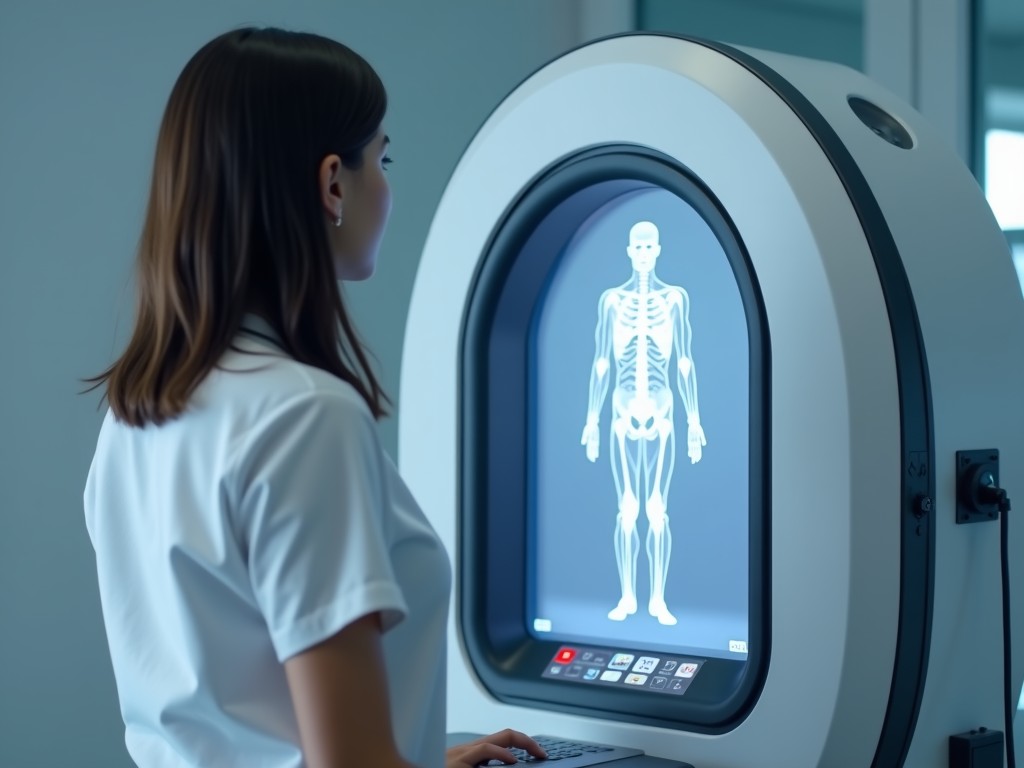
B2B Purchase Bia Body Composition Analyzer
Bioelectrical impedance analysis (BIA) estimates body composition by passing a low‑level alternating current through the torso and limbs. The analyzer measures the resulting impedance and reactance
Inquire NowBIA Body Composition Analyzer for B2B Procurement
Bioelectrical impedance analysis (BIA) estimates body composition by passing a low‑level alternating current through the torso and limbs. The analyzer measures the resulting impedance and reactance at one or more frequencies to derive fat mass, lean mass, total body water, and segmental distribution.
Using multiple frequencies improves the separation of intracellular and extracellular water because low frequencies penetrate mainly extracellular fluid while higher frequencies pass through cell membranes. This enables the device to estimate intracellular water, extracellular water, and thus derive fat‑free mass with greater accuracy than single‑frequency BIA.
Electrode placement determines the measurement path; common configurations include hand‑to‑foot, hand‑to‑foot segmental (separate readings for arms, legs, and trunk), and foot‑to‑foot for standing units. The choice of electrodes—disposable adhesive pads or reusable stainless‑steel plates—affects setup time and long‑term consumable cost.
Output parameters typically include total fat mass, fat‑free mass, total body water, intracellular water, extracellular water, and segmental lean mass for each limb and the trunk. Some models also provide visceral fat area, basal metabolic rate, and phase angle, which are derived from the measured resistance and reactance values.
Measurement Principles
The relationship between impedance and body composition follows the mixture theory where the conductive paths represent fluids and the resistive paths represent non‑conductive tissue. By applying a known current and measuring the voltage drop, the device calculates resistance (R) and reactance (Xc), which are then fed into empirical or multivariable equations validated against reference methods such as dual‑energy X‑ray absorptiometry (DXA).
Typical excitation currents are kept below 0.8 mA RMS to ensure patient safety and comfort, while the voltage remains under a few volts. Frequencies are selectable; a common range spans 5 kHz to 500 kHz, allowing the instrument to sample both the low‑frequency extracellular pathway and the high‑frequency intracellular pathway.
Repeatability is expressed as coefficient of variation (CV) of less than 1.5 % for total body water and under 2 % for fat mass when measurements are taken under standardized conditions (same time of day, posture, and hydration state). This level of precision supports longitudinal tracking in clinical and athletic programs.
Key Specifications
| Parameter | Specification |
|---|---|
| Measurement Method | Multi‑frequency BIA |
| Excitation Current | ≤0.8 mA sinusoidal |
| Frequency Range | 5 kHz – 500 kHz (selectable) |
| Number of Frequencies | 3‑5 (model dependent) |
| Electrode Type | Disposable adhesive or reusable stainless‑steel |
| Output Parameters | Fat mass, Fat‑free mass, Total body water, Intracellular water, Extracellular water, Segmental lean (arms, legs, trunk) |
| Display | 7‑inch LCD touchscreen, 800×480 px |
| Power Consumption | <15 W |
| Dimensions (W×D×H) | 340 mm × 260 mm × 110 mm |
| Weight | 4.2 kg |
| Operating Temperature | 10 °C – 40 °C |
| Compliance | IEC 60601‑1, ISO 13485, CE marked |
Typical Applications
- Fitness centers and gyms – provides quick body‑composition screening for member onboarding and progress tracking.
- Clinical weight‑management programs – supports monitoring of fluid shifts and lean‑mass changes in patients undergoing diet or bariatric therapy.
- Corporate wellness and occupational health – enables employers to offer preventive health assessments with minimal disruption to work schedules.
- Research institutions studying metabolism and nutrition – supplies segmental data useful for protocols that examine regional adipose distribution.
- Sports performance labs – aids in evaluating training‑induced changes in muscle mass and hydration status.
Customization and Integration
The analyzer can be supplied with a software development kit (SDK) that allows integration with hospital information systems, electronic medical records, or club management platforms via HL7, CSV, or JSON interfaces.
Optional connectivity modules include Wi‑Fi, Ethernet, and Bluetooth, enabling wireless data transfer to tablets or central servers. RFID or barcode readers can be added for automatic member identification during measurement.
Electrode configurations are interchangeable; hand‑to‑foot, hand‑to‑hand segmental, and foot‑to‑foot setups are available as plug‑in accessories. Enclosure options range from a bench‑top console to a wall‑mounted unit or a mobile cart with battery backup for point‑of‑care use.
Quality Assurance and Compliance
Design verification includes electrical safety testing per IEC 60601‑1, electromagnetic compatibility testing, and biocompatibility assessment of electrode materials according to ISO 10993‑5.
Each production lot undergoes functional testing where impedance measurements are compared against a calibrated reference phantom. Calibration traceability is maintained to national standards, and a calibration certificate is supplied with every unit.
Manufacturing follows ISO 9001 procedures, with in‑process inspections for component tolerances and final visual inspection. A standard warranty covers parts and labor for 24 months, with optional extended service agreements available.
Procurement Considerations
Prospective buyers can request a evaluation unit; lead time for a standard configuration is typically six to eight weeks after purchase order receipt, depending on selected options and regional logistics.
Minimum order quantities vary by distributor, but single‑unit purchases are supported for pilot programs. Spare parts such as electrode cables, replacement pads, and battery packs are stocked for fast‑moving items.
Total cost of ownership includes periodic electrode replacement (estimated 300‑500 measurements per set of disposable pads), annual calibration service, and optional software license renewals for advanced analytics modules.
Frequently Asked Questions
Can the electrode placement be customized for segmental analysis?
Yes, the system supports interchangeable electrode sets that enable hand‑to‑foot, hand‑to‑hand, and foot‑to‑foot configurations, allowing regional lean‑mass and fat‑mass measurements for arms, legs, and trunk.
What information is needed to prepare a quotation?
To generate a quote we require the desired electrode type, connectivity options (Wi‑Fi/Ethernet/Bluetooth), enclosure preference (bench‑top, wall‑mount, cart), and any software integration requirements such as HL7 or CSV export.
Are calibration services available on site?
Calibration can be performed on site using a certified reference phantom, or the unit can be returned to the service center. Both options are covered under the standard warranty or service agreement.
What is the typical production lead time for a customized unit?
Lead times for units with non‑standard electrode sets, special enclosures, or custom software range from eight to twelve weeks, depending on component availability and engineering effort.