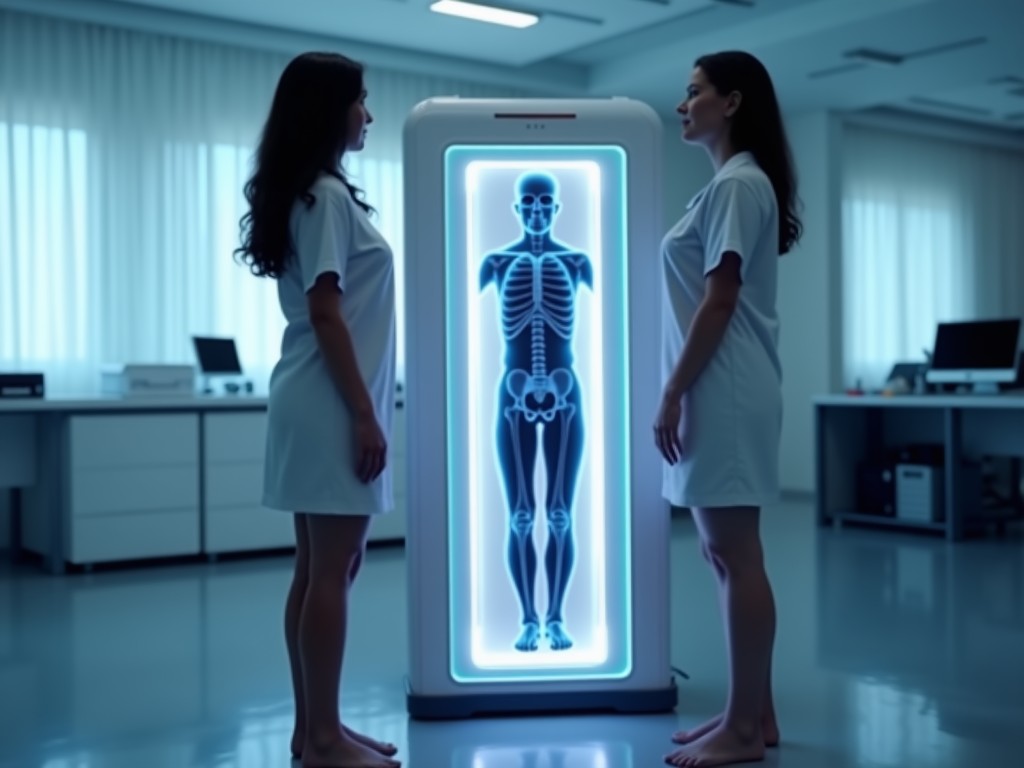
B2B Budget Friendly Body Composition Analyzer Factory
This analyzer is intended for facilities that require routine body composition screening of large groups, such as employee wellness programs in manufacturing plants, occupational health clinics, or
Inquire NowBudget-Friendly B2B Body Composition Analyzer
This analyzer is intended for facilities that require routine body composition screening of large groups, such as employee wellness programs in manufacturing plants, occupational health clinics, or large‑scale research cohorts. The design focuses on delivering measurement precision adequate for trend tracking while keeping unit cost low enough for broad deployment.
Key Technical Specifications
| Parameter | Typical Value / Range |
|---|---|
| Measurement Method | Multi‑frequency Bioelectrical Impedance Analysis (BIA) |
| Frequency Range | 5 kHz – 500 kHz (5‑point spectrum) |
| Electrode Configuration | 8‑point tactile electrodes (hand‑to‑foot) |
| Output Parameters | Fat mass, fat‑free mass, total body water, intracellular water, extracellular water, phase angle, basal metabolic rate |
| Accuracy vs. DXA (Reference) | Mean absolute error ≈ 1.8 kg for fat mass, 2.0 kg for fat‑free mass (population level) |
| Repeatability (CV%) | ≤ 1.2 % for impedance, ≤ 1.5 % for derived fat mass |
| Measurement Time per Subject | ≈ 20 seconds (including electrode contact) |
| Throughput | Up to 150 subjects per hour with automated data logging |
| Power Consumption | 12 W typical, 24 V DC input (external adapter) |
| Dimensions (W × D × H) | 320 mm × 260 mm × 110 mm |
| Weight | 2.8 kg |
| Operating Temperature | 10 °C – 40 °C, 10 % – 90 % RH non‑condensing |
| Data Interface | USB 2.0 host, Ethernet (TCP/IP), optional Wi‑Fi module |
| Calibration Interval | Every 12 months using precision resistor network (traceable to NIST) |
The specification set above enables reliable group‑level analysis while keeping the bill of materials modest. For example, the 8‑point electrode layout reduces wiring complexity and material cost compared with full‑body segmental arrays, yet still provides sufficient spatial information to estimate extracellular‑intracellular water shifts relevant to hydration monitoring in industrial environments.
Typical Applications
- Employee wellness programs in high‑volume manufacturing sites where quarterly body composition tracking supports ergonomic interventions and health‑care cost forecasting.
- Occupational health clinics conducting pre‑placement and periodic surveillance for physically demanding roles, providing rapid, non‑invasive screening that does not require specialized personnel.
- Large‑scale epidemiological or corporate research studies needing repeatable measurements across thousands of participants with minimal per‑subject time.
- Sports performance centers monitoring seasonal changes in lean mass and hydration for tactical athletes, where cost per test must stay low to accommodate frequent testing.
- Military recruitment and readiness assessments where portable, ruggedized units can be deployed in field stations for quick body composition checks.
Customization Options
- Electrode geometry – optional hand‑only or foot‑only configurations for specialized protocols.
- Software language packs – UI available in English, Spanish, Mandarin, and additional languages upon request.
- Data export formats – CSV, JSON, HL7, or direct API push to ERP/HR systems.
- Enclosure material – standard ABS impact‑resistant housing; optional stainless‑steel grade 304 for corrosive or wash‑down environments.
- Mounting choices – desktop base, wall‑mount bracket, or mobile cart with lockable wheels.
- Integration accessories – barcode scanner for subject ID, RFID reader, or biometric fingerprint add‑on.
Quality Assurance Approach
Manufacturing begins with controlled impedance front‑end circuitry assembled on FR‑4 boards with trace width/spacing calibrated to maintain <0.1 % resistance variation. Each unit undergoes a burn‑in cycle at 40 °C for 24 hours to stabilize component drift. Post‑burn‑in, a precision resistor network verifies impedance measurement accuracy across the full frequency spectrum; acceptance criteria are ±0.5 % of nominal values. Final functional testing includes repeat measurements on a multi‑compartment phantom with known fluid volumes to confirm that derived outputs (fat mass, total body water) fall within the stated error bounds before packaging.
Frequently Asked Questions
The standard 8‑point layout uses fixed spacings optimized for adult populations ranging from 1.5 m to 2.0 m height. Custom spacings are available as a mechanical adaptation for pediatric or specific anthropometric cohorts.
Quantity, desired enclosure material, any software language or data export needs, mounting preference, and target delivery region. Optional accessories such as barcode scanners or Wi‑Fi modules should be listed at this stage.
Each unit receives automated impedance verification, visual inspection of solder joints, and functional test with a calibrated phantom. A statistical process control chart tracks key parameters; any lot exceeding 1.5 % deviation triggers a hold and root‑cause analysis.
Units are placed in anti‑static bags, then secured in double‑wall corrugated cartons with corner protectors and foam inserts. Cartons are banded and stretch‑wrapped for palletization, compliant with ISTA 3A standards for general freight.
Standard configurations ship within 4‑6 weeks after receipt of purchase order. Custom enclosures or firmware alterations may extend lead time to 8‑10 weeks, confirmed at quoting.
Qualified customers may request a single unit sample, subject to a refundable deposit that is applied toward the first production order. Sample lead time aligns with standard production schedule.
Next Steps
If the technical specifications align with your screening program requirements, please reach out to discuss configuration options, pricing, and delivery timelines.
Contact Sales