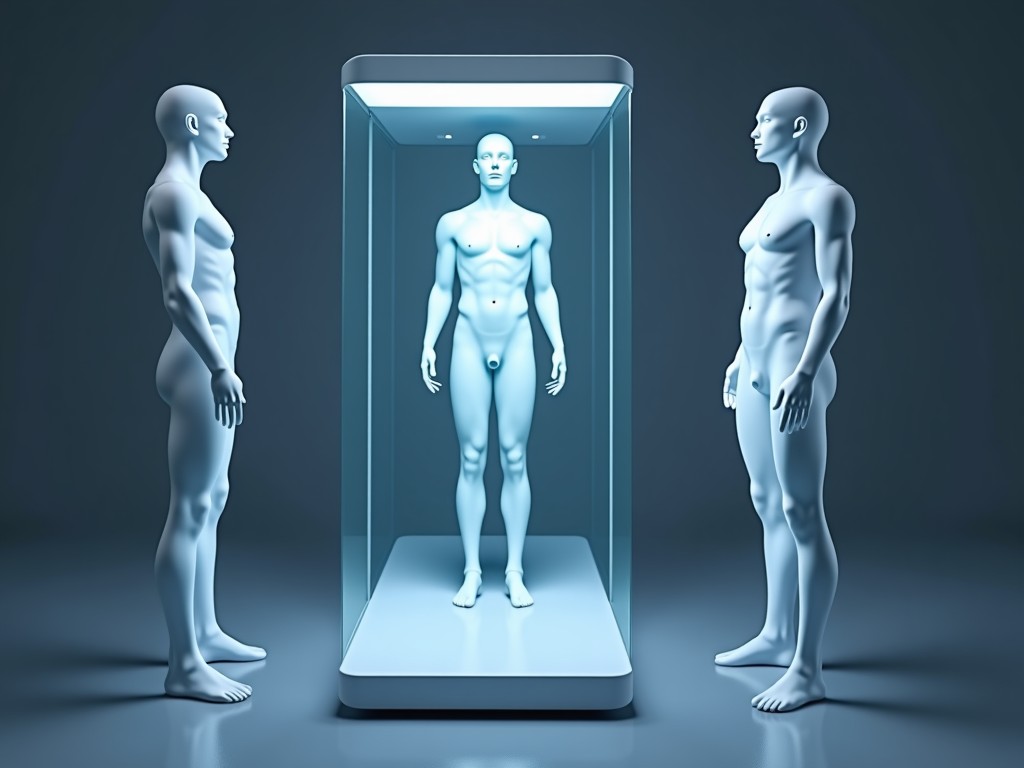
Wholesale 3D Body Scanner Mirror Suppliers
A 3D body scanner mirror is a precision optical component that reflects structured light or laser patterns onto a subject, enabling the sensor array to capture depth data. The mirror’s surface
Inquire NowWholesale 3D Body Scanner Mirror Suppliers
A 3D body scanner mirror is a precision optical component that reflects structured light or laser patterns onto a subject, enabling the sensor array to capture depth data. The mirror’s surface flatness, reflectance uniformity, and angular stability directly influence measurement accuracy and repeatability in industrial scanning systems.
Technical Specifications
- Scanning resolution: typically 0.1 mm to 0.5 mm depending on optics and sensor pitch.
- Measurement volume: adjustable from 0.5 m³ to 2 m³ via mirror tilt and focal length.
- Mirror substrate: low‑expansion borosilicate glass or silicon carbide, thickness 6 mm–12 mm.
- Reflective coating: aluminum or silver with dielectric overcoat, average reflectance >90 % at 850 nm.
- Surface flatness: λ/10 peak‑to‑valley across clear aperture.
- Angular adjustment range: ±15° in two axes with micrometer‑grade actuators.
- Power consumption: <5 W for mirror heating (if active thermal control).
Applications in Industrial Settings
In apparel manufacturing, the mirror enables rapid capture of body contours for pattern generation, reducing reliance on manual measurements and cutting fabric waste by up to 15 %.
Fitness centers use the same optical path to track longitudinal changes in muscle distribution, where mirror stability ensures comparable data across sessions spaced weeks apart.
Healthcare providers employ the scanner for prosthetic fitting; the mirror’s low‑expansion substrate minimizes distortion caused by ambient temperature fluctuations in clinical environments.
Customization Options
- Mirror diameter: 50 mm to 300 mm, with custom shapes (rectangular, elliptical) available upon request.
- Coating selection: enhanced aluminum for UV stability, protected silver for visible‑nearIR, or dielectric stacks for specific laser wavelengths.
- Frame material: stainless steel, aluminum alloy, or composite inserts to match mounting interface stiffness.
- Mounting interface: threaded inserts, kinematic mounts, or adhesive bonding pads designed for specific scanner housings.
- Optional features: integrated heating element for dew‑point control, embedded fiducial marks for auto‑alignment.
Quality Control Philosophy
Each mirror undergoes interferometric surface‑figure testing to verify λ/10 flatness across the clear aperture, followed by spectrophotometric reflectance measurement at the operational wavelength.
Mechanical inspections include flatness after simulated thermal cycling (−20 °C to +60 °C) and vibration testing per IEC 60068‑2‑6 to ensure alignment stability.
Final verification consists of a scan‑repeatability test using a calibrated step‑height gauge, with results logged for traceability.
Standard vs Custom Specifications
| Parameter | Standard Offering | Customizable Range |
|---|---|---|
| Mirror Diameter | 100 mm | 50 mm – 300 mm |
| Substrate Material | Borosilicate Glass | Silicon Carbide, Zerodur, Custom Glass |
| Reflective Coating | Aluminum + SiO₂ | Silver, Protected Aluminum, Dielectric Stacks |
| Surface Flatness | λ/10 | λ/20 – λ/5 (per application) |
| Mounting Interface | Threaded M6 Inserts | Kinematic Mount, Adhesive Pad, Custom Flange |
Frequently Asked Questions
Q: Can the mirror dimensions be customized to fit existing scanner housings? A: Yes, diameter, shape, and thickness can be adjusted based on your mechanical interface; provide the housing drawing for a feasibility review.
Q: What information is required before quotation? A: We need the operational wavelength, desired reflectance, clear aperture size, environmental temperature range, and any required certifications.
Q: Which coating options are available for high‑power laser applications? A: Protected silver or dielectric multilayer coatings are offered; specify the laser wavelength and power density for a suitable recommendation.
Q: How are export shipments protected against damage? A: Mirrors are packaged in custom foam inserts inside double‑wall corrugated boxes, with shock‑indicating labels and humidity‑desiccant packs.
Contact Us for Wholesale Inquiries
To discuss volume pricing, custom specifications, or request a sample, contact our engineering team. You may also submit a quote request or download the specification sheet for detailed parameters.