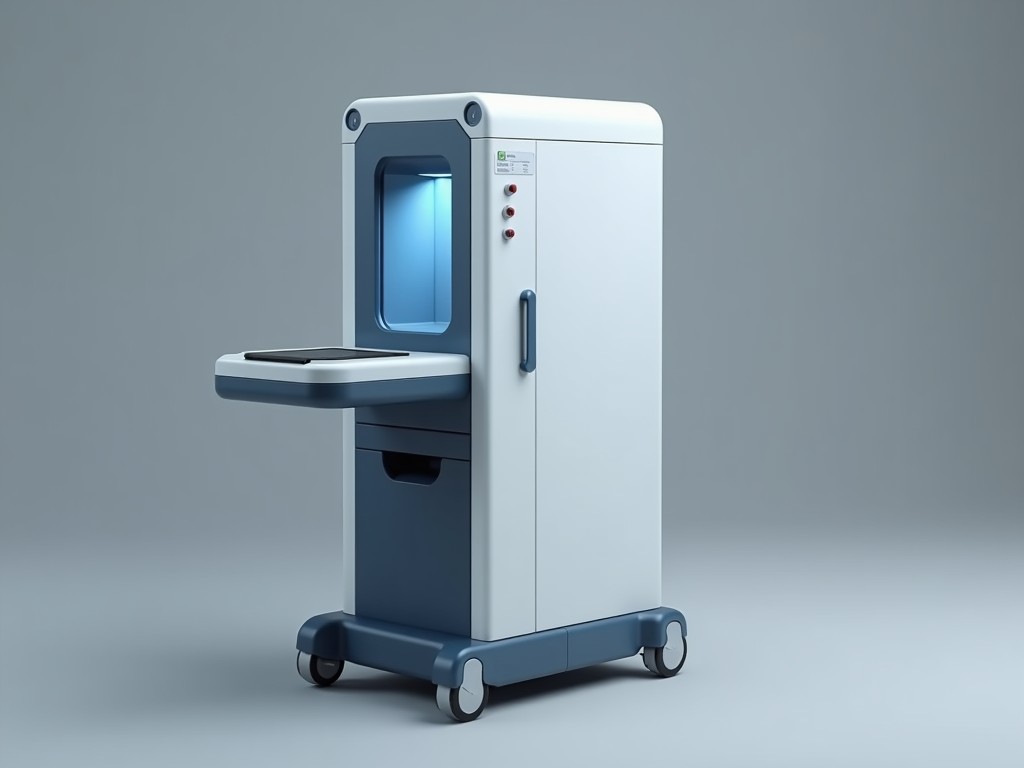
Wholesale Portable 3D Body Scanner
A portable 3D body scanner captures the three‑dimensional shape of a human body using structured light or laser triangulation, producing a dense point cloud that can be processed into a watertight
Inquire NowWholesale Portable 3D Body Scanner
A portable 3D body scanner captures the three‑dimensional shape of a human body using structured light or laser triangulation, producing a dense point cloud that can be processed into a watertight mesh. The device is designed for on‑site use in factories, retail environments, or research labs where repeated, quick measurements are required without moving the subject to a fixed scanning booth.
Key Technical Characteristics
The scanner operates with a Class 2 eye‑safe laser line projector and a pair of high‑resolution CMOS sensors, achieving a point spacing of 0.5 mm at a working distance of 0.8 m. Measurement volume is a cylinder 1.2 m in diameter and 2.0 m high, sufficient for full‑body capture of adults and children. Typical single‑scan acquisition time is under 1.5 seconds, with a maximum frame rate of 30 fps for dynamic posture studies.
- Resolution: 0.5 mm point spacing (≈2 million points per scan)
- Accuracy: ±2 mm RMS over the calibrated volume
- Scan speed: 1.5 s per full body, 30 fps video mode
- Power: 12 V DC, 20 W average consumption, optional hot‑swap battery pack (up to 4 h operation)
- Weight: 2.3 kg (including battery), dimensions 220 mm × 150 mm × 100 mm
| Parameter | Typical Value |
|---|---|
| Working Distance | 0.6 m – 1.2 m |
| Output Formats | PLY, OBJ, STL, XYZ, JSON (point cloud) |
| Operating Temperature | 0 °C – 40 °C |
| Interface | USB 3.0, Wi‑Fi 6 (optional) |
Typical Industrial Applications
In apparel manufacturing, the scanner provides accurate body measurements for pattern grading, reducing the need for physical fittings and decreasing sample lead time by up to 40 %. Ergonomics consultants use the captured geometry to design workstations and personal protective equipment, ensuring that clearance envelopes match the 95th percentile user. Sports science labs employ the device to track morphological changes during training cycles, correlating volume shifts with performance metrics.
Healthcare providers utilize the scanner for prosthetic socket design, where a precise limb contour improves fit and reduces pressure points. Retail chains deploy portable units in‑store for virtual try‑on experiences, generating avatars that drive online conversion rates. Because the system is lightweight and battery‑operated, it can be moved between production lines or pop‑up events without recalibration, preserving measurement consistency across locations.
Customization and Integration Options
The scanner ships with a C++ SDK and a Python wrapper that expose raw frame data, mesh generation, and alignment APIs. Clients can embed the output into existing PLM, ERP, or CAD pipelines via TCP/IP or UDP streams. Optional accessories include a motorized turntable for automated 360° capture, a quick‑release mounting bracket for fixed‑installation on conveyor sides, and a protective hard‑case rated IP 54 for dust and splash resistance.
- Lens options: narrow‑field (0.6 m – 0.9 m) for high‑detail torso scans, wide‑field (0.9 m – 1.5 m) for full‑body capture
- Software modules: automatic segmentation, pose‑aware scaling, cloth simulation export
- Battery packs: hot‑swap Li‑ion, 5 Ah, with LED charge indicator
- Enclosure colors: standard black, customizable upon request (MOQ = 20 units)
Quality Assurance and Calibration
Each unit undergoes a two‑stage calibration at the factory: first, a reference planar target verifies laser line uniformity across the field of view; second, a calibrated artifact with known geometry validates point‑to‑point accuracy within the specified tolerance. Calibration data are stored in non‑volatile memory and can be recalled via the SDK for field verification. A traceable calibration certificate is provided with every shipment, and recalibration intervals are recommended at 12 months or after any mechanical shock.
Incoming inspection includes a functional test of frame rate, temperature drift measurement, and battery endurance under load. Units that fail any test are reworked before packaging. The manufacturing process follows ISO 9001‑aligned procedures, with statistical process control applied to critical dimensions of the scanning optics.
Ordering, Lead Time and Packaging
Minimum order quantity for wholesale pricing is ten units. Standard lead time is four weeks after receipt of purchase order, assuming stocked components; custom lens or battery configurations may extend lead time by one to two weeks. Each scanner is packed in a double‑wall corrugated box with internal foam inserts, a printed quick‑start guide, and a USB‑C power cable. Palletized shipments include corner protectors and humidity indicator cards to monitor transit conditions.
Frequently Asked Questions
Can the scanning volume be adjusted? The optical system is fixed; however, working distance can be changed within the specified range to trade off resolution for coverage.
What file formats are available for downstream CAD integration? The SDK outputs PLY, OBJ, STL, and XYZ; mesh smoothing and decimation can be applied before export.
Is on‑site training provided? Yes, a remote training session (up to two hours) is included with the first order; additional hands‑on workshops can be arranged.
What warranty coverage applies? Twelve months limited warranty covering parts and labor, with optional extension to 24 months.