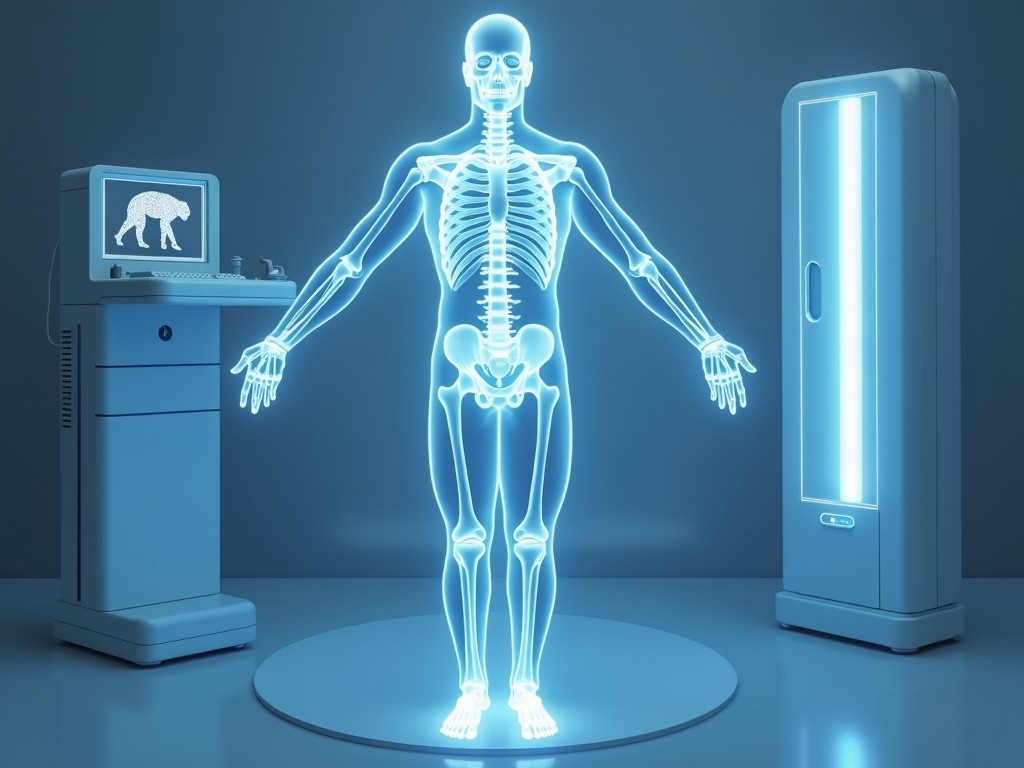
Whole Body Scan Machine Manufacturer
A whole body scan machine captures volumetric data of a person or object using multiple sensor modalities such as X‑ray, computed tomography, or millimeter‑wave radiation. The system reconstructs
Inquire NowWhole Body Scan Machine Manufacturer
Overview
A whole body scan machine captures volumetric data of a person or object using multiple sensor modalities such as X‑ray, computed tomography, or millimeter‑wave radiation. The system reconstructs cross‑sectional images that enable detailed analysis of internal structures, density variations, and potential anomalies.
Manufacturers design these systems to meet specific throughput, resolution, and safety requirements dictated by the target industry, whether it be medical screening, security checkpoint, or industrial quality control. Key design drivers include detector pixel pitch, gantry rotation speed, radiation dose management, and reconstruction algorithm latency.
Technical Specifications
| Parameter | Typical Value | Notes |
|---|---|---|
| Imaging Modality | Multi‑energy X‑ray / CT | Configurable per project |
| Spatial Resolution | 0.5 mm – 1.0 mm (in‑plane) | Depends on detector pitch and reconstruction kernel |
| Slice Thickness | 0.5 mm – 2.0 mm | Adjustable via collimation |
| Gantry Rotation Speed | 0.5 s – 2.0 s per revolution | Impacts temporal resolution and dose |
| Maximum Patient/Object Width | 500 mm – 800 mm | Customizable bore diameter |
| Dose Management | Automatic exposure control, iterative reconstruction | Reduces effective dose while maintaining image quality |
| Reconstruction Throughput | ≥30 volumes/min (GPU‑accelerated) | Dependent on reconstruction algorithm |
Key Features
- Modular detector arrays allowing easy upgrade to higher pixel density.
- Integrated dose‑monitoring firmware with real‑time feedback to operator console.
- Self‑calibrating gantry with laser‑based alignment verification (<0.1 mm tolerance).
- Vendor‑neutral DICOM‑compatible output with optional PACS gateway.
- Enclosed shielding designed to meet IEC 60601‑2‑44 and IEC 62233 standards for radiation safety.
Applications
In medical screening environments, whole body scan machines are employed for rapid assessment of trauma, osteoporosis screening, and whole‑body perfusion studies. The ability to acquire a complete volumetric dataset in under a second reduces patient motion artifacts and enables longitudinal comparison with prior scans.
Security facilities utilize the technology for concealed threat detection, where high‑resolution transmission imaging reveals metallic and non‑metallic objects concealed under clothing. The system’s low‑dose protocols accommodate high‑throughput passenger flow while maintaining detection sensitivity for threat materials as low as 0.1 g.
Industrial quality control labs apply the equipment for non‑destructive inspection of large composite structures, additive‑manufactured parts, and packaged goods. The adjustable bore size and configurable energy spectra allow imaging of components ranging from small electronic assemblies to large aerospace frames.
Quality Assurance
Each machine undergoes a factory acceptance test that verifies spatial uniformity, contrast-to-noise ratio, and geometric accuracy using calibrated phantoms. Test procedures follow IEC 61223‑3‑3 for CT performance evaluation, with results documented in a traceable test report.
Software validation includes automated regression testing of reconstruction pipelines, ensuring that firmware updates do not alter Hounsfield unit calibration beyond ±5 HU. Cybersecurity hardening is performed according to IEC 80001‑2‑2, covering network segmentation and secure boot mechanisms.
Customization Options
Manufacturers offer several axes of customization to align the scanner with specific project constraints:
- Bore diameter: 450 mm, 600 mm, 750 mm, or custom sizes up to 1000 mm.
- Detector technology: scintillator‑based flat panel, photon‑counting cadmium‑telluride, or amorphous silicon.
- Gantry orientation: fixed, tilt‑able (±15°), or C‑arm configuration for interventional workflows.
- Software packages: basic volume rendering, advanced cardiac analysis, automated threat‑detection algorithms, or AI‑assisted defect classification.
- Enclosure materials: lead‑equivalent shielding, steel‑composite, or lightweight aluminum for mobile units.
Frequently Asked Questions
Typical details include desired bore size, target throughput (subjects per hour), required spatial resolution, preferred imaging modality, and any regulatory constraints (e.g., FDA 510(k), CE marking).
Yes, the bore diameter, gantry length, and overall footprint can be adjusted to fit facility constraints or mobility requirements.
Options range from conventional lead sheets to tungsten‑polymer composites and bismuth‑based shielding, selected based on weight, cost, and attenuation needs.
Each unit passes a factory acceptance test using IEC‑standard phantoms, followed by a final functional check that verifies dose output, image uniformity, and software integrity before shipment.
Lead times vary from 12 to 20 weeks depending on configuration complexity and component availability; exact schedules are confirmed after technical specifications are finalized.
Contact Us
To discuss your project requirements, request a detailed quotation, or arrange a technical consultation, please reach out using the link below.
Request Quote