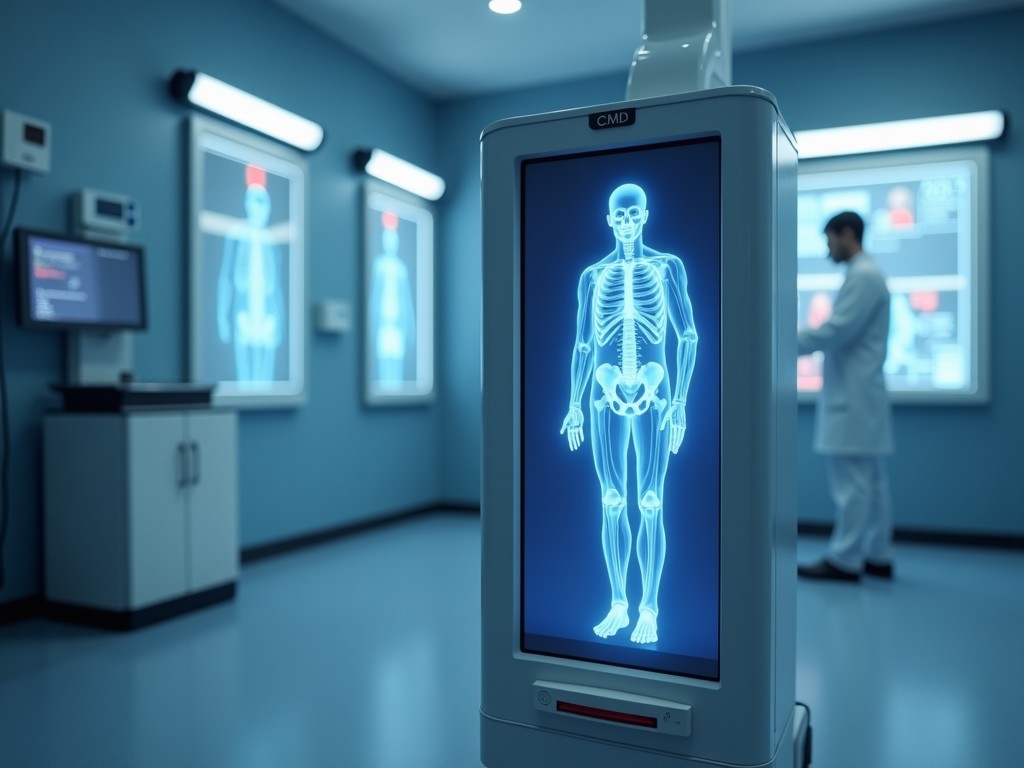
Oem All Body Scanner Exporter
The system employs either millimeter‑wave radar or low‑energy backscatter X‑ray to generate a three‑dimensional image of the human form without physical contact. Millimeter‑wave units operate at
Inquire NowOEM All Body Scanner Exporter
Technology Overview
The system employs either millimeter‑wave radar or low‑energy backscatter X‑ray to generate a three‑dimensional image of the human form without physical contact. Millimeter‑wave units operate at frequencies between 30 GHz and 300 GHz, providing penetration through clothing while reflecting off skin and concealed objects. Backscatter configurations use a narrow‑beam X‑ray source with detectors capturing scattered photons, yielding high‑contrast images of organic materials. Both modalities are designed to meet IEC 60601‑2‑28 safety limits for public exposure.
Image formation relies on sophisticated signal‑processing algorithms that convert raw sensor data into a privacy‑protected silhouette, highlighting potential threats while obscuring anatomical detail. The processing pipeline typically includes noise filtering, edge enhancement, and automated target recognition, allowing operators to focus on anomalies rather than reviewing every scan.
Key Specifications
| Parameter | Typical Range / Option |
|---|---|
| Scanning Technology | Millimeter‑wave (30‑300 GHz) or Backscatter X‑ray (20‑50 keV) |
| Throughput | 300‑600 persons per hour (depending on mode and image quality settings) |
| Spatial Resolution | 5‑10 mm (millimeter‑wave) / 1‑2 mm (backscatter) at the detection plane |
| Penetration Depth | Up to 20 mm of typical clothing layers |
| Power Consumption | 350‑600 W (average) |
| Dimensions (L×W×H) | 2200 mm × 900 mm × 2500 mm (enclosure) |
| Weight | 180‑250 kg |
| Compliance | IEC 60601‑2‑28, FCC Part 18, CE marking (where applicable) |
Typical Applications
- Airport passenger screening where rapid throughput and non‑invasive imaging are required.
- Corporate headquarters and data centers needing covert weapon detection without disrupting workflow.
- Public event venues such as stadiums and convention centers for intermittent high‑security periods.
- Correctional facility visitor lobbies to detect concealed contraband while maintaining visitor dignity.
- Government building entrances where regulatory mandates specify millimeter‑wave or low‑dose X‑ray screening.
Customization Options
- Choice of scanner geometry: walk‑through portal, side‑scan booth, or compact kiosk.
- Software modules for automated threat detection, image storage, and remote diagnostics.
- Enclosure materials ranging from powder‑coated steel to stainless steel for corrosive environments.
- Integration kits for access control systems, biometric readers, or baggage conveyors.
- Language packs and user‑interface layouts tailored to regional operational procedures.
Quality Assurance Philosophy
Each unit undergoes a staged verification protocol: (1) component‑level functional tests of RF sources, X‑ray tubes, detectors, and cooling systems; (2) system‑level imaging checks using standardized phantoms to confirm spatial resolution and penetration depth; (3) safety validation measuring emitted power against IEC limits; (4) environmental stress testing for temperature, humidity, and vibration compliance. Documentation includes traceable test records, calibration certificates, and a detailed conformity declaration.
Continuous improvement is driven by field feedback logs, enabling refinement of algorithms and hardware tolerances without requiring redesign of the core architecture.
Packaging and Logistics
Scanners are secured within custom‑fit wooden crates reinforced with steel brackets, then wrapped in vapor‑barrier film to protect against moisture during transit. Internal bracing isolates sensitive sub‑assemblies such as detector arrays and high‑voltage modules. Each crate includes shock‑indicators and tilt‑monitors that are inspected upon receipt. For overseas shipments, palletized configurations conform to ISPM‑15 standards, and all necessary export documentation (commercial invoice, packing list, certificate of origin) is prepared in advance.
Frequently Asked Questions
Can the scanner dimensions be adapted to limited site space?
Yes. The enclosure length, width, and height can be adjusted within ±15 % of the standard footprint, subject to maintaining required clearances for radiation safety and operator access.
What information is needed to prepare a quotation?
Key details include anticipated throughput, preferred technology (millimeter‑wave vs. backscatter), environmental conditions (indoor/outdoor, temperature range), integration requirements with existing security systems, and any regulatory certifications required for the destination country.
Which materials are available for the scanner housing?
Standard options are powder‑coated carbon steel (RAL 9005) and 304 stainless steel. Alternative alloys or protective coatings can be supplied upon request for specific corrosive or aesthetic considerations.
How is quality inspected before shipment?
Each unit passes a final acceptance test comprising image quality verification, safety emission measurement, and functional check of all interfacing subsystems. A test report is enclosed with the shipment.
What packaging methods protect the equipment during export?
Equipment is packed in double‑wall wooden crates with internal foam cushioning, moisture barrier, and shock‑indicating devices. Crates are banded and labeled according to ISTA 3A standards.
What is the typical production lead time?
Lead times range from 8 to 14 weeks after receipt of a technically cleared purchase order, depending on the selected configuration and current factory load.
Ready to Discuss Your Project?
Share your operational parameters, site constraints, and compliance targets with our engineering team. We will respond with a tailored concept outline, preliminary specifications, and next‑step guidance.
Submit Inquiry