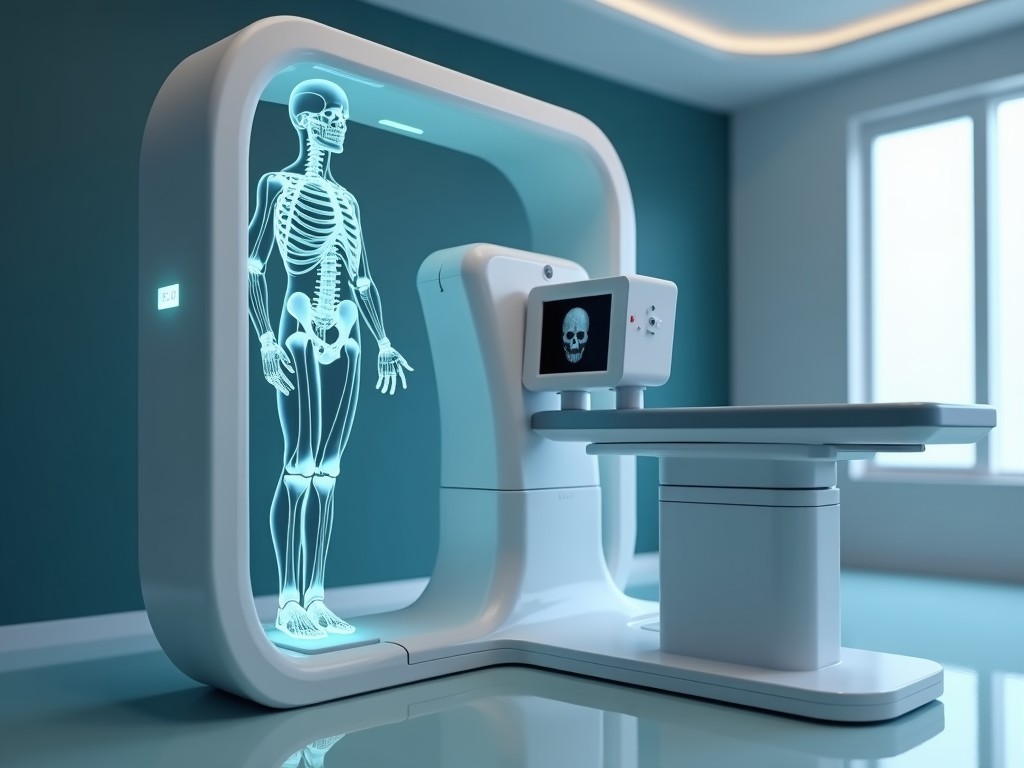
Oem 3D Body Scanner Machine Suppliers
A 3D body scanner captures the external geometry of a human subject using structured light or laser triangulation, producing a dense point cloud that can be processed into a watertight mesh. The data
Inquire NowOEM 3D Body Scanner Machines
Overview
A 3D body scanner captures the external geometry of a human subject using structured light or laser triangulation, producing a dense point cloud that can be processed into a watertight mesh. The data resolution, scan speed, and field of view determine suitability for apparel design, ergonomic assessment, or medical monitoring.
OEM suppliers provide the core scanning hardware, control electronics, and software development kits that enable system integrators to embed the technology into kiosks, mobile units, or stationary booths. The supplier’s role includes mechanical design, sensor selection, and firmware that meets interface standards such as USB 3.0, GigE, or Camera Link.
Technical Specifications
Key performance indicators are defined by the sensor type, baseline distance, and pattern projection frequency. Typical values are provided below; actual figures are customizable according to project requirements.
| Parameter | Typical Value | Notes |
|---|---|---|
| Scan Volume (W×H×D) | 500 mm × 500 mm × 800 mm | Adjustable via lens change |
| Point Spacing | 0.5 mm | At nominal distance |
| Frame Rate | 15 fps | Continuous capture mode |
| Light Source | Blue LED (470 nm) | Class M eye safety |
| Output Format | PLY, OBJ, STL | Via SDK |
| Power Consumption | 45 W | Idle ≈ 5 W |
Key Features
- Modular optics allow swapping between short‑range (0.3 m) and long‑range (2 m) configurations.
- On‑board FPGA processes fringe patterns in real time, reducing host PC load.
- SDK includes C++, Python, and .NET bindings with sample code for mesh generation and alignment.
- Enclosure rated IP54 for dust and splash resistance, suitable for retail environments.
- Calibration routine uses a reference plate; repeatability better than 0.2 mm RMS.
Applications
The scanner’s ability to capture surface topology in sub‑millimeter detail supports industries where fit, comfort, or safety depends on accurate body dimensions.
- Apparel manufacturers use the data to create parametric patterns that reduce prototype iterations by up to 40 %.
- Ergonomics labs assess reach and clearance for workstation design, minimizing risk of musculoskeletal disorders.
- Medical orthotics providers scan limbs to produce custom braces with wall thickness variations under 0.3 mm.
- Fitness centers track longitudinal body composition changes, correlating volume shifts with training programs.
Customization Options
OEM buyers can tailor mechanical, optical, and firmware aspects to match integration constraints and performance targets.
- Baseline distance adjustable from 150 mm to 500 mm to trade off depth of field versus resolution.
- Optional ring illumination for improved capture on dark or specular surfaces.
- Custom enclosure colors, branding panels, and mounting brackets available.
- Firmware can be configured to output raw phase maps, depth images, or processed meshes.
- Software license tiers permit redistribution of runtime components in end‑user products.
Quality Assurance
Suppliers apply a combination of functional testing and environmental validation to ensure long‑term reliability.
- Each unit undergoes interferometric verification of fringe projection uniformity across the field of view.
- Thermal cycling from –10 °C to +50 °C validates sensor drift compensation.
- Vibration testing meets IEC 60068‑2‑6 standards for transportation resilience.
- Final inspection includes a scan of a certified reference artifact; point‑to‑point error must stay below 0.15 mm RMS.
Frequently Asked Questions
Can the scan volume be increased without sacrificing resolution?
Yes, by selecting a longer baseline lens and adjusting the pattern frequency, the volume can be expanded while maintaining a point spacing of approximately 0.5 mm, subject to recalibration.
What information is required before quotation?
Typical details include intended scan volume, desired frame rate, environmental conditions (temperature, humidity), and any required certifications (e.g., CE, FCC).
Which materials are available for the enclosure?
Standard options are ABS‑PC blend and aluminum alloy; custom composites can be quoted upon request.
How is quality inspected?
Each scanner is measured against a traceable reference plate; results are recorded and supplied with the shipment.
Contact for OEM Inquiry
To discuss technical requirements, request a detailed specification sheet, or arrange a sample evaluation, please use the inquiry form below.
Send Inquiry