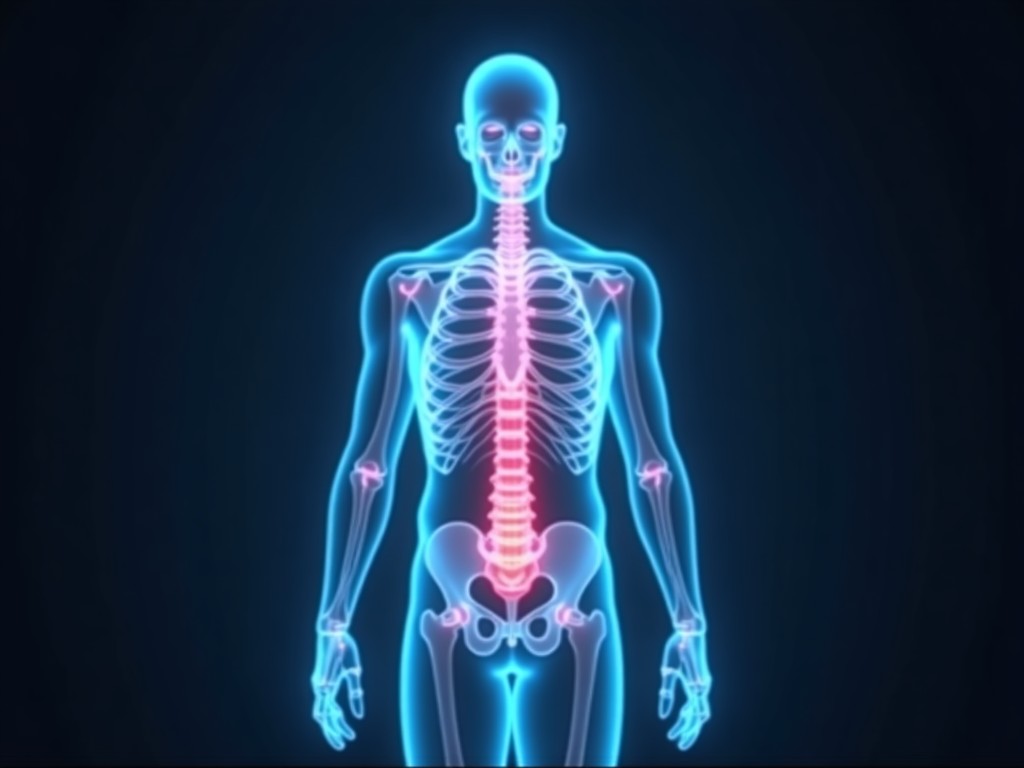
Odm Laser Body Scanner
A laser body scanner captures the three‑dimensional shape of a person without physical contact, producing a dense point cloud that can be used for sizing, ergonomics, or virtual avatar creation. As
Inquire NowODM Laser Body Scanner
A laser body scanner captures the three‑dimensional shape of a person without physical contact, producing a dense point cloud that can be used for sizing, ergonomics, or virtual avatar creation. As an ODM solution, the scanner’s mechanical housing, interface firmware, and software stack can be adapted to meet specific integration requirements while keeping the core optical engine unchanged.
Operating Principle
The device projects a structured laser line onto the subject while a high‑speed CMOS sensor observes the line’s deformation from a known angle.
By applying triangulation algorithms, each pixel shift is converted into a depth measurement, yielding XYZ coordinates for every point on the laser stripe.
Repeating the line sweep across the field of view builds a complete surface map at up to 120 frames per second.
Key Technical Specifications
The following table lists typical performance figures for the standard configuration; values can be tuned during ODM development.
| Parameter | Typical Value | Unit |
|---|---|---|
| Laser wavelength | 658 | nm |
| Scan width | 400 | mm |
| Scan height | 200 | mm |
| Point spacing | 0.5 | mm |
| Accuracy | ±0.2 | mm |
| Scan speed | 1.2×10⁶ | points/s |
| Frame rate | 120 | fps |
| Power consumption | 8 | W |
| Operating temperature | 0 – 45 | °C |
| Housing material | Aluminum alloy (6061) with powder coating | – |
| IP rating | IP54 | – |
| Interface | USB 3.0 Type‑C | – |
| Dimensions (L×W×H) | 220 × 120 × 80 | mm |
| Weight | 1.1 | kg |
Typical Applications
In apparel manufacturing, the scanner provides rapid body measurements that reduce reliance on manual tape measures and enable mass‑customization of garments.
Ergonomics laboratories use the data to design workstations, protective equipment, and vehicle interiors that match actual user dimensions.
Healthcare providers employ the point cloud for prosthetics fitting, orthotic design, and monitoring morphological changes over time.
Fitness and virtual‑reality integrators capture avatars for immersive training or gaming, where scan speed and resolution directly affect user experience.
Customization Options (ODM)
Because the core optics and processing firmware are fixed, ODM partners can modify the mechanical envelope, connector placement, and external aesthetics without requalifying the laser safety class.
Software layers—such as SDK language wrappers, data output formats (PLY, OBJ, JSON), and real‑time streaming protocols—can be adapted to match existing factory MES or AR pipelines.
Optional accessories include motorized turntables, remote triggers, and enclosure kits for harsh environments.
- Housing dimensions – adjust length, width, or mounting flange to fit integration envelope
- Connector type – choose M12, RJ45, or custom pin‑out for power and data
- Mounting brackets – select side‑mount, base‑plate, or adjustable gimbal
- Firmware feature set – enable/disable real‑time mesh generation, trigger modes, or exposure control
- Output data format – switch between raw point clouds, compressed packets, or CAD‑ready meshes
- Enclosure rating – upgrade to IP65 or add protective windows for dusty or wet zones
- Accessory integration – add rotary tables, synchronized lighting, or wireless synchronization modules
Quality Assurance & Testing
Each unit undergoes factory‑calibration against a traceable reference artifact, with repeatability verified over ten consecutive scans.
Environmental stress testing includes thermal cycling (−10 °C to +60 °C), humidity exposure (85 % RH, 48 h), and mechanical vibration per IEC 60068‑2‑6.
Final inspection confirms laser power emission complies with IEC 60825‑1 Class 2M limits and that point‑cloud noise stays below 0.05 mm RMS.
Frequently Asked Questions
- Can the scanning area be enlarged? Yes – the optics can be re‑specified for wider fields of view, which alters point spacing and may require a different laser class evaluation.
- What information is needed for a quotation? Project specifics such as required scan volume, output rate, environmental conditions, interface preferences, and any mechanical constraints.
- Which materials are available for the housing? Standard is powder‑coated aluminum; optional stainless steel or polymer composites are offered upon request.
- How is quality inspected before shipment? Each unit receives dimensional accuracy checks, laser power measurement, and functional scan tests against a calibrated target.
- What is the typical production lead time? For standard configurations, lead time is 4‑6 weeks; fully customized ODM projects are quoted case‑by‑case.
Contact for ODM Collaboration
To discuss specific mechanical, optical, or software adaptations for your production line, share your project requirements and we will return a detailed feasibility quote within two business days.