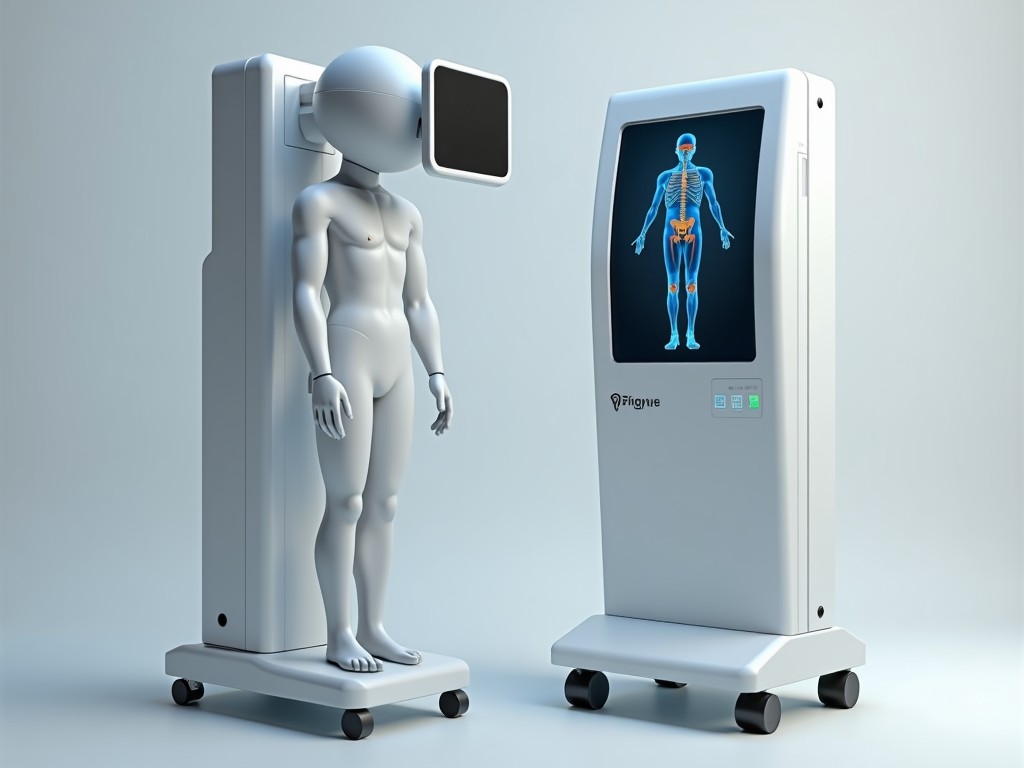
Odm 3D Body Fat Scanner Machine
The device combines structured‑light 3D surface scanning with multi‑frequency bioelectrical impedance analysis (BIA) to estimate body composition without contact or ionizing radiation. A rotating
Inquire NowODM 3D Body Fat Scanner Machine
The device combines structured‑light 3D surface scanning with multi‑frequency bioelectrical impedance analysis (BIA) to estimate body composition without contact or ionizing radiation. A rotating sensor array captures the external geometry of the subject while low‑amplitude currents are applied through surface electrodes, allowing the system to relate volume, surface area, and tissue impedance to fat mass, lean mass, and total body water.
Scanning is performed in under ten seconds, producing a point cloud with a typical spatial resolution of 0.5 mm. The BIA subsystem sweeps frequencies from 5 kHz to 500 kHz, enabling separation of extracellular and intracellular fluid compartments. Validation against dual‑energy X‑ray absorptiometry (DXA) shows a mean absolute error of approximately 1.5 % for body fat percentage in adult populations, with repeatability better than 0.3 % when the subject is repositioned under standardized conditions.
| Parameter | Typical Value | Customizable According to Project Requirements |
|---|---|---|
| Scanning Volume (W×H×D) | 2000 mm × 1500 mm × 2000 mm | Adjustable frame size, optional extended height |
| Spatial Resolution | 0.5 mm | Higher resolution optics available |
| Measurement Frequency Range | 5 kHz – 500 kHz | Custom frequency bands for specific tissue models |
| Scan Time | <10 s | Fast‑mode (<5 s) or high‑detail mode (>15 s) |
| Output Metrics | Body fat %, visceral fat, skeletal muscle mass, total body water | Additional metrics (bone mineral estimate, segmental analysis) via firmware |
| Power Consumption | 120 W (typical) | Low‑power mode, alternative voltage inputs |
| Operating Temperature | 0 °C – 40 °C | Extended range with environmental enclosure |
| Data Interface | USB 3.0, Ethernet (TCP/IP) | Wireless (Wi‑Fi 6), industrial fieldbus options |
These specifications enable integration into existing workflows such as member onboarding in fitness facilities, longitudinal studies in research labs, and pre‑employment health screening in corporate wellness programs. The short scan time minimizes subject discomfort, while the non‑contact nature eliminates consumables and reduces cross‑contamination risk.
- Fitness centers – provides repeatable baseline and progress tracking for personal training programs without the need for calibration phantoms.
- Medical research – delivers volume‑based body composition data complementary to imaging modalities, supporting studies on obesity, sarcopenia, and metabolic syndrome.
- Corporate wellness – enables rapid, private health assessments at scale, facilitating data‑driven benefits programs.
As an ODM product, the scanner’s enclosure can be fabricated from ABS plastic for lightweight indoor use or from 304 stainless steel for environments requiring frequent cleaning or resistance to cleaning agents. Electrode layout and count can be adjusted to match specific impedance models, and the onboard software offers a RESTful API for seamless connection to hospital information systems or club management platforms. Language packs and UI themes are configurable upon request.
Quality assurance follows a documented calibration routine using NIST‑traceable body‑composition phantoms before each production batch. Each unit undergoes a functional test that verifies scan completeness, impedance measurement linearity, and data output consistency. The manufacturing process adheres to ISO 9001 guidelines, and traceability records are maintained for critical components such as the structured‑light projector and the precision current source.