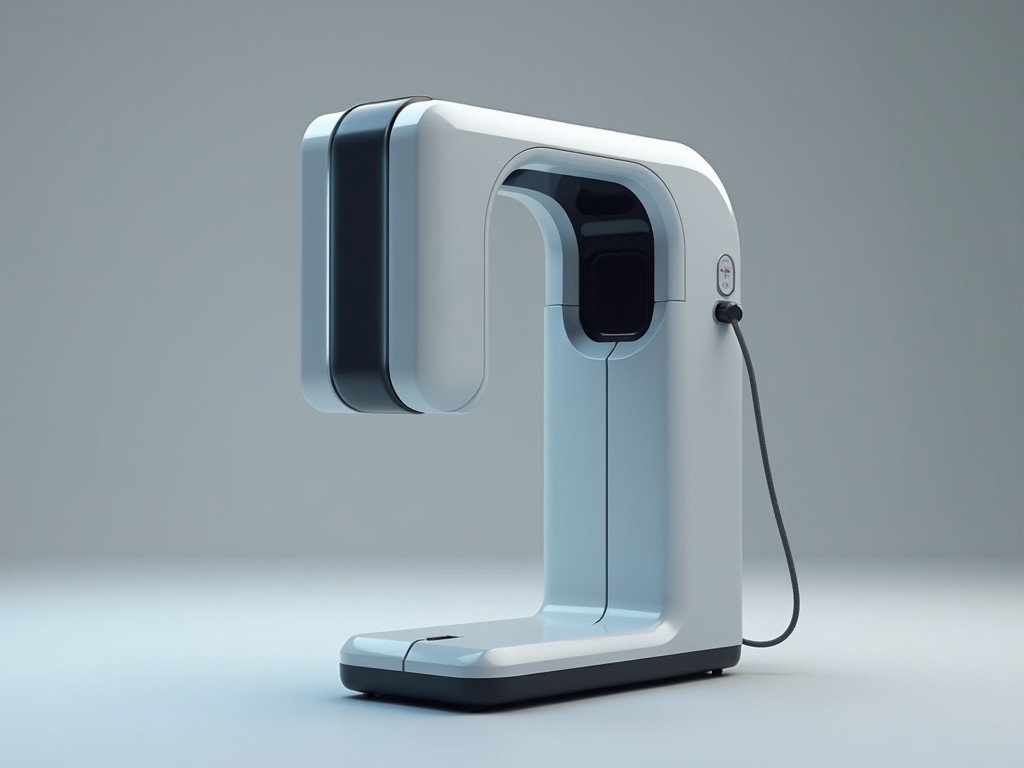
Custom Fitness 3D Body Scanner Supplier
A fitness 3D body scanner captures the external geometry of a human body using structured light or photogrammetry to produce a dense point cloud. The resulting data enables precise measurements of
Inquire NowCustom Fitness 3D Body Scanner Supplier
A fitness 3D body scanner captures the external geometry of a human body using structured light or photogrammetry to produce a dense point cloud. The resulting data enables precise measurements of circumferences, lengths, and volumes for tracking physical change over time. Suppliers adapt the core scanning technology to meet the specific requirements of fitness centers, apparel manufacturers, and sports‑performance labs.
Unlike manual tape measurements, the scanner provides repeatable sub‑millimeter accuracy across the entire body in a single acquisition. This eliminates operator variability and reduces the time needed for a full‑body assessment from several minutes to under ten seconds. The output can be exported in standard formats such as OBJ, STL, or PLY for downstream analysis in fitness tracking software.
Operating Principle
The scanner projects a known pattern of infrared light onto the subject while multiple synchronized cameras capture the deformation of that pattern from different angles. Triangulation of the displaced pattern yields XYZ coordinates for each illuminated point, generating a point cloud with uniform density.
Typical systems use a baseline of 150 mm between cameras and a projector wavelength of 850 nm to minimize interference with ambient lighting. Frame rates of 30 fps allow real‑time preview, while a single high‑resolution scan can be completed in 0.8 seconds with a point spacing of 0.5 mm.
Key Technical Specifications
| Parameter | Typical Value | Notes |
|---|---|---|
| Scan Volume (W×H×D) | 500 mm × 500 mm × 2000 mm | Enables full‑body capture from feet to head |
| Point Spacing | 0.5 mm | Determines measurement resolution |
| Accuracy (RMS) | ±1 mm | Verified against calibrated gauge block |
| Frame Rate | 30 fps | Live preview capability |
| Power Consumption | 45 W | Includes projector and cameras |
| Data Interface | USB 3.0 / Gigabit Ethernet | Selectable per order |
| Operating Temperature | 10 °C – 35 °C | Condensing humidity < 80 % |
Applications in Fitness Industry
Fitness facilities use body scanners to create baseline models for members, enabling objective tracking of muscle gain and fat loss over training cycles. The detailed geometry supports the design of custom compression garments that conform precisely to individual contours, improving comfort and performance.
- Progress visualization for personal training programs
- Ergonomic assessment of equipment such as bike seats and grips
- Generation of avatars for virtual coaching platforms
- Custom orthotic and insole fabrication based on foot scan data
- Research studies requiring repeatable anthropometric measurements
Customization Options
Suppliers adjust the scanner enclosure material to suit the installation environment, choosing between powder‑coated steel for high‑traffic gyms or ABS plastic for lightweight portable units. Lighting modules can be swapped to provide either structured‑light patterns or passive stereo illumination depending on required accuracy and ambient conditions.
- Enclosure finishes: stainless steel, powder‑coated aluminum, or impact‑resistant polymer
- Lighting configurations: single‑line structured light, multi‑line pattern, or infrared flood
- Software SDKs: C++, Python, or LabVIEW wrappers for data streaming
- Mounting options: floor‑standing pedestal, wall‑mounted bracket, or mobile cart with lockable wheels
- Output formats: raw point cloud, mesh, or CSV of extracted circumferences
Quality Assurance and Testing
Each unit undergoes a geometric traceability test using a calibrated reference artifact with known dimensions to verify scanning accuracy across the full volume. Repeatability is assessed by performing thirty consecutive scans on a static target and calculating the standard deviation of extracted measurements.
- Dimensional verification against ISO 10360‑2 coordinate measuring machine standards
- Environmental cycling: temperature shifts from 10 °C to 35 °C with humidity control
- Ingress protection testing to ensure resistance to dust and sweat‑related moisture
- Software validation: checking data integrity and timestamp synchronization across camera feeds
- Final visual inspection of enclosure seams, cable strain reliefs, and safety labeling
Integration and Support
Successful deployment requires defining the data flow from the scanner to the client’s fitness‑management platform, including format conversion and secure transfer protocols. Suppliers provide a configuration guide that outlines required USB bandwidth, power supply specifications, and recommended PC specifications for real‑time processing.
Training sessions cover scanner calibration procedures, software operation, and routine maintenance tasks such as lens cleaning and firmware updates. Ongoing technical assistance is available via email or remote diagnostics to minimize downtime during peak facility hours.
Frequently Asked Questions
Q: Can the scanning volume be adjusted for different facility layouts?
A: Yes, the enclosure dimensions and camera baseline can be modified to suit smaller studios or larger performance labs, subject to optical design limits.
Q: What file formats are available for exporting scan data?
A: Standard outputs include OBJ, STL, PLY, and a CSV table of segmented body measurements; custom formats can be arranged upon request.
Q: How is the scanner kept free of sweat and dust accumulation?
A: The enclosure features an IP54 rating, with sealed cable glands and replaceable front‑window protectors that can be wiped down with approved cleaning agents.
Q: What is the typical lead time for a customized unit?
A: Lead times range from six to ten weeks depending on the selected enclosure material, lighting configuration, and software integration level.
Q: Is on‑site installation and calibration included?
A: Suppliers can provide field service technicians for mechanical installation, initial calibration, and user training; travel expenses are quoted separately.
Request a Quotation
To discuss your specific scanning requirements, including enclosure material, lighting choice, and software interface, please use the link below to contact our sales team. Provide details such as intended installation location, expected daily throughput, and any required certifications so we can prepare an accurate proposal.