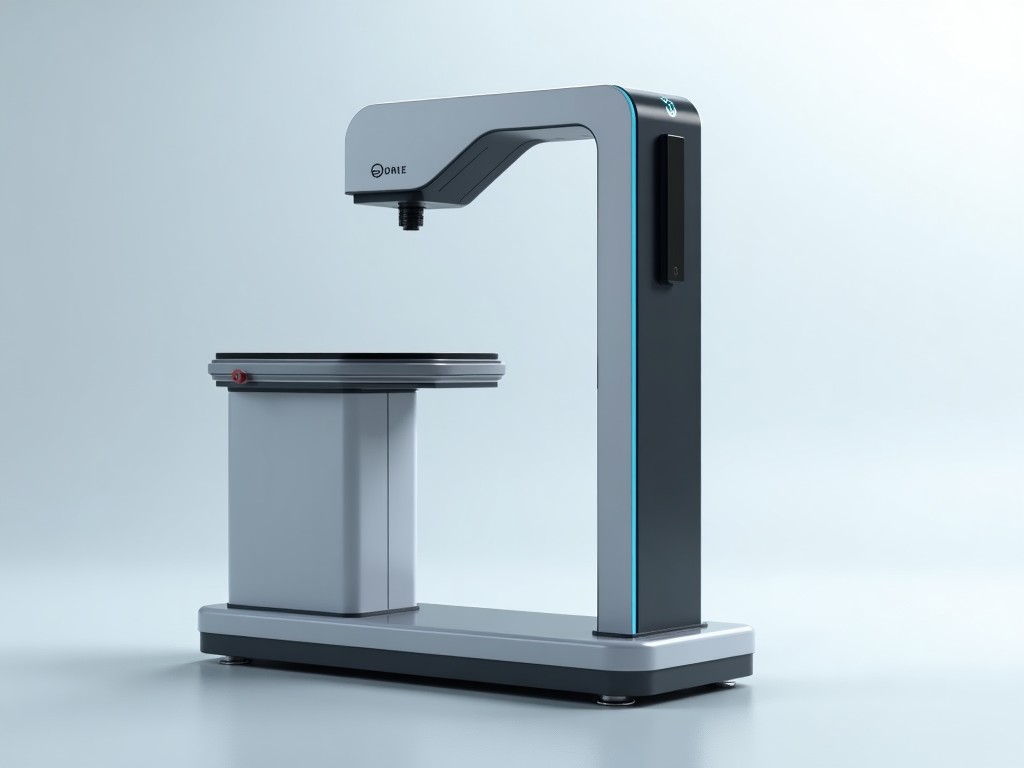
Cost Effective New Digital Body Scanning Machine
A digital body scanning machine captures the three‑dimensional shape of a human body without physical contact. It projects a known light pattern onto the subject and records the deformation of that
Inquire NowCost-Effective New Digital Body Scanning Machine
A digital body scanning machine captures the three‑dimensional shape of a human body without physical contact. It projects a known light pattern onto the subject and records the deformation of that pattern with one or more cameras. The resulting point cloud can be used for ergonomic analysis, apparel design, medical prosthetics, and quality control in manufacturing.
Technical Principle
The system uses structured light triangulation: a fringe pattern is projected onto the surface, and the camera views the pattern from a different angle. Software calculates the depth for each pixel by comparing the observed shift with the reference pattern. Frame rates of 30 fps allow full‑body scans in under two seconds, and the resolution is determined by the pixel density of the projector and camera sensors.
Key Specifications
| Parameter | Typical Value | Notes |
|---|---|---|
| Scanning Volume | 2000 mm × 1000 mm × 600 mm | Adjustable with optional fixtures |
| Point Spacing (Resolution) | 0.5 mm | Dependent on projector resolution |
| Volumetric Accuracy | ±0.8 mm | Traceable to national length standards |
| Repeatability (σ) | 0.12 mm | After warm‑up, 10 consecutive scans |
| Scan Speed | 1.5 s full body | Includes data transfer |
| Light Source | LED, 650 nm, Class 2 | Eye‑safe, no warm‑up time |
| Power Consumption | 45 W typical | 100‑240 V AC |
| Enclosure | Aluminum alloy, IP54 | Dust‑protected, splash‑resistant |
| Weight | 18 kg | Includes base stand |
Design and Construction
The scanner housing is machined from 6061‑T6 aluminum to provide rigidity while keeping mass low. Internal optics are mounted on kinematic brackets to minimize drift caused by vibration. The unit meets IP54, allowing operation in typical workshop environments without additional protective covers. Calibration is performed using a certified reference plate; the software stores correction maps that are applied in real time.
Measurement Accuracy and Repeatability
Accuracy is limited by the triangulation baseline and pixel size; with a 200 mm baseline and 2 MP cameras the theoretical depth resolution is ≈0.3 mm, which after calibration yields the quoted ±0.8 mm volumetric error. Repeatability benefits from the absence of moving parts; thermal drift is compensated by a built‑in temperature sensor that updates the calibration matrix every scan. These characteristics make the device suitable for comparative studies where change detection is more important than absolute dimension.
Applications
In apparel manufacturing, the scanner provides a dense surface mesh that enables virtual pattern making and reduces the need for physical draping sessions. Automotive ergonomics teams use the data to assess reachability and visibility inside vehicle cabins, improving design iterations without building multiple mock‑ups. Prosthetics clinics capture the residual limb shape to fabricate sockets with better fit, decreasing the number of trial fittings. Each application benefits from the repeatable, high‑density data that manual tape or photogrammetry cannot deliver efficiently.
Advantages of a Cost‑Effective Approach
The system avoids expensive rotating stages or robotic arms; instead it relies on a fixed gantry and structured light, which lowers both capital cost and maintenance overhead. Software licenses include core processing tools, eliminating recurring fees for basic mesh generation and alignment. Power draw is modest, allowing the unit to run from a standard outlet without dedicated circuitry. These factors contribute to a lower total cost of ownership compared with laser‑tracker or multi‑camera photogrammetry rigs offering comparable accuracy.
Comparison with Alternative Measurement Methods
| Method | Typical Cost | Skill Required | Data Richness | Typical Scan Time |
|---|---|---|---|---|
| Digital Body Scanner (this model) | $22k–$28k | Operator training < 1 h | Full‑resolution mesh (≈2 M points) | 1.5 s |
| Manual Tape & Caliper | <$500 | Experienced measurer | Sparse point set (≤ 20 points) | 5–10 min per subject |
| Multi‑Camera Photogrammetry Rig | $45k–$60k | Calibration expert | Dense mesh (≈3 M points) | 4–6 s (including sync) |
For more information or to request a quotation, please contact our sales team.