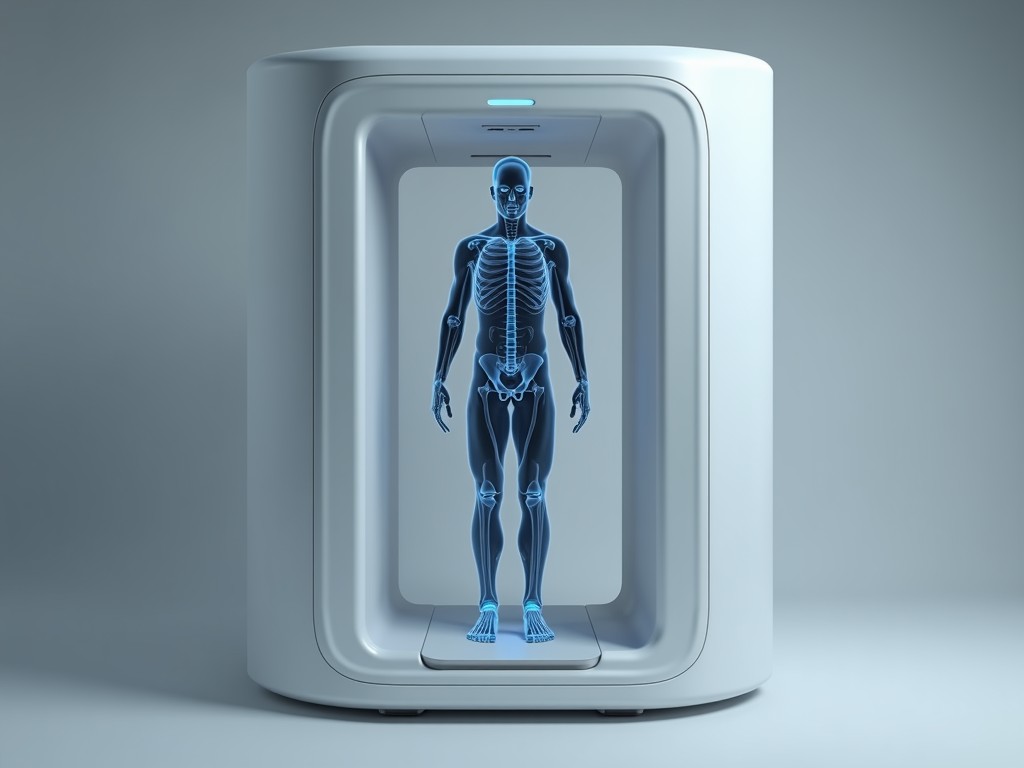
Cost Effective Fitness Body Scanner
Measurement of body composition relies on bioelectrical impedance analysis (BIA) combined with optical depth sensing to estimate fat, lean mass, and total body water distribution without physical
Inquire NowCost-Effective Fitness Body Scanner
Measurement of body composition relies on bioelectrical impedance analysis (BIA) combined with optical depth sensing to estimate fat, lean mass, and total body water distribution without physical contact.
Achieving a lower unit cost involves reducing the electrode count to a minimal array while preserving measurement repeatability within a few percent under stable conditions.
A full-body scan completes in ≤10 seconds, enabling high throughput in environments where many users are assessed daily.
Operates from a 12 V DC supply with average power consumption below 5 watts, allowing use with standard adapters or PoE splitters.
Key Specifications
| Parameter | Typical Value | Notes / Conditions |
|---|---|---|
| Measurement technology | Bioelectrical impedance with optical depth sensing | Non‑contact, safe for repeated use |
| Scan time | ≤10 s | Includes user positioning and data transfer |
| Repeatability (total body water) | Typically ±2 % or better | Stable temperature and hydration |
| Power consumption | <5 W average | 12 V DC input |
| Operating temperature | 10 °C – 40 °C | Ambient conditions |
| Dimensions (W×H×D) | 350 mm × 250 mm × 120 mm | Enclosure size |
| Weight | ≈4 kg | Includes mounting bracket |
| Data output | USB 2.0, Bluetooth 5.0 (optional) | Configurable per order |
| Compliance | IEC 60601‑1, ISO 13485 (typical) | Medical device safety & quality management |
Applications
Typical deployment environments include facilities where rapid, repeatable body‑composition data support training, wellness, or clinical decisions.
- Fitness centers & gyms – enables members to track progress and trainers to adjust programs based on objective data.
- Wellness clinics – supports nutritional counseling and metabolic risk assessment with quick, non‑invasive scans.
- Corporate wellness programs – allows periodic employee health monitoring without disrupting work flow.
- Sports performance labs – provides segment‑level lean‑mass feedback for optimizing training loads.
- Physical therapy & rehabilitation – tracks muscle‑gain or atrophy during recovery cycles.
- Research institutions – supplies consistent data sets for studies on metabolism, aging, or exercise interventions.
Quality Control & Calibration
Each scanner undergoes factory calibration using reference phantoms traceable to national standards, with verification of impedance and optical channels before shipment.
Periodic field checks are recommended; the device includes a built‑in self‑test routine that reports sensor integrity and prompts recalibration when drift exceeds predefined thresholds.
Customization Options
Options can be tailored to match integration requirements and environmental constraints.
- Enclosure material – ABS for lightweight indoor use, polycarbonate for impact resistance, or stainless‑steel for harsh‑environment installations.
- Sensor array density – configurable from 8 to 16 electrodes to balance cost and spatial resolution.
- Software interface – optional SDK for custom applications, cloud‑API for remote data aggregation, or built‑in touchscreen display.
- Mounting choices – wall‑mounted bracket, floor‑stand with leveling feet, or portable carrying case for mobile assessments.
Frequently Asked Questions
Common questions from procurement engineers and facility planners are addressed below.
- Can the scan resolution be adjusted for different user populations?
- Yes, the electrode spacing and excitation frequency can be selected during ordering to optimize sensitivity for pediatric, adult, or athletic cohorts.
- What information is required before a quotation is issued?
- Needed details include intended operating environment, required data output (USB, Bluetooth, API), enclosure preference, and estimated annual volume.
- How are sample units arranged for evaluation?
- Sample units can be shipped via standard freight; a refundable deposit is applied and credited toward the first purchase order.
Contact our engineering team for a quotation or technical discussion