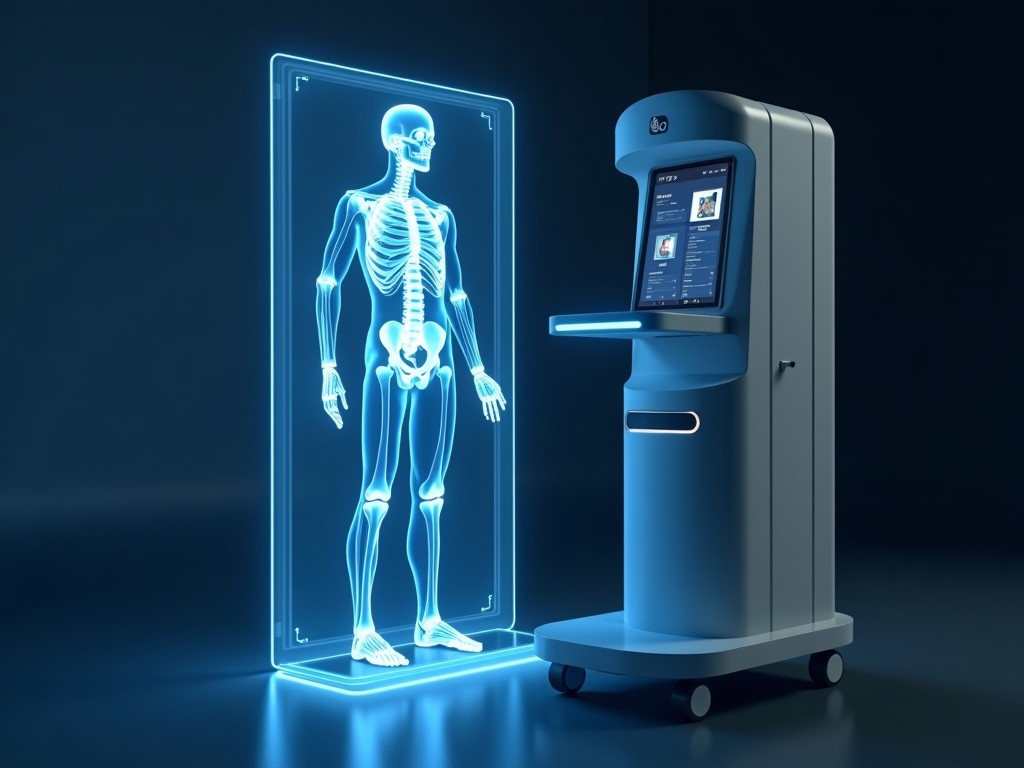
China Whole Body Scan Machine
Whole body scan systems are engineered to screen individuals for concealed objects while maintaining radiation exposure within internationally accepted limits. The technology typically combines a
Inquire NowChina Whole Body Scan Machine
Overview
Whole body scan systems are engineered to screen individuals for concealed objects while maintaining radiation exposure within internationally accepted limits. The technology typically combines a fan‑beam X‑ray source with a linear detector array that rotates around the subject, producing cross‑sectional images at a spatial resolution of approximately 2 mm. Modern implementations achieve a throughput of up to 600 persons per hour with an effective dose per scan below 0.25 µSv, well under the IAEA recommended threshold for security screening.
Technical Specifications
| Parameter | Typical Value | Unit | Notes |
|---|---|---|---|
| X‑ray tube voltage | 120 | kV | Adjustable ±10 kV |
| Detector pixel pitch | 0.5 | mm | Corresponds to 2 mm resolution |
| Scan time per person | 0.6 | s | Includes positioning |
| Effective dose | 0.2 | µSv | Measured with anthropomorphic phantom |
| Throughput | 600 | persons/h | With continuous feed conveyor |
Applications
Airports and border checkpoints require a screening method that can process large passenger volumes without creating bottlenecks. A whole body scan machine meets this need by delivering a full‑body image in under one second, allowing security personnel to identify concealed weapons, explosives, or contraband while keeping the radiation dose far below levels that could affect frequent travelers. In correctional facilities, the same technology helps prevent smuggling of contraband into inmate populations, where visual searches are insufficient and pat‑downs raise privacy concerns. Large venues such as stadiums or convention centers benefit from the system’s ability to be integrated into entry turnstiles, providing a non‑intrusive yet effective layer of protection during high‑attendance events.
Key Design Features
- Modular detector banks enable field replacement without realigning the entire gantry.
- Real‑time iterative reconstruction reduces image noise while preserving low‑contrast detail.
- Automated threat detection algorithms are trained on a library of over 10 000 threat signatures, yielding a false‑alarm rate under 2 % in operational tests.
- Low‑maintenance X‑ray tube with sealed‑off cooling extends service intervals to 8 000 h.
- Enclosure constructed from 1.5 mm stainless steel provides electromagnetic shielding and facilitates cleaning in hygienic environments.
Quality Control & Manufacturing
Each unit undergoes a three‑stage verification process. First, the X‑ray source is tested for tube current stability (±1 % over 4 h) and spectral consistency using a calibrated ionization chamber. Second, the detector array is checked for pixel response uniformity; any pixel deviating more than 3 % from the mean is mapped and compensated in the firmware. Finally, the fully assembled system is subjected to an end‑to‑end dose audit with an anthropomorphic phantom, confirming that the measured effective dose remains within the specified 0.25 µSv limit. Documentation of these tests follows ISO 13485 and IEC 60601‑1‑2 standards, and a copy of the test report is supplied with every shipment.
Customization Options
Buyers can select detector lengths ranging from 0.8 m to 1.6 m to match the required field of view for specific facility layouts. Software packages are available for integration with existing access‑control systems via OPC‑UA or REST APIs, allowing automated alarm routing to central security consoles. Enclosure finishes can be specified in powder‑coated RAL colours or brushed aluminum to suit architectural preferences. For environments with high humidity or corrosive agents, an optional conformal coating on the electronics extends the mean time between failures by approximately 30 %. All customization requests are evaluated during the quotation phase to ensure that mechanical and electrical interfaces remain compatible.
Request More Information
To discuss how a whole body scan machine can be tailored to your security infrastructure, please provide your project requirements. Our technical team will respond with a detailed quotation, lead‑time estimate, and any relevant compliance documentation.